
Inquiry Basket
 Loading ......
Glucagon-like peptide-1 receptor agonist (GLP-1RA) is an effective drug to achieve good glycemic control in patients with type 2 diabetes (T2DM). GLP-1RA can induce glucose-dependent stimulation of insulin secretion, reduce glucagon release, reduce hepatic glucose output, delay gastric emptying and increase satiety, resulting in moderate reductions in glycated hemoglobin (HbA1c), body weight and systolic blood pressure, the risk of hypoglycemia is lower. The American Diabetes Association recommends GLP-1RA as the preferred second-line drug for T2DM patients with confirmed atherosclerotic cardiovascular disease, and the European Society of Cardiology (ESC) has regarded GLP-1RA as a first-line treatment drug for reducing cardiovascular risk in T2DM patients. .A variety of GLP-1RAs are currently on the market, including long-acting dulaglutide, intermediate-acting liraglutide, short-acting benaglutide, etc., all of which are administered via subcutaneous injection. Even though GLP-1RA has obvious advantages in terms of hypoglycemic and cardiovascular benefits, the acceptance of GLP-1RA treatment among patients is still low, mainly related to gastrointestinal adverse reactions and subcutaneous injection route of administration. Oral semaglutide is the first GLP-1RA approved for oral treatment of T2DM in the world. With the emergence of this drug, even T2DM patients who are unwilling to use GLP-1RA through injection can be treated early in the treatment of diabetes. The use of semaglutide provides patients with a valuable oral medication option.
GLP-1RA is a peptide drug. The large molecule has poor penetration into the gastrointestinal mucosa and is easily degraded by proteolytic enzymes and affected by acidic environments. Therefore, its absorption in the gastric mucosa is poor, and its bioavailability is generally low when taken orally, combined with absorption enhancers may help alleviate these disorders.
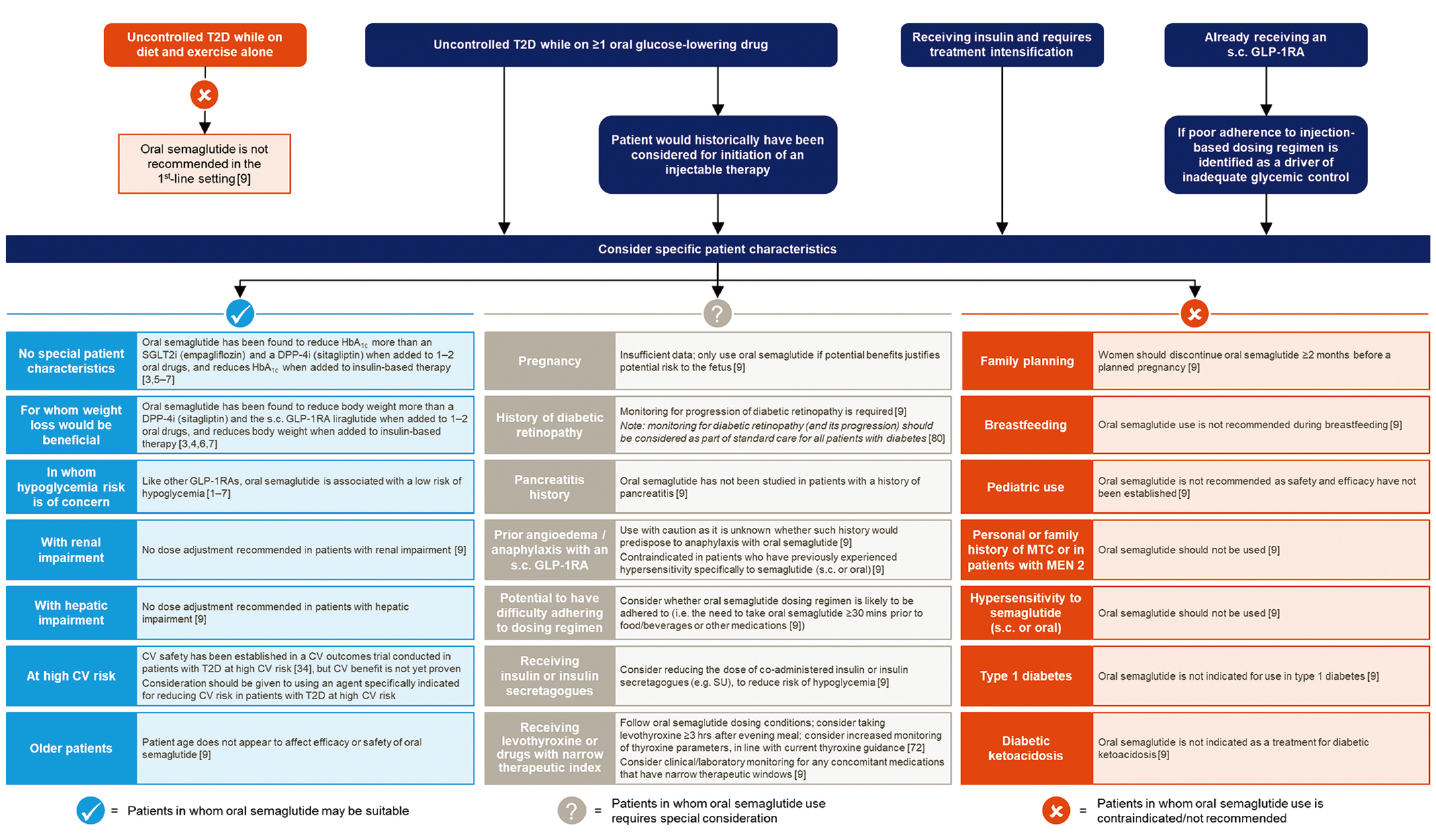 Figure 1. Key considerations for the use of oral semaglutide across a spectrum of clinical scenarios in type 2 diabetes.(Brunton SA, et al.; 2020)
Sodium 8-(2-hydroxybenzamido) octanoate (SNAC) is an absorption enhancer. When semaglutide is combined with SNAC, SNAC increases the pH of the environment surrounding the tablet in the stomach.
This thereby protects semaglutide from degradation by pepsin and promotes semaglutide passage through gastric epithelial cells via transcellular pathways in a concentration-dependent manner to enhance absorption.
After entering the blood, SNAC easily dissociates from semaglutide and does not affect the pharmacological effects of semaglutide.
Oral semaglutide is mainly absorbed from the stomach. Studies have shown that food intake can affect gastric pH and prevent the maximum absorption of oral semaglutide. Therefore, patients should take oral semaglutide at least 30 minutes before meals to avoid food interference. The degree of absorption of semaglutide depends on the amount of SNAC bound to it. Studies have shown that when the SNAC is 300 mg, the blood concentration of semaglutide is the highest. After oral administration in patients with T2DM, the estimated absolute bioavailability of semaglutide is 0.4% to 1.0%, and the average steady-state concentrations of semaglutide after oral administration of 7 mg and 14 mg once daily are 7.6 mmol/L and 14.6mmol/L, respectively, reaching the maximum concentration within 1 hour after oral administration, and reaching steady state after continuous administration for 4 to 5 weeks. In healthy subjects, oral semaglutide is extensively bound to plasma albumin, has a half-life of 150 hours, and is present in the blood circulation for approximately 5 weeks after the last dose, with a clearance rate of 0.04 L/h. Oral semaglutide is metabolized through proteolytic cleavage of the peptide chain backbone and continuous β-oxidation of fatty acid side chains, and is excreted through urine and feces. About 3% is excreted in the urine as intact semaglutide.
The pharmacokinetic properties of oral semaglutide are not affected by patient-specific factors such as age, sex, race, ethnicity, and hepatic and renal function. Regardless of the severity of hepatic or renal impairment, it exhibits pharmacokinetic properties similar to those of the subcutaneous formulation. The drug exposure of oral semaglutide decreases with increasing body weight, but studies have found that oral semaglutide 7~14mg/d provides sufficient drug exposure for patients with a body weight of less than 188kg.
Since the absorption of oral semaglutide relies on SNAC delivery, it is important to evaluate drug-drug interactions. Multiple drug interaction studies have found that metformin, omeprazole, rosuvastatin, lisinopril, furosemide, warfarin, digoxin, ethinyl estradiol/levonorgestrel None of the other drugs significantly affected the drug concentration of oral semaglutide.
PIONEER1 is a randomized, double-blind, placebo-controlled, multi-center Phase I clinical study that mainly evaluates the efficacy and safety of semaglutide in the treatment of patients with T2DM. The results show that oral semaglutide can achieve good hypoglycemic and weight loss effects.
PIONEER8 is a randomized, double-blind, placebo-controlled Phase II clinical study designed to evaluate the efficacy and safety of semaglutide combined with insulin. This study confirmed that the hypoglycemic regimen of semaglutide combined with insulin has outstanding advantages in terms of blood sugar control rate, reduction of insulin dosage, and weight loss.
The most common adverse reactions of semaglutide are gastrointestinal reactions, including nausea, vomiting, abdominal pain, diarrhea, loss of appetite, and constipation. They are generally mild to moderate, and the occurrence of gastrointestinal reactions is related to the dosage. The study found that the incidence of hypoglycemia was low when semaglutide was used as monotherapy, and the combination of semaglutide and insulin did not significantly increase the incidence of hypoglycemia. This shows that semaglutide has good cardiovascular safety, but compared with subcutaneous injections, oral formulations have no advantage in reducing the occurrence of cardiovascular events in high-risk groups. Renal insufficiency does not affect the recommended dosing of semaglutide. There were no significant changes in the pharmacokinetics, safety, and tolerability of semaglutide after oral administration to patients with hepatic impairment. However, compared with patients with normal liver function, the exposure of SNAC in the preparation increased 3.64 times in patients with severe hepatic insufficiency.
Other adverse reactions of semaglutide are similar to those of GLP-1RA, with reports of slightly increasing the patient's heart rate, increasing amylase and lipase levels, and causing acute pancreatitis. The instructions warn that semaglutide should not be used in patients with a history of pancreatitis. A history or family history of medullary thyroid cancer is a contraindication to semaglutide.
Reference
| Target | Cat. No. | Product Name | Host | Isotype | Application | |
| HbA1c | CABT-L6226 | Human Anti-human GHb/HbA1c monoclonal antibody, clone K02 | Human | IgG | ELISA | Inquiry |
| CABT-B9106 | Mouse anti-Human HbA1c monoclonal antibody, clone 5M2 | Mouse | IgG1 | ELISA | Inquiry | |
| CABT-CS504 | Duck Anti-Human HbA1c Polyclonal Antibody | Duck | IgY (?Fc) | ELISA | Inquiry | |
| Semaglutide | CABT-L6359 | Rabbit Anti-Semaglutide polyclonal antibody | Rabbit | IgG | ELISA, IA | Inquiry |
| Target | Cat. No. | Product Name | Expression System | Tag/Conjugate | Application | |
| HbA1c | DAGA38100 | Human Hemoglobin A1c (HbA1c) | Human Erythrocytes | N/A | Immunoassays | Inquiry |
| DAG-WT112 | Hemoglobin A1c Antigen-Low (HbA1c Ag-L) | N/A | Unconjugated | Control/Calibrators | Inquiry |
| Target | Cat. No. | Product Name | Size | Species Reactivity | Application | Detection Sample | |
| HbA1c | DEIA-BJ2475 | Mouse HbA1c(Glycosylated hemoglobin A1c) ELISA Kit | 96T | Mouse | Quantitative | Serum, plasma, tissue homogenates, other biological fluids | Inquiry |
| DEIABL-R1 | Rat HbA1C ELISA Kit | 96T | Rat | Quantitative | Serum, plasma, tissue homogenates and other biological fluids. | Inquiry | |
| Semaglutide | DEIASL092 | Semaglutide ELISA Kit | 96T | NA | Quantitative | Serum, plasma | Inquiry |
| GLP-1 | DEIA-XYZ83 | GLP-1 (1-37) ELISA Kit | 96T | Quantitative | serum, plasma | Inquiry | |
| DEIA1731 | Glucagon-Like Peptide-1 ELISA Kit | 96T | Quantitative | plasma, other biological media | Inquiry | ||
| DEIA1902 | Human GLP1(Glucagon-like peptide 1) ELISA Kit | 96T | Human | Quantitative | Serum, plasma, tissue homogenates, other biological fluids | Inquiry | |
| DEIA2216 | GLP-1 Total ( Multi-Species ) ELISA Kit | 96T | Quantitative | serum, plasma, cell tissues culture | Inquiry | ||
| DEIA2156 | GLP-1 active ( 7-36 ) ELISA Kit | 96T | Quantitative | plasma | Inquiry |
Loading ......
