
Inquiry Basket
 Loading ......
Ferulic acid (FA) is a ubiquitous aromatic acid derived from plants such as rice bran, oats, and wheat. FA acts as a potent antioxidant, protecting cells from free radical damage. In addition, it has health functions such as antithrombotic, antibacterial and anti-inflammatory, tumor inhibition, prevention and treatment of high blood pressure and heart disease, and enhancement of sperm vitality. Moreover, it has low toxicity, easy to be metabolized by the human body, and can be used as a food preservative, which has a wide range of uses in food and medicine.
Browse all Ferulic Acid products
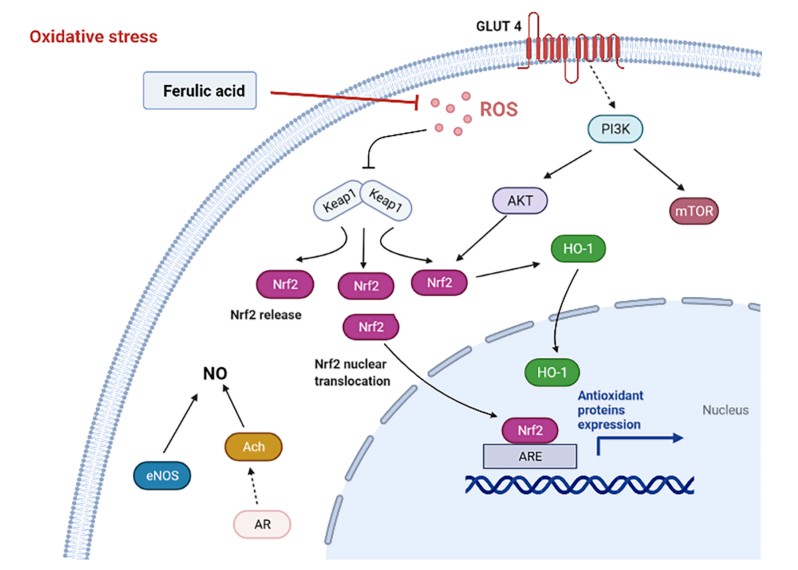 Figure 1. Molecular pathways involved in the antioxidant effect of FA.
(Source: Li, D. et al., 2021)
FA is a phenolic compound abundant in plants, fruits, vegetables, feedstuffs, and cereal grains. It was first isolated from Ferula foetida and chemically characterized in 1925. FA exists in two forms: cis-isomer, a yellow oily liquid, and trans-isomer, the most common form found in nature, appearing as a white crystal. It is soluble in water, ethyl acetate, ethanol, and ethyl ether, with a melting point of 168-171°C and a molar mass of 194.186 g/mol.
In plants, FA serves as a secondary metabolite synthesized in the shikimate/phenylpropanoid pathway, contributing to rigidity and protection. It is a vital component of the cell wall, where it exists in various forms: free, dimerized, and linked to lipids, carbohydrates, and lignin through ester and ether bonds.
FA can be extracted from natural sources in both free and bound forms. Free FA extraction necessitates the use of aqueous or organic solvents, such as methanol. On the other hand, bound FA requires alkaline or enzymatic hydrolysis treatments to break the covalent bonds between FA and other cell wall components. Depending on the extraction method and conditions employed (e.g., temperature, pH, and duration), different bioactive derivatives of FA can be released.
The pharmacokinetics of FA involve its absorption, distribution, metabolism, and elimination in the body. FA is rapidly absorbed after oral administration, and its absorption and distribution in rats were found to occur quickly based on low values of T1/2 (abs) (absorption half-life), T1/2 (α) (distribution half-life), and T1/2 (β) (elimination half-life).
Studies have shown that co-administration of FA with other substances, such as Honghua or clopidogrel, can significantly increase the bioavailability of FA. This results in higher AUC (area under the concentration-time curve), Cmax (maximum concentration), and Tmax (time to reach maximum concentration) of FA. Transdermal delivery of FA has also been explored, demonstrating controlled and sustained release of the compound, potentially improving its therapeutic efficacy.
The pharmacokinetics of FA can be influenced by factors like the solvents used in formulations. Different solvents have been shown to affect the pharmacokinetic parameters of FA, leading to variations in AUC and Cmax. Furthermore, the pharmacokinetics of FA can be impacted by the physiological state of the individual. For example, in rats with blood deficiency, the absorption of FA increased and its elimination slowed down, resulting in higher bioavailability and peak concentration.
These reasons can affect the pharmacokinetics of FA and affect its pharmacodynamic effects. Considering the complexity of pathophysiological processes and individual variations, optimizing FA administration in clinical practice should take into account disease characteristics, metabolic characteristics, and individualized dosing to maximize its therapeutic efficacy.
References
| Target | Cat. No. | Product Name | Host | Isotype | Application | |
| Ferulic acid | HMABPY075 | RHA™ anti-Ferulic acid monoclonal antibody, clone FA | Mouse | IgG | ELISA, LFIA | Inquiry |
| Cholesterol | CABT-Z305R | Rabbit Anti-Cholesterol Polyclonal Antibody | Rabbit | IgG | WB, ICC, IHC-P, IHC-F, ELISA | Inquiry |
| Enterobacterial | CABT-RM206 | Mouse Anti-Enterobacterial Monoclonal antibody, clone 3IP98 | Mouse | IgG2a | ELISA, LFIA | Inquiry |
| Target | Cat. No. | Product Name | Expression System | Tag/Conjugate | Application | |
| Ferulic acid | DAGA-069B | Ferulic Acid [BSA] | N/A | BSA | LFIA | Inquiry |
| DAGA-075K | Ferulic Acid [KLH] | N/A | KLH | Immunogen | Inquiry | |
| DAGA-057H | Ferulic Acid [HRP] | N/A | HRP | ELISA | Inquiry |
| Target | Cat. No. | Product Name | Size | Species Reactivity | Application | Detection Sample | |
| Ferulic acid | DEIANJ07 | Ferulic acid ELISA Kit | 96T | NA | Quantitative | Wheat | Inquiry |
| Cholesterol | IKJU-019CL | HDL and LDL/VLDL Cholesterol Assay kit (Colorimetric/Fluorometric) | quantitative | serum | Inquiry | ||
| DEIA-JY2150 | HDL and LDL/VLDL Cholesterol Assay Kit | 192T | N/A | Quantitative | Serum or plasma | Inquiry |
Loading ......
