
Inquiry Basket
 Loading ......
MIF (Macrophage migration inhibitory factor) is a highly conserved 12.5 kDa secretory protein which expressed in different cell types and tissues. As the multifaceted functions of MIF are being described in the pathogenesis of inflammatory, autoimmune diseases, cancer cell proliferation and metastasis, MIF has emerged as an attractive and promising therapeutic drug target in recent years.
MIF pro-inflammatory activity can be initiated by signaling through CD74 and CD44, resulting in the secretion of TNF-a, IL-1, IL-6, IL-8, and various MMPs. By binding to its cognate receptor CD74, MIF activates multiple signaling pathways such as Src, ERK, MAPK, Akt, and suppress p53-induced apoptosis. The interaction of MIF with non-cognate chemokine receptors CXCR2 and CXCR4 promotes chemotaxis that enables recruitment of monocytes/neutrophils and T cells. During an innate immune response, MIF has been shown to repress the inhibitory effects of glucocorticoids on macrophages and T cells, thus promoting host inflammation and immunity.

Fig. 1 Mode of action of MIF
a. MIF might mediate its biological activities either through a classical receptor-mediated pathway or through a non-classical endocytic pathway
b. The induction and regulation of inflammatory responses of innate immune cells by MIF
c. MIF counter-regulates the immunosuppressive effects of glucocorticoids at transcriptional and post-transcriptional levels.
MIF has important functions in pathogenesis, invasion and immune evasion of bacterial, parasitic and viral infections. Arjona found that blocking MIF action in mice either by antibody, small molecule antagonist, or gene deletion increased resistance to WNV lethality. Thus pharmacotherapeutic approaches targeting MIF may be useful in treating WNV encephalitis.
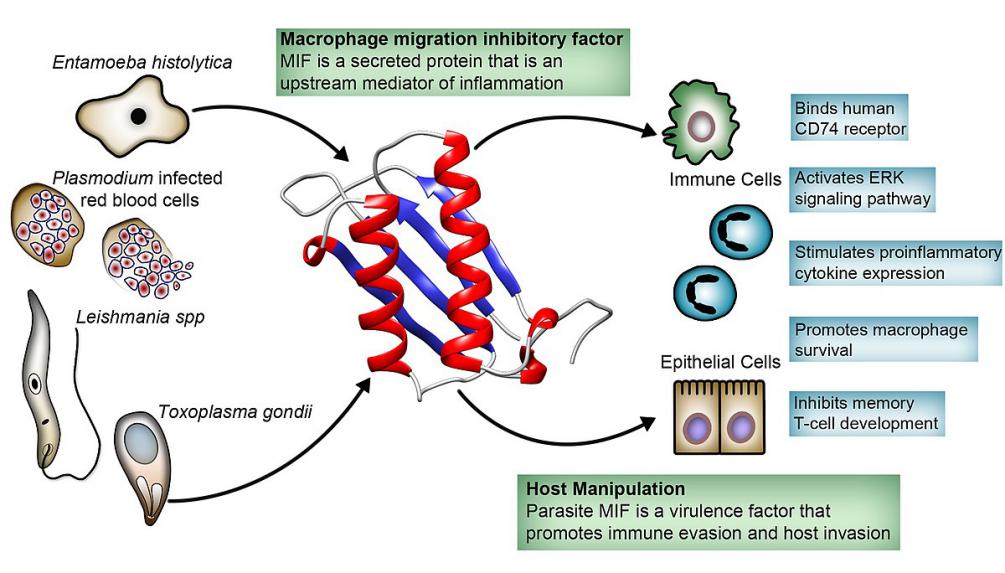 Fig. 2 Parasite-produced MIF cytokine in immune evasion, invasion, and pathogenesis
MIF is overexpressed and associated with increased invasiveness of many cancer types and the degree of MIF expression correlates with tumor aggressiveness. In hepatocellular carcinoma, a positive correlation was also identified between intratumoral MIF and plasma MIF, suggesting that high tumor-associated MIF expression may drive higher circulating levels of soluble MIF.
 Fig. 3 Known and putative effects of MIF on tumor-infiltrating immune cells
 Fig. 4 MIF biological activities which favour tumour pathogenesis
As a pleotropic inflammatory cytokine with upstream immunoregulatory roles, MIF is commonly associated with autoimmunity diseases. Experimental animal studies of MIF gene deletion and anti-MIF treatment in models of rheumatoid arthritis and systemic lupus erythematosus ameliorate disease activity. Besides, MIF protein levels also increased in the plasma of those with neurology diseases such as schizophrenia, mild cognitive impairment and Alzheimer's disease.
MIF directed pharmacologic therapeutics in development for treatment of human patients include small molecule inhibitors, monoclonal antibodies and nanobodies, and peptide inhibitors. Small molecule inhibitors like ebselen and p425 binding within the MIF tautomerase site negatively affect protein binding with CD74. Monoclonal antibodies including imalumab (anti-MIF) and milatuzumab (anti-CD74) have been evaluated in early phase clinical trials, with reports of efficacy in the treatment of SLE and cancer. Besides, the synthetic peptides MIF(aa 40–49) and MIF(aa 47–56) resemble the N-like loop of parent MIF responsible for secondary site binding to CXCR2 and compete for this binding site. Thus the development of peptide inhibitors as a third therapeutic class may expand the potential armamentarium of anti-MIF clinical therapeutics even further.
Creative Diagnostics developed a portfolio of MIF reagents for the research of MIF functions, disease pathogenesis, and potential treatment.
References
| Cat. No | Product Name | Application | |
| CABT-13969MH | Mouse Anti-Human MIF monoclonal antibody, clone 3B215E4 | WB, IHC, IP, ELISA | Inquiry |
| DCABH-802 | Mouse Anti-Human MIF monoclonal antibody, clone 5F5 | WB, ELISA, IHC-P | Inquiry |
| CABT-B9045 | Mouse Anti-Human MIF monoclonal antibody, clone N89761 | ELISA, WB | Inquiry |
| CABT-B9046 | Mouse Anti-Human MIF monoclonal antibody, clone N89762 | ELISA, WB | Inquiry |
| CABT-B9047 | Mouse Anti-Human MIF monoclonal antibody, clone 3BS4 | ELISA, WB | Inquiry |
| DCABH-6092 | Rabbit Anti-Human MIF monoclonal antibody, clone KN22-75 | WB, IP, FC | Inquiry |
| DMAB-JX2361769 | Rabbit Anti-Human MIF Monoclonal Antibody, Clone S13-2O8 | ELISA (Capture) | Inquiry |
| DMAB-JX2361770 | Rabbit Anti-Human MIF Monoclonal Antibody, Clone S18-2Y3 | ELISA (Detection) | Inquiry |
| DPABY-723 | Rabbit Anti-Human MIF polyclonal antibody | ELISA, ICC/IF, IHC-P, WB | Inquiry |
| ABPR-0568 | Human MIF ELISA Matched Antibody Pair | ELISA | Inquiry |
| Cat. No | Product Name | Expression System | Application | |
| CDBP1877 | Human MIF blocking peptide | HEK293 cells | Apuri, BL, ELISA | Inquiry |
| Cat. No | Product Name | Application | Detection Sample | |
| DEIA2806 | Human MIF ELISA Kit | Qualitative | Cell culture supernatants, Serum, Plasma, Urine | Inquiry |
| DEIA8068 | Human MIF ELISA Kit | Qualitative | Cell lysates, Serum, Plasma | Inquiry |
| DIA-XYA180 | Human MIF ELISA Kit | Quantitative | Cell lysates, Serum, Plasma | Inquiry |
Loading ......
