
Inquiry Basket
 Loading ......
Cytokines are small protein molecules that are released by immune cells in order to send signals to other cells, typically in response to a threat or activating event, such as an infection. Cytokines can be divided into several categories including interferons (having a role in defense and interfering with viral replication), colony-stimulating-factors (causing differentiation and proliferation of stem cells), interleukins (modulating the growth, differentiation, and activation of immune cells during inflammatory and immune responses), chemokines (having a chemoattractant activity), transforming growth factors(wound healing, angiogenesis, immunoregulation, and cancer), and tumor necrosis factors (cell survival, proliferation, differentiation, and death, pro-inflammatory cytokine). Two of the most important cytokine effector pathways are the JAK-STAT and NF-κB pathways. Cytokines act on their target cells by binding to specific membrane receptors. Signaling by cytokine receptors depends upon their association with the Janus kinases.
Cytokine storm (Cytokine Release Syndrome, CRS) is a harmful inflammatory disorder caused by an inflammatory response induced by an uncontrolled immune system. Many factors can trigger CRS, including various therapies, pathogen-induced triggers (e.g., bacterial sepsis, influenza virus, and COVID-19), autoimmune conditions (e.g., autoinflammatory disorders), monogenic disorders (e.g., primary or secondary hemophagocytic lymphohistiocytosis), and iatrogenic interventions (e.g., CAR T-cell therapy, blinatumomab, other T-cell-engaging immunotherapies, and gene therapies).
 Figure 1. Cytokine storm in the lung after influenza virus infection.
Cytokines offer multiple screening targets for drug discovery in autoimmune diseases and the development of molecules susceptible to regulating the activity and signaling potential of these key mediators is now central in inflammatory-related research. For instance, the inflammatory circuit of TNFα, IL-6, IL-23, and IL-17 plays a critical role in host defense and tissue repair, whereas the dysregulation of this inflammatory circuit leads to the development of autoimmune diseases such as psoriasis. Sustained production of type I IFN-α contributes to systemic autoimmune diseases in patients including systemic lupus erythematosus, myositis, systemic sclerosis, Sjögren's syndrome, and RA. In Rheumatoid arthritis, TNF-α and IL-1, as well as GM-CSF and IL-8, from activated macrophages increase the adhesion molecules expression on endothelial cells in synovial post-capillary venules.
 Figure 2. The inflammatory circuit of TNFα, IL-6, IL-23 and IL-17 in the pathogenesis of psoriasis
Cytokines have versatile roles in the cancer immunity cycle including effector T-cell infiltration in cancer sites, cancer cell death, etc. More importantly, cytokine-mediated signaling pathways control the direction of naïve CD4+ T cell differentiation and thus determine the effects of anticancer immunity showing as Figure 4. So far, G-CSF, GM-CSF, VEGF, IL-2, and IFN-γ are the five most studied cytokines in cancer research. Moreover, there is no evidence that inflammatory cytokines and chemokines, which can be produced by the tumor cells and/or tumor-associated leukocytes and platelets, may contribute directly to malignant progression. Examples are TNF, IL-1, and IL-6. Vascular endothelial growth factor (VEGF), and transforming growth factor-h, may facilitate the suppression of immune response to tumors. IL-10 is essential to suppress tumor-promoting inflammation mediators, thereby facilitating tumor growth and metastasis. Chemokines play a central role in leukocyte recruitment to sites of inflammation. Most tumors produce chemokines of the two major groups α (or CXC) and β.
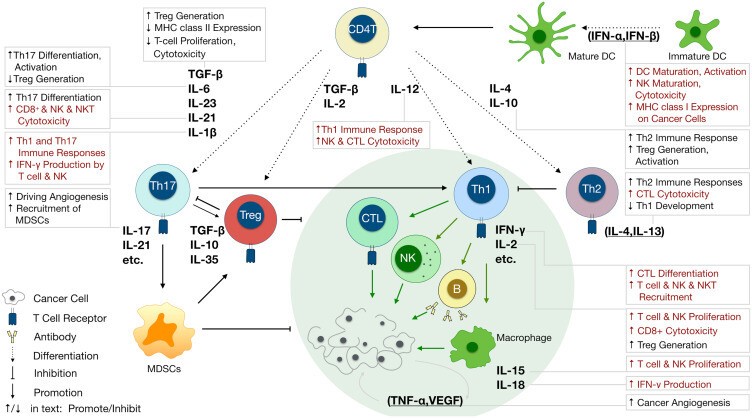 Figure 3. Varied roles of cytokines involved in anticancer immunity
Neutralizing inflammatory cytokines or antagonizing their receptor function is considered a useful therapeutic strategy to treat autoimmune diseases. Tumor Necrosis Factor alpha (TNF-α) is a potent pro-inflammatory cytokine. An excess of TNFα signaling activity can lead to a number of autoimmune diseases. The monoclonal anti-TNF antibodies have been used for patients suffering from diseases like inflammatory bowel diseases, rheumatoid arthritis, spondyloarthritis, or psoriasis. Currently, there are four TNFα monoclonal antibodies licensed for clinical use including Adalimumab, Infliximab, Certolizumab, and Golimumab. IL-6 activates both the STAT3 and SHP2/Gab/MAPK signaling pathways via the gp130 signal transducer. Enhanced STAT3 activation via IL-6 may contribute to autoimmune encephalomyelitis (EAE), collagen-induced arthritis (CIA), RA, IBD, and psoriasis. Multiple neutralizing antibodies targeting IL-6 and its receptor have been developed, such as tocilizumab has been approved, in combination with methotrexate, to treat RA, and siltuximab has been approved for multi-center trials of Castleman's disease treatment. Sirukumab, olokizumab, and sarilumab are under Phase-II or -III study in patients with RA. Moreover, cytokine therapy to activate the immune system of cancer patients has been an important treatment modality. IFNα has been approved in the US as a treatment for hairy cell leukemia, melanoma, follicular lymphoma, and AIDS-related Kaposi's sarcoma. Currently, many new strategies are being tested to reduce the toxicities associated with its use. These include combining IFNα with cell-based therapies, cancer vaccines, and checkpoint inhibitors. Treatment with high doses of IL-2 (Proleukin) is currently approved for use in advanced kidney cancer and melanoma. In addition to being used as a direct therapy, IL-2 is also used to grow and activate anti-cancer T cells that have been taken from a cancer patient's blood or tumor for use as a T cell therapy. Other members of the IL-2 cytokine family (IL-15, IL-21, and IL-7) are also being actively tested as both monotherapies and combination therapies with vaccines, cytolytic viruses, and adoptive cell therapy.
 Figure 4. Cancer treated with IL-12
The ability to diagnose Tb using IL-6, TNF-α and IFN-γ in pleural was reported. Patients with Tb pleural effusions are known to have significantly higher pleural effusion cytokine levels than non-Tb patients. IL-1β, IL-7, IL-12, IL-1RA, RANTES/CCL5, MIP1β/CCL4, and IP10/CXCL10 could discriminate children with sepsis from clinical malaria and other febrile conditions. IL-1β and TNF-α may be considered markers of hypothyroidism. Significantly higher concentrations of IL-1β in children with hypothyroidism may be used to distinguish children with cAIT from GD patients. Elevated levels of cytokines (IL-1β, TNF-α, IFN-γ, and IL-10) are demonstrated in patients compared with controls, involved in SLE pathogenesis. Patients with long-lasting RA have a higher percentage of T lymphocytes and their subpopulations expressing activation markers (CD4+CD69+, CD4+CD25+, and CD4+HLA-DR+) than healthy individuals. IL-6 and IL-10 are found to be predictive of disease severity within COVID-19 patients. In patients with COVID, Plasma and/or bronchoalveolar levels of IL-6 have been identified as early biomarkers of lung injury and predictive factors of prolonged mechanical ventilation, organ dysfunctions, morbidity, and mortality in lung diseases. In the early stage of Huntington's disease (HD), of microglia-derived inflammatory markers IL-6, matrix metallopeptidase 9, vascular endothelial growth factor (VEGF), and TGF-β1 levels were significantly increased, while IL-18 level was significantly reduced.
Aside from infections and diseases with inflammatory indications, cytokines may also be useful in assessing prognoses of inherited and often chronic conditions, including Alzheimer's Disease, neurological outcomes following cardiac arrest (causing prolonged hypoxia), cancer, lupus nephritis, and lymphohistiocytosis.
Creative Diagnostics offers a plethora of chemokine and cytokine antibodies with different formats from antibodies, antibody pair sets, humanized antibodies, and functional grade antibodies (ow endotoxin azide free) to boost your research and assay development. Various host species can be chosen from, including human, mouse, rat, sheep, bovine, and chicken. All of antibody products are well-validated with abundant quality control data in comprehensive applications.
Loading ......
