

Inquiry Basket
 Loading ......
Lysosomal escape nanocarriers function as engineered delivery systems which break down the lysosomal membrane through physical or chemical processes after cellular endocytosis to release small molecule drugs into the cytoplasm where they avoid degradation by lysosomal enzymes.
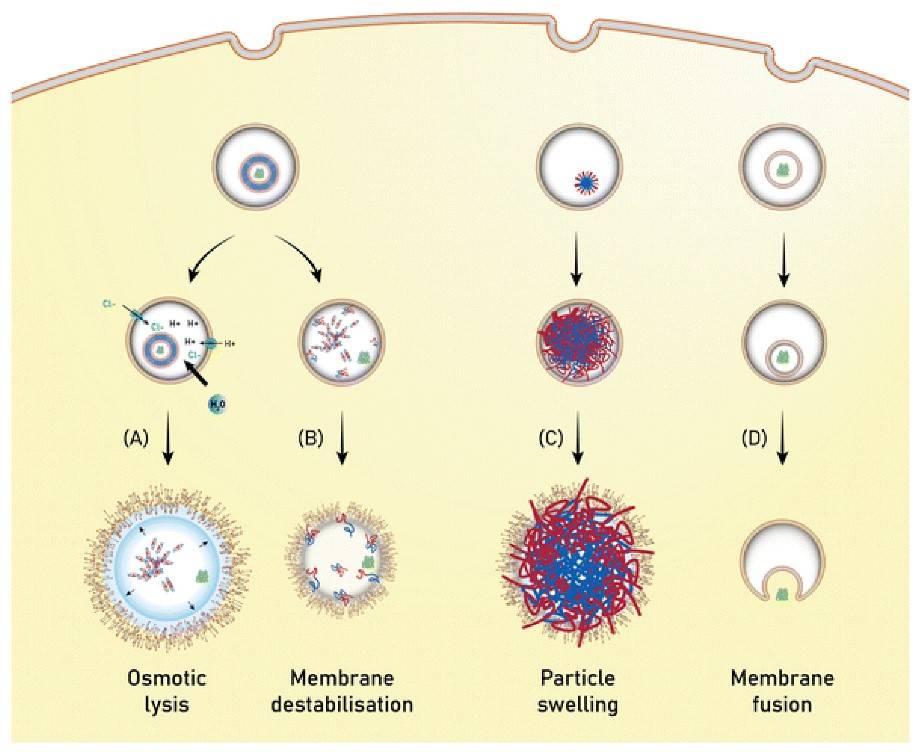 Figure 1. Endosomal escape mechanism mediated by nanovesicle system. (Sources: Desai N, et al. 2024)
Characteristics of small molecule drugs:
The value of lysosomal escape:
Material Selection and Functionalization
Responsive Design
Pathway Optimization
Performance Comparison with Traditional Carriers
| Parameter | Traditional Nanocarriers | Lysosomal Escape Carrier |
| Drug stability | Easily degraded by lysosomes, low bioavailability | The drug integrity is high after escape, and the efficacy is improved |
| Targeting | Depends on the EPR effect, non-specific accumulation | Enzyme/light responsiveness can be designed to achieve cell-specific release |
| Gene editing efficiency | Low transfection efficiency (<1%) | Proton sponge effect vector transfection efficiency reaches 97% |
| Toxicity | Some materials (such as PEI) are cytotoxic | Reducing toxicity through modification (e.g. polyzwitterion modification) |
| Clinical Application | Mainly liposome drugs, limited indications | Expanding to cancer, gene editing, metabolic diseases |
Lysosomal escape nanocarriers have significantly improved the intracellular delivery efficiency and therapeutic effect of small molecule drugs through innovative material and mechanism design. In the future, it is necessary to focus on efficiency-safety balance, multimodal responsiveness design and clinical transformation research to promote its widespread application in precision medicine.
Lysosomal escape nanocarriers are engineered delivery systems. After being endocytosed by cells, they can destroy the lysosomal membrane structure physically or chemically. This allows the loaded small - molecule drugs to escape into the cytoplasm and avoid degradation by lysosomal enzymes.
Small - molecule drugs face physicochemical limitations because of their low solubility, rapid metabolism, and inconsistent permeability through membranes. Traditional drug preparations depend on passive diffusion which leads to poor targeting and degradation by lysosomal enzymes thereby reducing bioavailability. Drug stability is increased through lysosomal escape which prevents degradation by acidic conditions and hydrolases while delivering drugs more effectively inside cells for improved therapeutic results.
The challenges include low escape efficiency (generally less than 1%), cytotoxicity of polycationic materials, the need for more in - vivo research for clinical transformation, and the lack of intelligent design. Future directions involve developing multi - mechanism synergistic strategies, optimizing safety through structural modification, strengthening in - vivo research, and using artificial intelligence to predict the material - mechanism - efficacy relationship.
References
Loading ......
