
Inquiry Basket
 Loading ......
Prostaglandin (PG) is a physiologically active lipid compound with various hormone-like effects, consisting of 20 carbon atoms and synthesized from arachidonic acid (AA) by metabolism by cyclooxygenase. Prostaglandins belong to the eicosatrienoic acid group, which together with thromboxanes are known as prostaglandin-like lipids, sharing the same carbon skeleton. The carbon atoms C8-C12 of prostaglandins form a cyclopentane ring, and the carbons C1-C7 and C12-C20 form two parallel aliphatic chains called R1 and R2, respectively. There are no glands in the body that specifically produce prostaglandins, instead, different types of cells act as autocrine and paracrine messengers to produce prostaglandins. The half-life of PGs is very short, only 1 to 2 minutes. PGs are regarded as "local hormones" because most PGs act locally in tissues in a paracrine and autocrine manner and do not enter the circulation, except for prostacyclin, which is synthesized by vascular endothelial cells and enters the circulation. More than 20 kinds of natural prostaglandins have been discovered at present, and more than 2,000 kinds of prostaglandin analogs have been synthesized, and they have the advantages of high activity, long duration of action, and few side effects. Different prostaglandins have been used clinically to induce labor, treat diseases such as hypertension, peptic ulcer, glaucoma, asthma, lung cancer and thrombosis.
Prostaglandins (PGs) are derived from AA oxidation, a process catalyzed by cyclooxygenase (COX) or prostaglandin H synthase. In humans, there are two isoforms of COX, COX1 and COX2. Although COX1 and COX2 are encoded by different chromosomes, they share 60% of the amino acid sequence and have similar three-dimensional structures. COX1 is a cell-intrinsic enzyme that is constitutively expressed in most cells and is the main source of synthesized prostaglandins, responsible for the maintenance of basic physiological functions, and its expression is not induced by factors such as hormones or infections. COX2, on the other hand, is an inducible enzyme, usually induced by pro-inflammatory cytokines, pro-cancer agents and other factors, and is an important source for the production of prostaglandins, which are closely related to inflammation and tumorigenesis. During prostaglandin synthesis, AA first generates the precursor molecule prostaglandin H2 (PGH2) in the presence of COX, and then PGH2 is converted to the corresponding different types of prostaglandins by various prostaglandin synthases, including prostaglandin D2 (PGD2), prostaglandin E2 (PGE2), prostaglandin F2α (PGF2α), prostaglandin I2 (PGI2).
PGs are synthesized and rapidly transported into the extracellular microenvironment by prostaglandin transporter (PGT), a protein belonging to the superfamily of 12 transmembrane anion transport polypeptides. PGs in the microenvironment bind and activate G-protein coupled receptors to affect downstream pathways before being oxidized and inactivated by the enzyme 15-hydroxyprostaglandin dehydrogenase (15-PGDH). Prostaglandin catabolism takes a very short time, usually only a few seconds, so it cannot enter the systemic circulation, and the final product is excreted through urine.
 Figure 1. Synthesis pathways of prostaglandins and drug targeting strategies
(Source: Jiang X, et al. 2021)
Prostaglandins mediate a variety of physiological functions, such as inflammation, tissue homeostasis, the female reproductive cycle, vasodilation and so on. In addition, PG is also related to tumor progression. Most of the actions of prostaglandins are mediated by binding to different G protein-coupled receptors. Each prostaglandin has at least one different receptor, such as PGD2 receptors (DP1 and DP2), PGE2 receptors (EP1, EP2, EP3, and EP4), PGF2α receptors (FP), and PGI2 receptors (IP). These receptors can be divided into different categories based on their ligand specificity. IP, DP1, EP2, and EP4 receptors mediate the increase of cAMP, which are referred to as "relaxing receptors," whereas FP and EP1 receptors associated with G protein heterotrimers (Gq) can induce calcium mobilization, which is called "contractile receptors". In addition, the FP receptor may be associated with RHO (RAS homologous GTPase protein) through the Gq-independent pathway, which binds to small Gs proteins that can stimulate G proteins in cAMP-dependent pathway by activating adenylate cyclase. DP2 receptors are thought to be members of the "chemotactic receptor" subgroup. It is associated with inhibitory Gi proteins, inhibits cAMP synthesis and increases intracellular Ca2+ concentration. EP3 receptors bind to Gi or G12, resulting in decreased intracellular cAMP levels, increased Ca2+ concentration, and activation of RHO proteins associated with the small G protein family.
Table 1. Summary of PG general functions
| Biological System | PG Mediator | Physiological Effect |
| Digestive system | PGE2, PGI2 | Reduction of acid secretion; Increase of mucous secretion |
| PGE2 | Longitudinal smooth muscle contraction; Circulatory smooth muscle contraction | |
| Respiratory system | PGI2, PGE2 | Bronchodilator |
| PGH2, PGF2α | Bronchoconstriction | |
| Cardiovascular system | PGE2, PGI2 | Arterial vasodilation |
| PGF2α | Inhibition of platelet adhesion and leukocyte aggregation | |
| Renal system | PGI2, PGE2 | Medullary blood flow, pressure diuresis |
| PGI2, PGE2 | Renin release | |
| PGE2 | Natriuresis, diuresis | |
| Immune system | PGE2, PGI2 | Inhibition of proliferation and activation of T and B lymphocytes |
| Central nervous system | PGE2 | Inflammation |
| PGD2, PGI2 | Induction of sleep | |
| Female reproductive system | PGE2, PGI2, PGF2α | Ovulation, implantation, endometrial contraction, and synergism with oxytocin |
| Male reproductive system | PGE1, PGE2, PGE3, PGF2α | Fertility |
(Source: Jara-Gutiérrez Á, et al. 2021)
Some substances, known as prostaglandin inhibitors, can prevent PG formation by inhibiting COX1/2, and they interact with specific amino acids of the enzyme to achieve an inhibitory effect. For example, ASA irreversibly binds to the serine-530 residue of the substrate entry channel, preventing arachidonic acid from entering the active site of COX1/2 and leading to irreversible inactivation. Some drugs, such as ibuprofen and naloxone, competitively inhibit arachidonic acid and are more specific for COX2. The carboxyl group of indomethacin can electrostatically interact with the arginine-120 residue of the COX channel thereby inhibiting COX1/2 in time-dependent manner. According to the different structure of two kinds of COX, for example, there are two valine amino acids in COX2 and isoleucine in COX1, some inhibitors such as etoricoxib, nimesulide can act selectively on COX2, thus avoiding the occurrence of the typical gastrointestinal and renal side effects caused by inhibition of COX-1.
In general, the PG signaling pathway promotes tumorigenesis by mediating cell proliferation, growth, apoptosis, invasion, migration, metastasis, and angiogenesis. However, the higher concentration of PGD2, the more it hinders tumor progression, both primary and metastatic, and the rate of apoptosis of cancer cells increases. However, this prostaglandin is usually in low concentration and does not prevent tumor progression. Therefore, PGD2 can be regarded as a protective factor for cancer and a marker of good prognosis. PGE2 and PGF2α are associated with increased tumor progression and invasiveness, as well as decreased immune system function, and high-level PGE2 is a risk factor to be considered in tumorigenesis and development. There is some controversy over PGI2 and PGJ2, because some studies have shown that they are related to the stagnation of cancer development, but other studies have pointed out that they may be the inducing factors of tumorigenesis, so further research is needed to clarify conflicting data.
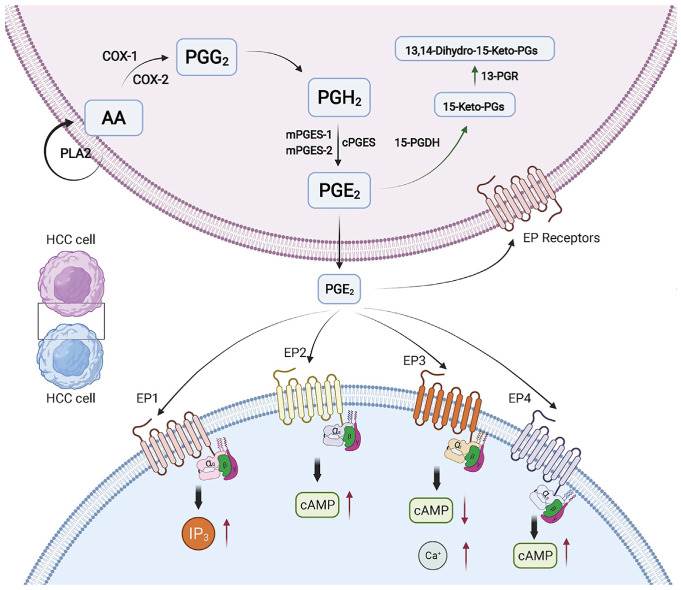 Figure 2. The biosynthesis and function of PGE2 in HCC
(Source: Chen C, et al. 2022)
References
| Target | Cat. No. | Product Name | Size | Species Reactivity | Application | Detection Sample | |
| Prostaglandin | DEIANS045 | Mouse PGE2(Prostaglandin E2) ELISA Kit | 96T | Mouse | Quantitative | Serum, plasma, tissue homogenates and other biological fluids. | Inquiry |
| DEIA6234 | 13,14-dihydro-15-keto Prostaglandin F2α ELISA Kit | 96T | Quantitative | Plasma, other sample matrices | Inquiry | ||
| DEIA6497 | Urinary Prostacyclin ELISA Kit | 96T | Quantitative | Urine | Inquiry | ||
| DEIA4110 | PGF2α(Prostaglandin F2 Alpha) ELISA Kit | 96T | Universal | Quantitative | Serum, plasma, tissue homogenates and other biological fluids | Inquiry | |
| DEIA5079 | 17-phenyl trinor Prostaglandin F2α EIA Kit | 96T | Quantitative | Aqueous humor, human tear samples | Inquiry | ||
| DEIA4977 | Prostaglandin E2 ELISA Kit | 96T, 480T | Quantitative | Urine, plasma, tissues culture media | Inquiry | ||
| DEIA4993 | Prostaglandin Screening ELISA Kit | 96T, 480T | Quantitative | Culture medium | Inquiry | ||
| DEIA5002 | Prostaglandin F2α ELISA Kit | 96T, 480T | Quantitative | Serum, plasma, urine, cell culture supernatants | Inquiry | ||
| DEIA2192 | Human PGE2(Prostaglandin E2) ELISA Kit | 96T | Human | Quantitative | Serum, plasma, tissue homogenates, other biological fluids | Inquiry | |
| DEIA10312 | Prostaglandin F2 alpha (17-Phenyl-trinor) ELISA Kit | 96T | Quantitative | Plasma, serum, whole blood, CSF, tear samples | Inquiry | ||
| DEIA-NS2303-1 | PGE1(Prostaglandin E1) ELISA Kit | 96T | Universal | Quantitative | Serum, plasma, cell culture supernatant and other biological samples | Inquiry |
| Target | Cat. No. | Product Name | Expression System | Tag/Conjugate | Application | |
| Prostaglandin | DAG067S | Prostaglandin [KLH] | N/A | KLH | ELISA, LF | Inquiry |
| DAG068S | Prostaglandin [HRP] | N/A | HRP | ELISA, LF | Inquiry | |
| DAG-WT1894B | Prostaglandin [BSA] | N/A | BSA | ELISA, LFIA | Inquiry |
| Target | Cat. No. | Product Name | Host | Isotype | Application | |
| Prostaglandin | CABT-L2520 | Mouse Anti-Prostaglandin monoclonal antibody, clone PG | Mouse | IgG | ELISA, LFIA | Inquiry |
| DPATB-H81011 | Anti-8 iso Prostaglandin F2 alpha polyclonal antibody | Rabbit | IgG | IHC-Fr, ELISA, RIA | Inquiry | |
| DPATB-H81920 | Anti-Prostaglandin E1 polyclonal antibody | Rabbit | IgG | ELISA | Inquiry | |
| DPATB-H82964 | Anti-Prostaglandin E2 polyclonal antibody | Rabbit | IgG | ELISA, IHC-P | Inquiry | |
| DPAB-DC4626 | Anti-PGF1-alpha polyclonal antibody | Rabbit | IgG | ELISA, RIA | Inquiry | |
| DPAB-DC4627 | Anti-PGF2-alpha polyclonal antibody | Sheep | RIA | Inquiry | ||
| DPABH-29498 | Anti-Prostaglandin E2 polyclonal antibody | Rabbit | IgG | RIA, ELISA | Inquiry |
Loading ......
