
Inquiry Basket
 Loading ......
Immunoglobulin refers to a class of globulins with antibody activity or a chemical structure similar to antibodies, which play a crucial role in the immune system's defense against pathogens and foreign substances. They are produced by B cells and are highly specific at recognizing and neutralizing antigens. Immunoglobulins include secretory and membrane types: the former mainly exist in blood and interstitial fluid, and have various functions of antibodies; the latter are expressed on the surface of B cell membranes as antigen recognition receptors, called membrane immunoglobulins (mIg). The chemical basis of all antibodies is immunoglobulin, but not all immunoglobulins have antibody activity.
X-ray crystal diffraction structure analysis shows that the basic structure of various immunoglobulins (i.e., immunoglobulin monomers) consists of two identical heavy chains (H chain) and two identical light chains (L chain) connected by interchain disulfide bonds, presenting a "Y" shaped tetrapeptide chain molecule. The amino acid composition of the two H chains and the two L chains in a native Ig molecule is identical.
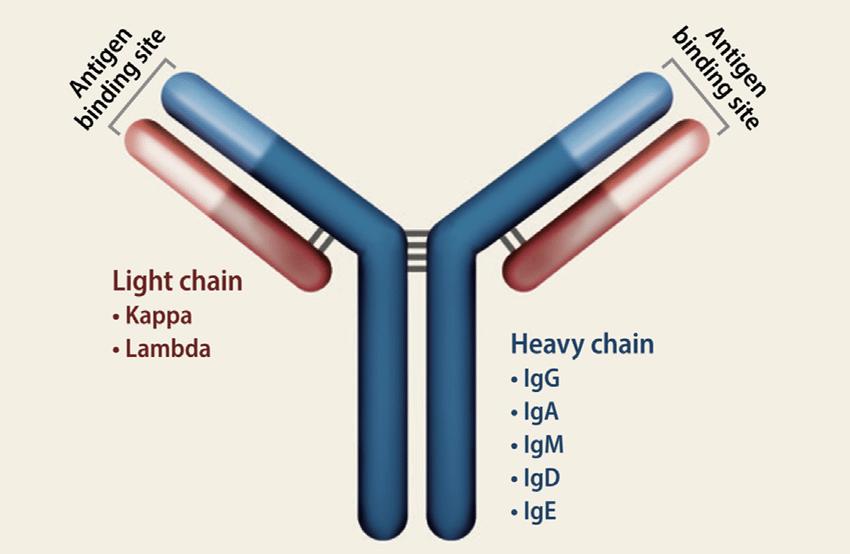 Fig. 1 Structure of a normal immunoglobulin (Ig) molecule. (Batko K, et al., 2019)
The relative molecular mass of the immunoglobulin heavy chain is 50,000-75,000 and consists of 450-550 amino acid residues. According to the difference in structure and antigenicity of the heavy chain, it can be divided into 5 classes: μ chain, γ chain, α chain, δ chain, and ε chain. Immunoglobulins composed of different heavy chains and light chains are called IgM, IgG, IgA, IgD, and IgE. The amino acid composition of the hinge region of the same class of Ig and the number and position of disulfide bonds in the heavy chain are also different. Based on this, the same class of Ig can be divided into different subclasses. For example, human IgG can be divided into four subclasses: IgG1, IgG2, IgG3, and IgG4; IgA can be divided into IgA1 and IgA2. IgM, IgD, and IgE have no subclasses identified.
Immunoglobulin light chains consist of 211-219 amino acid residues. According to the structure and antigenicity of the light chain, it is divided into κ chain and λ chain, and accordingly, Ig can be divided into two types, namely κ type and λ type.
Immunoglobulins are classified into five primary isotypes. Each isotype is associated with a distinct type of heavy chain and exhibits different biological properties.
IgG is the most abundant immunoglobulin in the bloodstream, accounting for approximately 75% of the total immunoglobulin pool in humans. It is composed of two heavy chains (γ-chains) and two light chains. IgG plays a crucial role in long-term protection against pathogens through opsonization, neutralization, and complement activation. It can cross the placental barrier, providing passive immunity to the developing fetus.
IgM is the first immunoglobulin produced during an immune response. It is a pentameric molecule consisting of five monomeric units, each with two heavy chains (μ-chains) and two light chains. IgM is highly efficient in agglutination and complement activation, making it effective in clearing pathogens during the early stages of infection. It also serves as an antigen receptor on the surface of B cells.
IgA is primarily found in mucosal secretions, such as saliva, tears, and breast milk, as well as in the bloodstream. It exists in two forms: monomeric IgA (mIgA) and dimeric IgA (dIgA). IgA plays a critical role in mucosal immunity by preventing the attachment of pathogens to mucosal surfaces. It is composed of two heavy chains (α-chains) and two light chains.
IgE is involved in allergic reactions and defense against parasitic infections. It is present in low concentrations in the bloodstream. IgE binds to specific receptors on mast cells and basophils, triggering the release of inflammatory mediators in response to allergens or parasites. IgE consists of two heavy chains (ε-chains) and two light chains.
IgD is primarily found on the surface of mature B cells, alongside IgM. Its exact function is not fully understood, but it is believed to play a role in the activation and differentiation of B cells. IgD contains two heavy chains (δ-chains) and two light chains.
In conclusion, immunoglobulins are a diverse group of proteins that play critical roles in immune defense. Understanding the types, classes, and subclasses of immunoglobulins provides valuable insights into the immune response and has significant implications for research, diagnostics, and therapeutic development. Creative Diagnostics offers a wide range of high-quality antibodies and reagents for studying immunoglobulins, accelerating their application in fields such as biochemical diagnosis, detection reagents, new biological drugs, and medicine.
References
Loading ......
