
Inquiry Basket
 Loading ......
Glicentin is a 69 amino acid proglucagon-derived peptide(PGDP) mainly produced in the L-intestinal cells. Experimental and clinical studies have highlighted its role in both intestinal physiology and glucose metabolism, pointing to its potential interest in a wide range of pathological states including gastrointestinal and metabolic disorders. However, due to its structure presenting many similarities with the other proglucagon-derived peptides, its measurement is technically challenging.
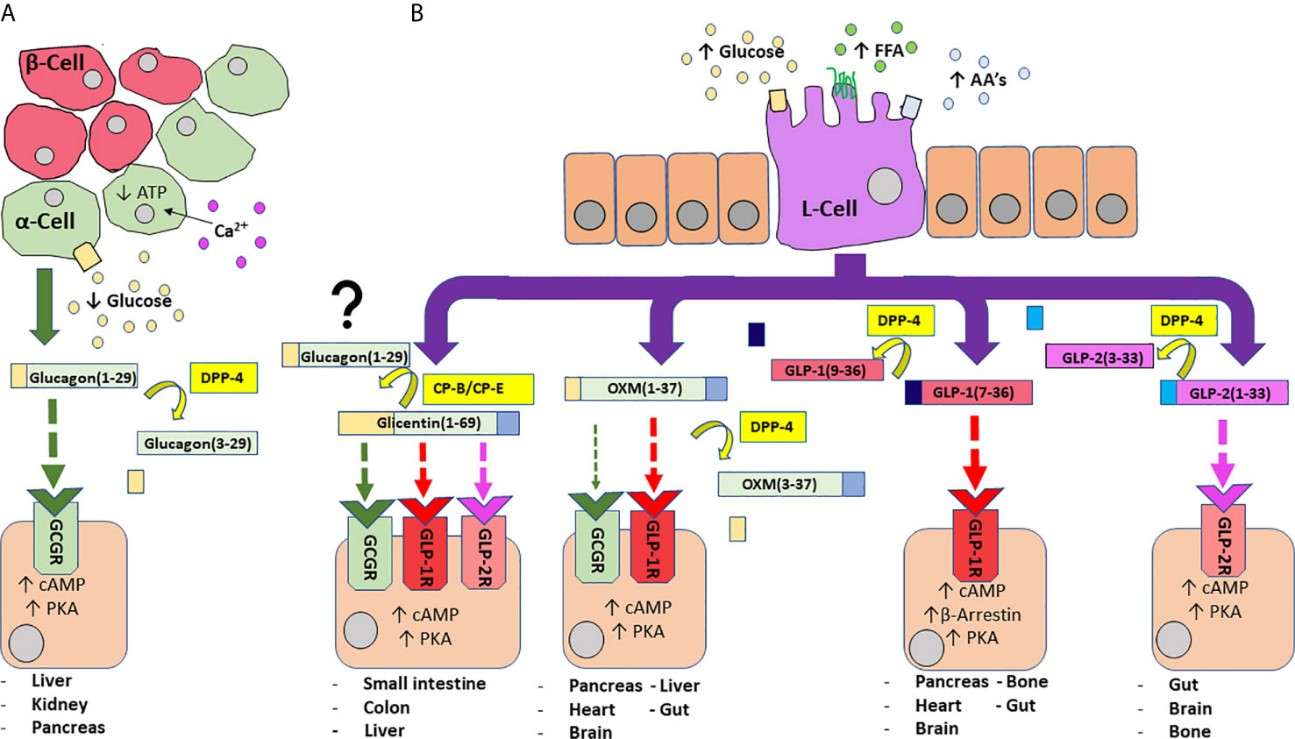 Fig. 1: An overview of PGDP actions and secretion from pancreatic alpha-cells and enteroendocrine L-cells
Glicentin is associated with various biological actions such as insulin secretion stimulation, inhibition of gastric acid secretion, regulation of gut motility, stimulation of intestinal growth, and inhibit the invasion of enteric bacteria.
First, several studies in rat model have highlighted the trophic role of glicentin on intestinal mucosa. An increase of several parameters of mucosal growth, including weight, protein and DNA content, alkaline phosphatase and ornithine decarboxylase activities have been reported in the jejunum after glicentin subcutaneous injection. In vitro studies confirmed the proliferative action of glicentin on epithelial cell line IEC-6. In addition, a decrease of crypt fission in the ileum after glicentin administration was observed. It pinpoints the potential role of glicentin in intestinal mucosa remodeling. In addition to its trophic effect on intestinal mucosa, glicentin may also act as a barrier-sustaining agent. The effect of recombinant human glicentin on bacterial internalization by confluent INT407 enterocytes cell lines using Salmonella enteritidis, Escherichia coli and Enterococcus faecalis was determined. A lower bacterial internalization through the glicentin-treated enterocytes was observed compared to the non-treated cells. Glicentin can also stimulate the digestive tract smooth muscle contraction, an effect which may involve GLP-1 receptor. Using human gastric biopsies, it has been revealed that glicentin mRNA expression was associated with the existence of histological intestinal metaplasia and positively correlated with Helicobacter infection. Given its biological function, glicentin also shows potential role in the context of digestive oncology.
An early study fund that glicentin can stimulate the release of glucose from rat hepatocytes, with a stimulation of cAMP production, an effect comparable to what observed after incubation with glucagon. Several relatively more recent in vivo studies in dogs demonstrated that administration of glicentin led to an increase of plasma insulin and a decrease of glucagon. Hence, similarly to GLP-1 and oxyntomodulin, glicentin has an insulinotropic action, exerting an incretin-like effect, and has the potentialas marker and/or player of metabolic diseases such as diabetes or obesity.
Glicentin has a role in glucose metabolism and intestinal physiology, and may be useful for diagnosing and treating metabolic disorders, and may be useful in the following ways:
it was recently demonstrated that postprandial response of glicentin, but not of any other proglucagon peptide, is impaired in early stages of NAFLD, which suggests that glicentin may be useful for the noninvasive diagnosis of the disease.
Glicentin, due to its longer half-life, may be able to serve as a more reliable marker of L-cell function compared to GLP-1. In that case, its diagnostic or prognostic value should be further tested in obesity and its comorbidities. For example, its levels after bariatric surgery could be used to identify patients who will eventually have a more robust response vs those that will need more intense postoperative care to achieve sufficient weight loss or could predict other metabolic outcomes in the long term.
References
| Cat. No. | Product Name | Applicaiton | |
| DPABB-JX299 | Rabbit Anti-Porcine Glicentin/Glucagon polyclonal antibody | IHC | Inquiry |
| DPABB-JX300 | Rabbit Anti-Rat Glicentin (1-32) polyclonal antibody | ELISA, IHC | Inquiry |
| DPABB-JX301 | Rabbit Anti-Human Glicentin-Related Polypeptide (21-50) polyclonal antibody | IA | Inquiry |
| DPABB-JX301-B | Rabbit Anti-Human Glicentin-Related Polypeptide (21-50) polyclonal antibody [Biotin] | IA | Inquiry |
| DPABB-JX301-C3 | Rabbit Anti-Human Glicentin-Related Polypeptide (21-50) polyclonal antibody [Cy3] | IA | Inquiry |
| DPABB-JX301-C5 | Rabbit Anti-Human Glicentin-Related Polypeptide (21-50) polyclonal antibody [Cy5] | IA | Inquiry |
| DPABB-JX301-F | Rabbit Anti-Human Glicentin-Related Polypeptide (21-50) polyclonal antibody [FITC] | IA | Inquiry |
Loading ......
