
Inquiry Basket
 Loading ......
Endorphins are endogenous opioid peptides, organic, mammals-made opioids. Endorphins can trigger μ-opioid receptors (MOR) that regulate mood and the body. There are four endorphins: α, β, γ, and δ, and there are α-endorphins, β-endorphins, γ-endorphins, enkephalins, and dynorphins. These are peptide compounds that are very morphine-like and can help you get rid of pain and feel good. MOR is extremely responsive to enkephalins and β-endorphins, and endogenous peptides, opioid receptors and endorphin neurons make up the endorphin system. Endorphin/MOR systems are associated with mental illness and neurodegenerative diseases; endorphin/MOR circuits are also involved in mood, memory, behaviour, psychiatric symptoms and pain regulation.
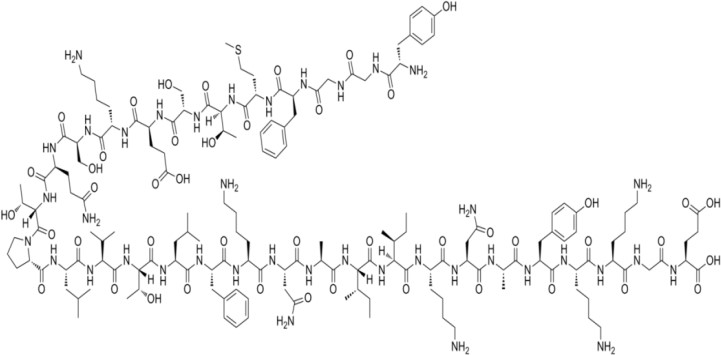 Figure 1. Structure of β-endorphins
(Source: Jain A, et al. 2019)
Drug addiction can induce functional connectivity disruptions in neural circuits related to reward pleasure, learning and memory, inhibitory control, and behavioral motivation. This shift from early drug use to compulsive abuse points to a dysregulation of executive functioning in the prefrontal cortex, down its descendant branches to the hippocampus and amygdala. One of the theories of addiction has been to think of addiction in terms of neural circuits, and logically split up the brain regions in addiction into reward pleasure, learning and memory, inhibitory control, and motivational behaviour. Among these, abnormal activation of the reward circuit can lead to damage in the memory circuit, which in turn reinforces the abnormalities in the reward circuit. With repeated drug abuse, conditioned responses become established, making the addiction memory triggered by drugs further enhance the motivation to use drugs through associative learning. Additionally, the altered reward circuit changes the functional activity of the prefrontal cortex, resulting in impaired emotional information processing and cognitive control, while increasing drug-seeking impulses, leading to reckless drug-seeking behaviors and motivations. After drug withdrawal, interactions between the prefrontal cortex and amygdala can reactivate addiction memories in withdrawal contexts, resulting in a vicious cycle of relapse.
As a natural brain reward substance, endorphins can produce euphoria similar to that of drugs. They mediate drug addiction by participating in the reward circuits involved in the generation of pleasure, the formation of emotional memories, and the regulation of inhibition and motivation. Endorphins serve as a common mediating factor in drug addiction. In addition, endorphins can be enhanced through exercise, with both central and peripheral endorphin levels increased significantly and temporarily during exercise.
We commonly employ the conditioned place preference (CPP) model to judge the gratifying properties of drugs that are taken illegally. In one cocaine-dependent mouse model, β-endorphin injected into the lateral ventricle dramatically increases the mice's activity and triggers a high CPP response; naloxone blocks the β-endorphin-mediated boost. This indicates that endorphins are key substances in mediating the rewarding effects of drugs. Additionally, endorphins can mediate drug reward and reinforcement effects through interactions with multiple systems, including dopamine (DA) and endogenous cannabinoids. Several studies have demonstrated a positive correlation between β-endorphin-induced drug reinforcement and increased DA release. The cannabinoid receptor CB1 can form heterodimers with MOR, resulting in a synergistic effect that jointly inhibits the release of γ-aminobutyric acid (GABA), thereby enhancing the rewarding effects.
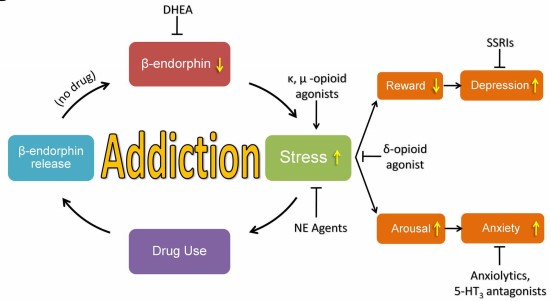 Figure 2. A flow chart summarizing the role of stress and mood states in addiction
(Source: Yadid G, et al. 2012)
Endogenous enkephalins can act as a mediator in physiological forgetting and work in concert with dopamine, norepinephrine and adrenocorticotropic hormone to modulate memories' acquiring, consolidation and retrieval. Enkephalin neurons also deliver messages to the prefrontal cortex, hippocampus and amygdala, all part of the midbrain limbic DA reward system, involved in the cognitive control of drug addiction. It is the progenitor cells of the hippocampus, for instance, which are involved in learning and memory that are flooded with opioid receptors. The more β-endorphin or MOR activation we induce, the more these hippocampal precursor cells can multiply. On the other hand, a block on these receptors stops the growth of hippocampal precursor cells.
The physiological (physical) and psychological (mental) withdrawal symptoms that occur during drug withdrawal are the primary reasons for the motivation to relapse. Endorphins, particularly β-endorphin, mediate these withdrawal symptoms. For example, during the early stages of heroin withdrawal, β-endorphin levels decrease and can remain low for at least one month, with the desire to use drugs and anxiety levels negatively correlated with β-endorphin levels. Additionally, MOR is an important regulatory mediator in various forms of drug addiction. Prolonged drug abuse can lead to tolerance of opioid receptors, altering their density and activity, and disrupting the functional integrity of the midbrain limbic DA reward system. Therefore, low-dose drug use may be insufficient to please the reward system of the body, producing a cascade of physical and psychological withdrawal symptoms that are sufficient to make the drug-taking addictive.
Exercise-induced stress can trigger a prolonged release of endorphins in many sites, from the basal hypothalamus to the nucleus of the solitary tract in the medulla, by way of increased body temperature, alteration in oxygen tension, energy metabolism, engagement of the hypothalamic-pituitary-adrenal (HPA) system, and fluctuations in plasma ion levels. Endogenous endorphins and their receptors become fundamentally altered in addicts - hence plasma levels of β-endorphin after withdrawal are lower than those of non-addicts. Yet exercise can drive plasma β-endorphin in drug addicts by turning on the endogenous opioid peptide system.
 Figure 3. The interrelation between the HPA and β-endorphins
(Source: Pilozzi A, et al. 2020)
β-Endorphin is mostly made by the pituitary and the brain, but immune cells can also create and release it. It swells up growth hormone, prolactin, somatostatin and glucagon. They've identified β-endorphin in the synovial tissue of osteoarthritic or rheumatoid arthritis patients in the form of T cells, macrophages and fibroblasts. β-endorphin, by interacting with MOR, blocks adenylate cyclase, which prevents neurotransmitters from entering the site of inflammation and creating analgesia. Also, there's been plenty of evidence that β-endorphin works with the immune system and may have immunological functions. It can shift the Th1/Th2 balance toward Th2 by regulating this balance. In the NF-κB signaling pathway, β-endorphin is also thought to exert anti-inflammatory effects by inhibiting the NF-κB pathway, thereby downregulating downstream inflammatory factors.
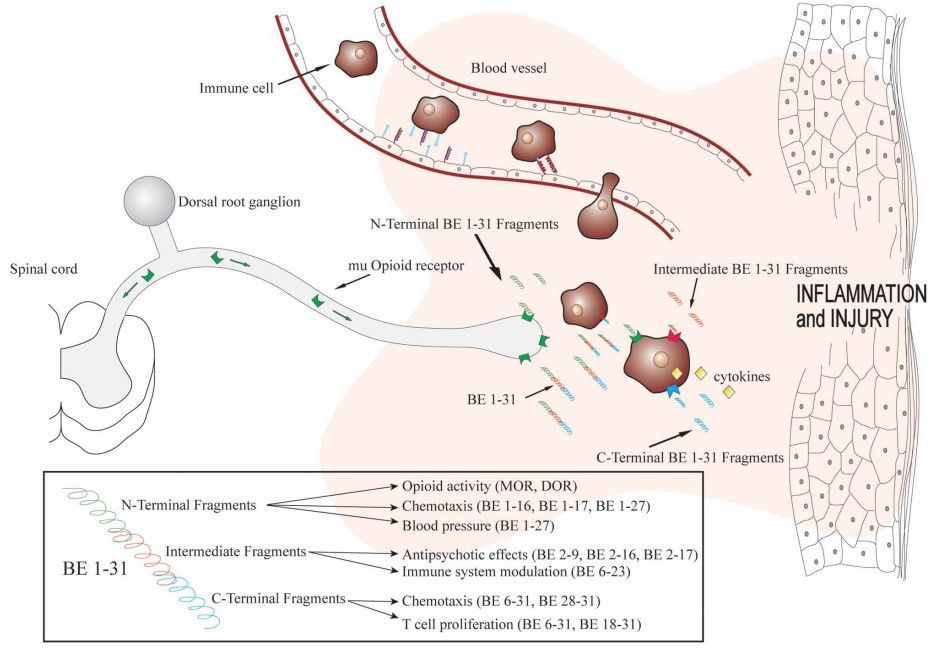 Figure 4. Biotransformation of beta-endorphin within inflamed tissue and fragment actions
(Source: Asvadi NH, et al. 2014)
β-endorphin acts on synovial fibroblasts in osteoarthritis through the MOR, by repressing the G protein-coupled cAMP system and calcium ion channel currents. The basic mechanism is that opioid peptides bind to opioid receptors and the receptors' conformational change results in lipid methylation of the cell membrane, increased fluidity of the membrane and receptor mobility through the membrane. The interaction also engages inhibitory guanine nucleotide-binding proteins. These inhibitory guanine nucleotide-binding proteins, once turned on, change conformation upon contact with GTP in the cytoplasm, then fuse to and activate adenylate cyclase. Thus, ATP can't be converted to cAMP in the cytoplasm, and so cAMP isn't produced. This decrease inhibits the phosphorylation of CREB (cAMP response element-binding protein) and its nuclear translocation, ultimately suppressing NF-κB expression.
References
| Target | Cat. No. | Product Name | Size | Species | Application | Detection Sample | |
| POMC | DEIA3206 | Human Beta-Endorphin ELISA Kit | 96T | Quantitative | Serum, plasma, tissue homogenates and other biological fluids | Inquiry | |
| β-Endorphin | DEIA-BJ2111 | Rat β Endorphin ELISA Kit | 96T | Quantitative | Serum, plasma, cell culture supernatants, body fluid and tissue homogenate | Inquiry | |
| DEIA-BJ772 | Human β-EP(Beta-endorphin) ELISA Kit | 96T | Human | Quantitative | Serum, plasma, tissue homogenates and other biological fluids. | Inquiry | |
| DEIA-BJ2656 | Rabbit β Endorphin ELISA Kit | 96T | Quantitative | Serum, plasma, cell culture supernatants, body fluid and tissue homogenate | Inquiry | ||
| DEIA-XYZ58 | Human β-Endorphin ELISA Kit | 96T | Quantitative | Serum, plasma | Inquiry | ||
| DEIA-XYZ59 | Bovine/Camel/Mouse β-Endorphin ELISA Kit | 96T | Quantitative | Serum, plasma | Inquiry | ||
| DEIA10566 | Mouse, Bovine, Ovine, Camel Endorphin, beta ELISA Kit | 96T | Mouse, Bovine, Sheep, Camel | Quantitative | Blood, plasma, tissues, CSF | Inquiry | |
| DEIA-BJ773 | Rat β-EPR(Beta-Endorphin Receptor) ELISA Kit | 96T | Rat | Quantitative | Serum, plasma, tissue homogenates, other biological fluids | Inquiry | |
| Alpha-Neoendorphin | DEIA-XYZ49 | Alpha-Neoendorphin ELISA Kit | 96T | Quantitative | Serum, plasma | Inquiry |
| Target | Cat. No. | Product Name | Host | Isotype | Application | |
| Alpha-Neoendorphin | DPAB21626H | Anti-alpha-Endorphin polyclonal antibody [BSA] | Rabbit | RIA, IHC | Inquiry | |
| DPBT-66731RA | Anti-Alpha Neoendorphin polyclonal antibody | Rabbit | IgG | IHC, ELISA, FC, IP, RIA, WB | Inquiry | |
| DPATB-H81432 | Anti-alpha neo Endorphin polyclonal antibody | Rabbit | IgG | IHC-Fr, RIA | Inquiry | |
| DPAB-DC4203 | Anti-Alpha-endorphin polyclonal antibody | Rabbit | IgG | IP, EIA | Inquiry | |
| Gamma Endorphin | DPATB-H81492 | Anti-Gamma Endorphin polyclonal antibody [Biotin] | Rabbit | IgG | ELISA, IP, RIA | Inquiry |
| DPAB-DC4204 | Anti-Gamma-endorphin polyclonal antibody | Rabbit | IgG | IP, EIA | Inquiry | |
| POMC | CABT-L1535 | Rabbit Anti-Human Beta Endorphin monoclonal antibody, clone 30I5M3 | Rabbit | IgG | WB | Inquiry |
Loading ......
