
Inquiry Basket
 Loading ......
Several dengue vaccines have entered clinical application. The licensed dengue vaccine currently operates in multiple countries and regions and proves moderately effective in reducing disease incidence. The vaccine shows limitations that become apparent after initial infection and pose increased health risks for specific population groups. Ongoing research focuses on the development of vaccines that deliver improved safety alongside greater effectiveness in disease prevention. Researchers are working to produce mRNA-based vaccines for dengue with expectations of major advancements in the next few years.
The first quadrivalent live virus vaccine developed globally targets protection against all four different serotypes of dengue virus. The vaccine triggers a strong immune response yet poses a severe dengue threat for first-time vaccinated children who have never encountered the virus. Children who have already experienced dengue infection should receive this vaccine to minimize the chances of developing antibody-dependent enhancement (ADE).
Medical treatments for dengue lack specific antiviral drugs at the present time. Medical care for dengue concentrates on managing symptoms through medications that reduce fever and fluid replacement therapy. Researchers are creating antiviral medications to stop the replication of the dengue virus through comprehensive virology and immune response studies. The development of immune modulators and vaccine adjunct therapies remains an active field of research.
The treatment plan prioritizes early identification of severe dengue warning indicators and supportive care through intravenous fluid therapy and blood monitoring. The mortality rate from dengue drops below 1% as opposed to above 13% when patients receive early recognition and appropriate fluid management.
The transmission of dengue virus continues to accelerate which makes precise testing results essential for the progress of vaccine and drug development.
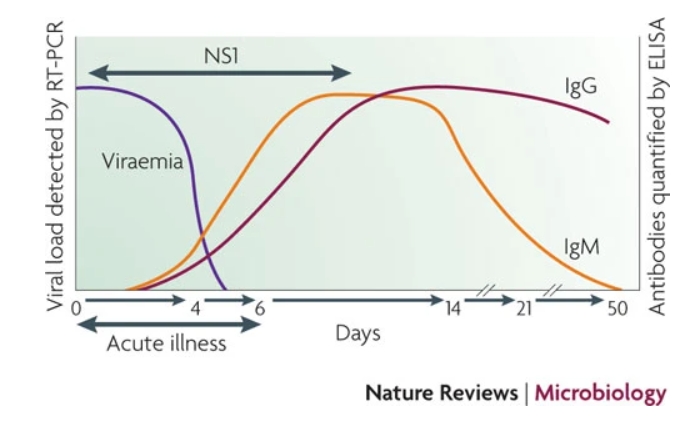 Figure 1. Dengue virus, antigen and antibody responses used in diagnosis. (Source: Guzman M, et al., 2010)
The Enzyme-Linked Immunosorbent Assay (ELISA) stands as the predominant serological testing method today because of its exceptional sensitivity and specificity which enable effective detection of both antibodies and antigens in dengue cases.
ELISA serves as an essential tool throughout drug development processes. This method measures virus-specific antigens or antibody levels in blood samples to determine how antiviral drugs block virus replication while researchers investigate drug-induced decreases in viral load and patient recovery promotion. ELISA serves as a tool to track the drug's influence on the immune system while preventing abnormal immune responses. ELISA offers essential assistance for vaccine research and new drug development through its application in clinical trials that determine safety and effectiveness.
Creative Diagnostics presents high-quality ELISA kits designed for precise dengue testing and research development of dengue drugs and vaccines. We provide dependable solutions to ensure your advancement remains steady and efficient.
References
| Target | Cat. No. | Product Name | Size | Species | Application | Detection Sample | |
| DENV | DEIABL333 | Dengue virus IgM µ-capture ELISA Kit | 96T | Qualitative | serum, plasma | Inquiry | |
| DEIA508 | Dengue IgG ELISA Kit | 96T | Human | Qualitative | serum, plasma (EDTA, lithium heparin or citrate plasma | Inquiry | |
| DEIA510 | Dengue IgM ELISA Kit | 96T | Human | Qualitative | serum or plasma (EDTA or lithium heparin plasma). | Inquiry | |
| DEIA1439 | Dengue Virus IgG ELISA Kit | 96T | Human | Qualitative | serum, plasma (EDTA, lithium heparin or citrate plasma | Inquiry | |
| DENV NS1 | DEIABL14 | Dengue NS1 Antigen ELISA Kit | 96T | Human | Qualitative | human serum | Inquiry |
| DEIA-JY2107 | Human Dengue Virus Non-Structural Protein 1 (DENV NS1) ELISA Kit | 96T | Human | Quantitative | Serum, Plasma, Tissue Homogenates and other Biological Fluids. | Inquiry |
Loading ......
