
Inquiry Basket
 Loading ......
Eastern equine encephalitis (EEE) is a typical zoonotic viral disease, belonging to the A group of arboviruses, enveloped virus family, and genus A virus. It contains single stranded RNA and is named after the virus that was first isolated from diseased horse brain tissue. Subsequently, the same virus was isolated from the patient's brain tissue, causing severe and dangerous symptoms of human encephalitis. Its clinical manifestations are similar to those of Japanese encephalitis, with a mortality rate of over 35%. This virus is also listed as one of the main types of bioterrorism prevention by the international community, and is classified as a type of managed virus, receiving much attention.
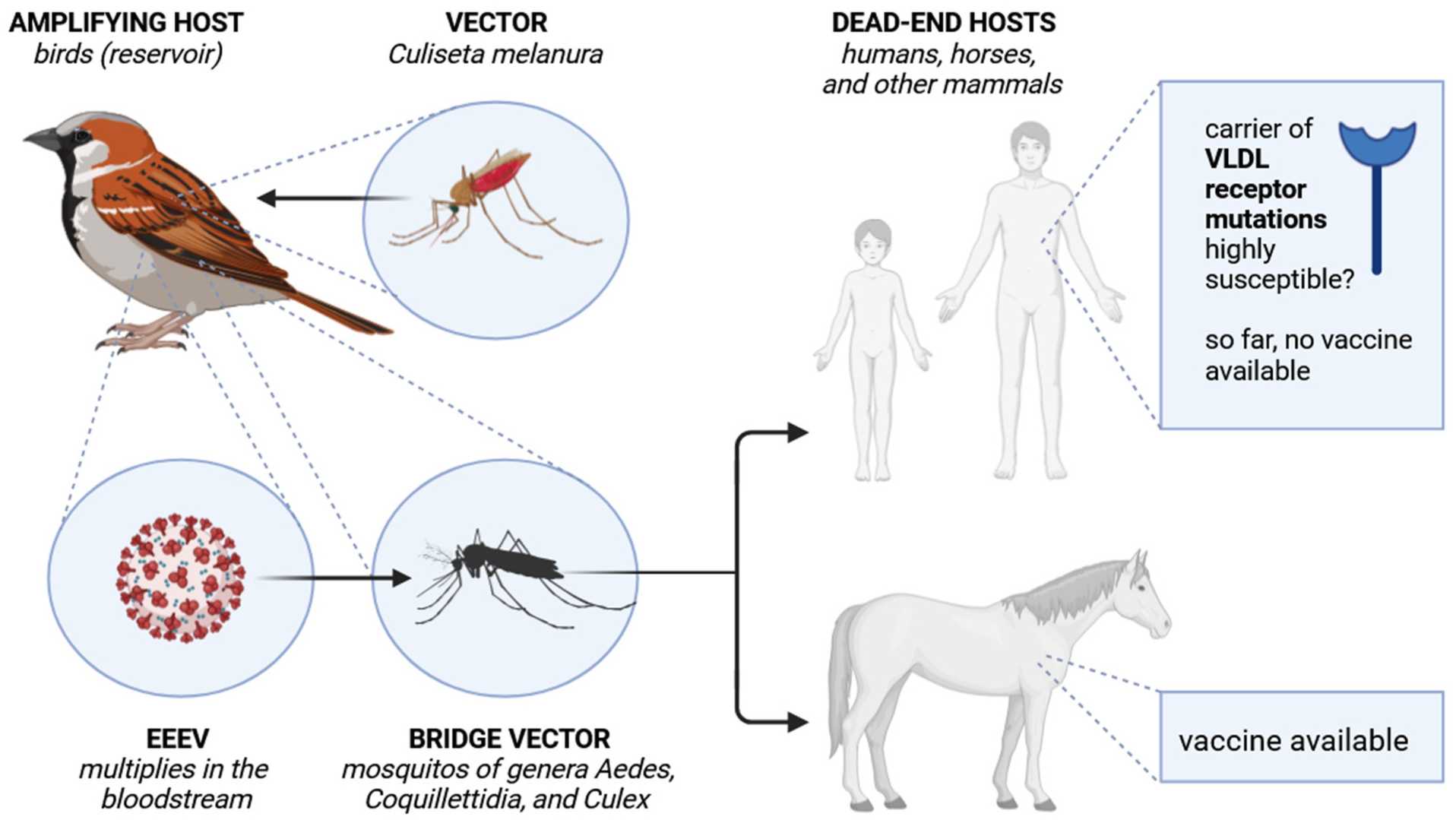 Figure 1. The scheme shows the Eastern equine encephalitis virus (EEEV) transmission.( Kordowitzki, Pawel.2024)
Eastern equine encephalitis is a viral encephalitis. Eastern equine encephalitis virus (EEEV) is a member of the alpha virus family of the enveloped virus family, and is very similar to Venezuelan equine encephalitis virus. Due to its high chance of laboratory infection, the possibility of developing symptoms after infection is high, and the symptoms are severe and life-threatening. It lacks effective prevention methods, is highly contagious, and poses a great threat to the population. Therefore, it is defined as a type of bacterial strain. EEEV storage hosts are birds. In North America, 39 bird species have virus antibodies, and Eastern equine encephalitis virus has been isolated from purple whitehead bentgrass, tits, and migratory birds. Most wild birds do not develop symptoms after infection, only showing varying degrees of viremia, but they can carry and spread the virus.
The typical manifestations of this disease are rapidly occurring flu like symptoms, such as headache and fever, and even convulsions, consciousness disorders, and meningeal irritation symptoms. If left untreated, accompanied by central nervous system damage and poor prognosis, it may lead to death in 35% of cases. The prognosis of eastern equine encephalitis is related to the scope and severity of the disease. When brain lesions are more localized and do not invade the "life center", the prognosis is often good when the condition is mild. If the coma lasts for a long time or there are frequent seizures, the brain hypoxia and pathological changes worsen, and the prognosis is often poor, which can easily leave neurological and psychological sequelae.
The laboratory diagnosis of EEEV infection serology is the basis of diagnosis, especially IgM antibody serum testing and cerebrospinal fluid testing are more important. The auxiliary detection role of PCR detection, histopathology, and immunohistochemistry in autopsy tissues is also evident. The Eastern equine encephalitis virus is very similar to the Venezuelan equine encephalitis virus, but there are also significant differences. Once infected, EEEV has lifelong immunity and no ability to cross infect. At present, only a few laboratories or disease prevention and control centers in the world have the ability to perform such diagnosis and differential diagnosis.
Although there are medications available for treating various types of encephalitis in horses, there is no effective targeted treatment for infected individuals. Relatively speaking, the optimal medical methods include hospitalization and supportive treatment, such as expert care, respiratory support, prevention of secondary bacterial infections, and physical therapy, which mainly reduce the risk of fever and relieve its pressure on the brain and spinal cord. Due to the relative lack of treatment measures, prevention is still the main focus.
Rapid and accurate diagnosis is essential for patient management. Diagnosis is based on a combination of clinical presentation and laboratory testing .
| Diagnosis | Details |
| Serological Testing | The most common method involves detecting EEEV-specific IgM and IgG antibodies in serum or cerebrospinal fluid (CSF) using an enzyme-linked immunosorbent assay (ELISA). The presence of EEEV-specific IgM in CSF strongly suggests acute infection. |
| Molecular Techniques | Reverse transcription-polymerase chain reaction (RT-PCR) can detect viral RNA in serum, CSF, or tissue samples, particularly during the early viremic phase of the illness. |
| Virus Isolation | The virus can be isolated from clinical specimens using susceptible cell cultures, but this is a slow process and requires high-containment biosafety level (BSL-3) facilities due to the high pathogenicity of EEEV. |
There are currently no antiviral drugs used to treat EEE. The treatment of serious illnesses is supportive, including corticosteroids, anticonvulsants used to control seizures, intravenous infusion, endotracheal intubation for assisted breathing, and antipyretic drugs (antipyretics). Intravenous immunoglobulin (IVIg) has been tested as a potential therapeutic method by silencing self reactive T cells and neutralizing pathogenic antibodies. IVIg treatment is safe, but the results are mixed as to whether it is an effective treatment method. EEE typically requires physical therapy, occupational therapy, and speech therapy to address issues related to motor skills, daily life, and communication.
The Eastern equine encephalitis virus has become a terrifying pathogen due to its high mortality rate and severe, often permanent nerve damage to survivors. Despite its rarity, its potential to trigger catastrophic epidemics and its classification as a potential bioterrorism agent highlight the importance of ongoing research. The complex ecology of the virus, involving birds and specific mosquito vectors, makes eradication unlikely, highlighting the crucial role of prevention through personal protection and public health mosquito control measures. Understanding the progress of molecular virology of Ebola virus, especially the identification of key host receptors and the structure of viral antigens, has paved the way for new treatment strategies and the development of urgently needed effective human vaccines. Continuous vigilance and research are crucial in mitigating the threat posed by this terrible virus.
Reference
| Target | Cat. No. | Product Name | Host | Isotype | |
| EEEV E1 | DMAB-CS24379 | Magic™ Mouse Anti-EEEV E1 Monoclonal antibody, clone 18Z68 | Mouse | IgG | Inquiry |
| DMAB-CS24380 | Magic™ Mouse Anti-EEEV E1 Monoclonal antibody, clone 18Z69 | Mouse | IgG | Inquiry | |
| CABT-CS914 | Mouse Anti-EEEV E1 Monoclonal antibody, clone 2C2D5 | Mouse | IgG2b | Inquiry | |
| CABT-CS913 | Mouse Anti-EEEV E1 Monoclonal antibody, clone 2B5C7 | Mouse | IgG2b | Inquiry | |
| Eastern Equine Encephalitis virus E2 glycoprotein | CABT-B1088 | Anti-EEEV E2 Glycoprotein polyclonal antibody | Rabbit | IgG | Inquiry |
| EEEV | CABT-CS919 | Humanized Anti-EEEV Monoclonal antibody, clone 249 | Humanized | IgG1 | Inquiry |
| EEEV E2 | CABT-CS918 | Humanized Anti-EEEV E2 Monoclonal antibody, clone 230 | Humanized | IgG1 | Inquiry |
| Target | Cat. No. | Product Name | Host | |
| EEEV E2 | DAGA-267 | EEEV E2 glycoprotein (aa 338-687) [His] | E. coli | Inquiry |
| / | DAGB175 | Eastern Equine Encephalitis Virus E3E2 Protein [His] | Insect cells | Inquiry |
Loading ......
