
Inquiry Basket
 Loading ......
Carcinoid tumors are a group of slow growing cancers caused by special cells called neurosecretory cells. These cells possess the characteristics of both nerve cells and hormone secreting endocrine cells. They are distributed throughout the body, especially in organs such as the intestines, lungs, and pancreas. Although NETs are relatively rare, their unique characteristics and ability to produce excessive hormones can lead to various symptoms, making them a complex topic for diagnosis and treatment.
 Figure 1. Carcinoid Tumors.
The clinical manifestations of carcinoid tumors vary greatly depending on several factors, including tumor location, size, presence of metastasis, and ability to secrete bioactive substances. Many types of cancer are asymptomatic and are accidentally discovered during imaging studies or surgical procedures for unrelated diseases. However, when symptoms do appear, they can be divided into two categories: local symptoms caused by the tumor's lump effect or invasion of surrounding tissues, and systemic symptoms caused by the secretion of hormones and other bioactive molecules (carcinoid syndrome).
Local symptoms vary depending on the anatomical location of the tumor. For example, gastric cancer may cause symptoms such as abdominal pain, nausea, vomiting, and upper gastrointestinal bleeding (due to tumor ulcers). Lung cancer can manifest as coughing, hemoptysis (coughing up blood), chest pain, shortness of breath, or recurrent pneumonia, especially when the tumor blocks the bronchi. Rectal carcinoid tumors may cause rectal bleeding, constipation, diarrhea, or a feeling of incomplete emptying, while ileal carcinoid tumors may cause intestinal obstruction, abdominal spasms, and malabsorption (due to inflammation or obstruction caused by tumors leading to impaired nutrient absorption).
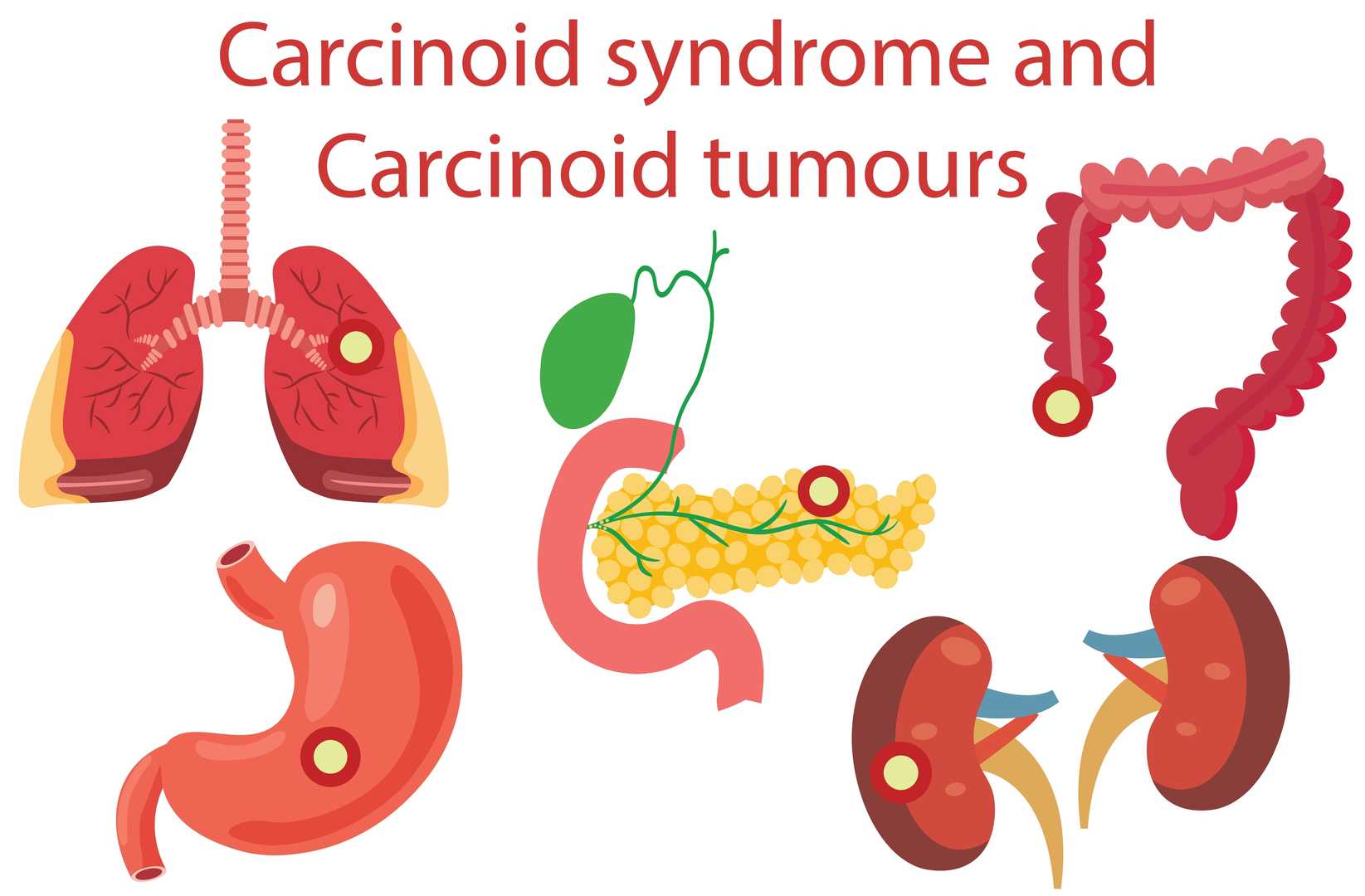 Figure 2. Local Symptoms.
Carcinoid syndrome is a rare but unique systemic symptom that occurs in approximately 10-20% of cancer patients, with the most common being metastatic colorectal cancer (especially liver) patients. This syndrome occurs when bioactive substances secreted by tumors, such as serotonin, histamine, kallikrein, and prostaglandins, bypass the liver's detoxification mechanism and enter the systemic circulation. The most common symptoms of carcinoid syndrome include:
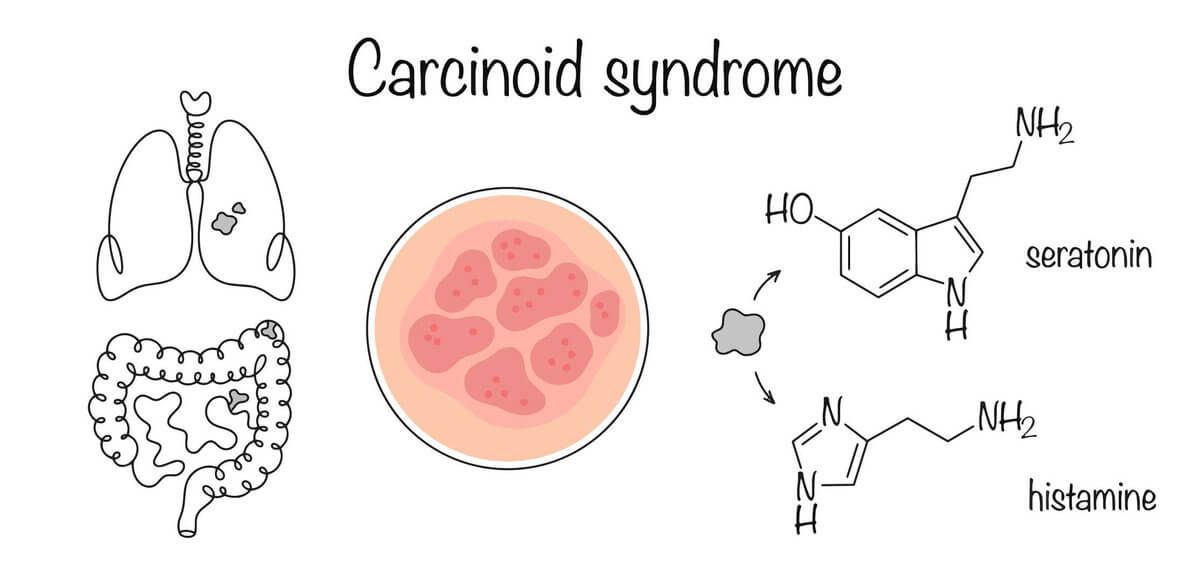 Figure 3. Carcinoid Syndrome.
Laboratory testing plays a crucial role in the diagnosis and monitoring of carcinoid tumors. The most commonly used biochemical markers are:
The prognosis of carcinoid tumors varies due to multiple factors, including tumor location, size, staging, grading, and the presence of metastasis. Overall, the prognosis of carcinoid tumors is better than most other types of cancer, with a 5-year survival rate of approximately 67% for all patients. However, there are significant differences in prognosis among different subtypes:
| Prognosis | Details |
| Localized tumors: | Patients with small localized carcinoid tumors (such as appendiceal or rectal carcinoid tumors smaller than 1 centimeter) have a good prognosis, with a 5-year survival rate of nearly 100% after surgical resection. |
| Metastatic tumors: | Patients with metastatic carcinoid tumors (especially liver metastases) have a poor prognosis, with a 5-year survival rate of approximately 30-40%. However, with advances in medical and local treatments, many patients with metastatic diseases can survive for 10 years or longer with well controlled symptoms. |
| Tumor grading: | The prognosis of atypical carcinoid (with a higher mitotic rate and possible necrosis) is worse than that of typical carcinoid, with a higher risk of recurrence and metastasis. The 5-year survival rate for atypical lung cancer is approximately 60-70%, while for typical lung cancer it is 90%. |
| Cancer like syndrome and heart disease | The presence of cancer like syndrome, especially cancer like heart disease, is associated with poor prognosis. The median survival of untreated patients with cancer like heart disease is 2-3 years, but early diagnosis and treatment (including valve replacement surgery) can significantly improve prognosis. |
Carcinoid tumors are a group of neuroendocrine tumors with different clinical behaviors and outcomes. Although they are relatively rare, the incidence rate is rising. Early diagnosis and appropriate treatment are crucial to improve the survival rate and quality of life of patients. The progress of molecular biology and targeted therapy is expected to further improve the management of these challenging tumors in the future.
| Cat. No. | Product Name | Host | Isotype | Application | |
| CABT-L3025 | Mouse Anti-Human Neurofilament monoclonal antibody, clone JID750 | Mouse | IgG | IHC | Inquiry |
| CABT-L3025 | Mouse Anti-Human Neurofilament monoclonal antibody, clone JID750 | Mouse | IgG | IHC | Inquiry |
| DMAB-L21045 | Mouse Anti-Human NSE monoclonal antibody, clone 712 | Mouse | IgG1 | ELISA(Cap), ELISA(Det) | Inquiry |
| Cat. No. | Product Name | Size | Species Reactivity | Application | Detection Method | |
| DEIA-JY2408 | Serotonin ELISA kit | 96T | Human | Quantitative | ELISA | Inquiry |
Loading ......
