
Inquiry Basket
 Loading ......
Bone tumors are tumors that occur in the bones or their associated tissues. Bone cancer develops rapidly, with poor prognosis and high mortality rate. Malignant bone tumors are divided into primary and secondary types. Secondary malignant bone tumors are those that metastasize from other tissues or organs in the body to the bones through the bloodstream and lymphatic system. There is also a type of lesion called tumor like lesion. The tissue of tumor like lesion does not have the characteristics of tumor cell morphology, but its ecology and behavior are destructive to tumors, generally limited and easy to cure. Bone cancer is a rare malignant tumor originating from the bone, which can be a primary tumor (originating from bone tissue) or a secondary tumor (metastasizing from other organs). Primary bone cancer accounts for less than 1% of all cancers, but they may be invasive and require specialized treatment.
Bone and joint pain, bone lumps, and movement disorders are considered the three main symptoms of bone tumors, especially bone cancer. However, many early stages of bone cancer do not have typical clinical symptoms, and the clinical manifestations of bone tumors are not specific in many cases. Early symptoms of bone tumors are sometimes not obvious, often only attracting attention when they develop to a certain extent, with local swelling or pain or tenderness, and even diagnosed and discovered only when pathological fractures occur.
| Phase | Symptoms |
|---|---|
| Pain | The main symptom of early onset of bone tumors is that the disease is mild and intermittent at the beginning. As the condition progresses, the pain can gradually worsen and develop into a persistent condition. Most patients experience increased pain at night, which affects their sleep. The pain can radiate to a distance. |
| Swelling or lumps | Tumors located beneath or superficial to the periosteum appear earlier and can cause bone swelling and deformation. If the tumor penetrates beyond the bone, it can produce a fixed soft tissue mass with a smooth or uneven surface. |
| Pressure | Tumors that grow into the cranial and nasal cavities can compress the tissues of the brain and nose, resulting in symptoms of cranial compression and respiratory distress; Pelvic tumors can compress the rectum and bladder, causing difficulty in defecation and urination; Spinal tumors can compress the spinal cord and cause paralysis. |
| Pathological fracture | Any slight external force on the tumor site can easily cause fractures, with severe swelling and pain at the fracture site, and pathological spinal fractures often accompanied by paraplegia. |
| Systemic symptoms | In the later stage of bone tumors, due to the consumption of tumors, stimulation by toxins, and painful torment, a series of systemic symptoms may occur, such as insomnia, irritability, loss of appetite, mental lethargy, pale complexion, progressive emaciation, anemia, cachexia, etc. |
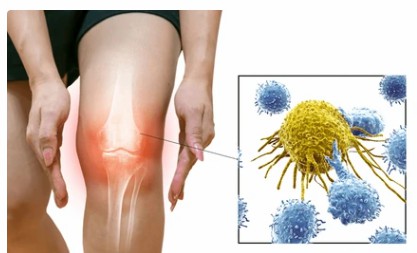
Radiological examination: X-ray examination can provide valuable information for clarifying the nature, type, scope, and determining treatment strategies of bone tumors, and is an important diagnostic method for bone tumors. The imaging of malignant tumors is irregular, with blurred edges, obvious osteolysis, bone destruction, thinning, fracture, and loss. Primary malignant tumors often exhibit periosteal reactions, which can be in the shape of sunlight radiating, onion like, or codman's triangle.
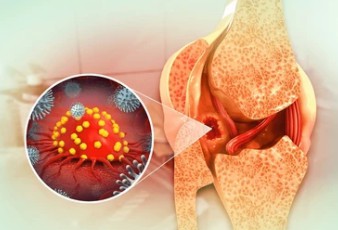
Pathological examination: Histopathological examination is considered to be the most accurate diagnostic method, but pathological examination still needs to be combined with clinical and X-ray examinations. Common sampling and examination methods include needle aspiration biopsy, open biopsy, frozen section, paraffin section, etc.
Bone metastasis has now become a critical component in the management of advanced cancer and this becomes more serious when we talk about breast cancer, cancer and multiple myeloma. Bone metastasis can also lead to a number of life-threatening pathological fractures, spinal cord compression, hypercalcemia, and others. The field of bone oncology is now also moving on with new scientific and clinical discipline, which focus more on the aspect of management of bone related cancers including both primary bone tumors as well as bone metastases. Development in the field of bone targeted nanomedicine has also instilled a hope to improve targeted delivery of anticancer drugs to bone tumors and also improve therapeutic efficacy, as well as also reducing off target effects.
Bone cancer cannot be prevented for certain, but chances are you can get through it better if the condition is detected early. The best way to try and detect bone problems early is by making regular health check ups to the doctors especially if you have a family history of bone cancer or are at risk of other factors. For early detection of bone tumors, advanced imaging techniques such as MRI, and PET scans are also being implemented. We are also exploring the use of machine learning and artificial intelligence to try and increase the accuracy of classification and diagnosis of bone tumors
Bone cancer is a complex and challenging disease that requires a multidisciplinary approach for effective management. The advancement of treatment options, including targeted therapy, nanomedicine, and personalized medicine, has improved the survival rate and quality of life for many patients. However, further research is needed to develop more effective and less invasive treatment methods. Public awareness and early detection remain crucial in the fight against cancer, as timely intervention can significantly reduce the disease burden and improve patient outcomes.
| Cat. No. | Product Name | Host | Isotype | Application | |
| DCABH-2450 | Anti-Alkaline Phosphatase monoclonal antibody, clone CHO/14/77LG55 | Mouse | IgG3 | ELISA, IHC-P | Inquiry |
| DCABH-10749 | Anti-BMP4 monoclonal antibody, clone 20G5C5 | Mouse | IgG1 | WB, ELISA | Inquiry |
| CABT-54689RM | Anti-TNFSF11 monoclonal antibody, clone IK22/5 | Rat | IgG2a | IHC-Fr, FC, IF, IP, WB | Inquiry |
| Cat. No. | Product Name | Size | Species Reactivity | Application | Detection Method | |
| DEIA-XY10 | Human Osteocalcin (1-43/49) ELISA kit | 96T | Human | Quantitative | / | Inquiry |
| DEIASL035 | Deoxypyridinoline ELISA Kit | 96T | Rat, Mouse, Rabbit, Guinea Pig, Dog, Pig, Sheep, Cow, Horse, Squirrel, Cynomolgus Monkey, Rhesus Macaque, Human Cell Culture | Quantitative | / | Inquiry |
| Cat. No. | Product Name | Size | Target | Species | |
| DAG2547 | Chicken Alkaline Phosphatase [AP] | / | / | Chicken | Inquiry |
| DAG-WT1923 | Native Bone Alkaline Phosphatase | 5 g | BALP | / | Inquiry |
| DAG-WT609 | Recombinant Mouse Alkaline Phosphatase [His] | 1 mg | ALP | Mouse | Inquiry |
| DAG-WT618 | Recombinant Human Intestinal-Type Alkaline Phosphatase [His] | 50 g | ALP | Human | Inquiry |
Loading ......
