
Inquiry Basket
 Loading ......
Avian nephritis belongs to other types of infectious and parasitic diseases. This virus belongs to the family of microRNA viruses and mainly infects chickens under 4 weeks of age, which can cause interstitial nephritis. Infection manifests as visceral urate deposition and decreased liver weight. About 20% of SPF chickens that die within 8-10 days after vaccination at one day of age have visceral urate deposition. The avian nephritis virus was first isolated from the rectal contents of healthy one week old broiler chickens by Yamaguchi et al. in 1979, and its morphology and biochemical characteristics were identified as a microRNA virus. The Anti-ANV Polyclonal antibody is a crucial tool used in techniques such as immunohistochemistry (IHC) and immunofluorescence assay (IFA) to specifically detect and localize viral antigens within infected tissues, such as the kidney and intestines, confirming active infection and elucidating viral tissue tropism.
 Figure 1. Genome Sequence of Nephritis Virus. (Lagan Tregaskis, et al, 2021)
The etiological agent of ANV infections is avian nephritis virus, within the genus Avastrovirus in the family Astroviridae. Like other astroviruses, ANV has a positive-sense single-stranded RNA genome within a nonenveloped capsid. There are three recognized viral serogroups (ANV-1, -2, and -3) and at least six more genogroups outside of the three serotypes. ANV strains vary in virulence and in antigenicity. In addition to ANV, other viral species within the genus Avastrovirus include chicken astrovirus (CAstV), turkey astrovirus (TAstV), and duck astrovirus (DAstV), distinguished by the hosts from which they were isolated, as well as by viral genome characteristics.
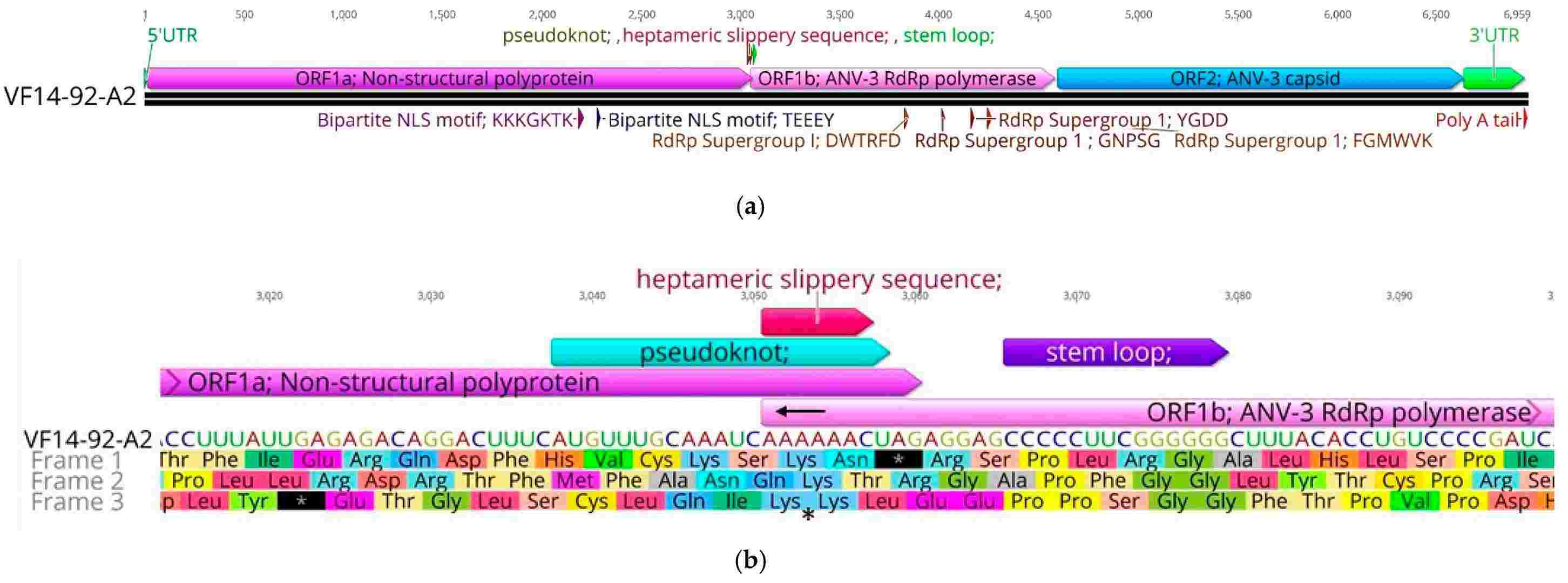 Figure 2. Schematic representation of ANV genotype 3 whole genome and ribosomal shift mechanism. (Lagan Tregaskis, et al, 2021)
The molecular mechanisms underlying ANV-induced cell damage and immune response are areas of ongoing research. Current understanding points to viral interference with host cell processes and the induction of specific pathological pathways.
The following table outlines key pathological targets and host responses implicated in ANV infection:
| Target / Process Category | Key Host Genes / Factors / Pathways | Role in ANV Pathogenesis |
| Viral Entry & Cellular Tropism | Putative Cellular Receptor(s) on renal tubular epithelial cells. | The specific receptor for ANV entry remains unidentified. Its binding determines the virus's strong tropism for kidney cells, leading to direct infection and lysis of tubular epithelium, which is the primary cause of nephritis. |
| Innate Immune Response | Type I Interferon (IFN) Pathway, RIG-I-like Receptors (RLRs), MDA5. | As an RNA virus, ANV generates pathogen-associated molecular patterns (PAMPs) that are detected by cytoplasmic sensors like MDA5. This triggers signaling cascades leading to interferon production. The efficiency of ANV in modulating this response is crucial for establishing infection. |
| Cellular Stress & Apoptosis | Endoplasmic Reticulum (ER) Stress Response (e.g., GRP78/BiP, CHOP). | High-level viral protein synthesis in infected cells can induce ER stress, activating the unfolded protein response (UPR). Prolonged stress may lead to apoptosis (programmed cell death) of tubular cells, exacerbating kidney damage. |
Avian nephritis virus infections affect primarily chickens but also various other poultry species, including ducks, turkey, geese, and guinea fowl. ANV infections have been reported worldwide. ANV infections occur mainly in chickens < 7 days old; however, interstitial nephritis can occur in chicks up to 4 weeks old. In a study assessing a method for quantifying ANV in chickens with runting and stunting syndrome, the highest numbers of viral copies were found in breeder hens > 44 weeks old. Subclinical infections are common and have been detected by serological surveys in some specific-pathogen-free (SPF) chicken flocks and in turkeys. ANV has also been associated with increased mortality rates in 4-week-old ducklings and with late-stage (near hatching) embryo deaths in ducks and geese. Transmission is via the fecal-oral route and occurs by direct or indirect contact with feces from infected birds. Vertical transmission can also occur, but it appears less common. As with all astroviruses, the young, including embryos, are the most susceptible to ANV infections. ANV is consistently isolated from the kidneys or feces during the first 10 days after infection.
Although avian nephritis viruses and related viruses can be isolated by inoculation of suspected material (kidney or rectal contents) in the yolk sac of SPF chick embryos and in chick kidney cells, many ANVs are difficult to isolate. The best way to detect an ANV is byreverse transcription PCR (RT-PCR) assay or reverse transcription quantitative real-time PCR (RT-qPCR) assay of kidney or gut content samples. These tests are designed to detect multiple strains and enable quick differentiation from other viruses. Serological diagnosis can be based on direct or indirect immunofluorescence assay, seroneutralization tests, or ELISA. However, these tests might detect only a limited number of ANV strains because of their high antigenic diversity, and they are not widely available. Besides ANVs, nephropathogenic strains of infectious bronchitis virus (IBV) and CAstV also cause interstitial nephritis. Therefore, when nephritis is diagnosed, it is necessary to identify the causative agent. However, identifying the causative agent can be complicated by coinfections of ANV and CAstV, which are common.
Avian nephritis virus is an important avian astrovirus, and its main pathological impact is on the kidneys. Its molecular pathogenesis involves a series of events: virus entry into renal tubules, potential induction of ER stress and apoptosis, activation of innate immunosensors (MDA5), and triggering of pro-inflammatory cytokine responses mediating tissue damage. The lack of specific cellular receptors and detailed mechanisms of immune evasion highlights areas for future research. The key to identification is to use tools such as RT-PCR and antigen-specific spot slides for effective diagnosis. The current control relies on strong biosecurity to manage this ubiquitous virus and mitigate its economic impact on chicken performance.
Reference
| Target | Cat. No. | Product Name | Host | Isotype | Application | |
| ANV | CABT-CS215 | Chicken Anti-ANV Polyclonal antibody | Chicken | IgY | / | Inquiry |
| Target | Cat. No. | Product Name | Host | |
| ANV | DAGC533 | Avian Nephritis Virus (G4260) Spotted Slides | N/A | Inquiry |
Loading ......
