Specifications
Species Reactivity
Drosophila melanogaster
Immunogen
Synthetic peptide derived from N terminal part of Fruity fly Atg8a.
Applications
Application Notes
Optimal dilution should be determined by the end user.
Target
Alternative Names
Autophagy-related 8a, isoform A; ATG8, Atg8, atg8, ATG8, Atg8A, atg8A, atg8a, BcDNA:LD05816, CG1534, DmAtg8a, Dmel\CG32672, DrAtg8a, LC3
Citations
 Publication ()
Have you cited CABT-L1690 in a publication?
Let us know and earn a reward for your research.
The level of oncogenic Ras determines the malignant transformation of Lkb1 mutant tissue in vivo
Briana Rackley, Chang-Soo Seong, Evan Kiely, Rebecca E. Parker, Manali Rupji, Bhakti Dwivedi, John M. Heddleston, William Giang, Neil Anthony, Teng-Leong Chew & Melissa Gilbert-Ross
Applications: WB
Reactive species: Drosophila melanogaster
"Abstract: The genetic and metabolic heterogeneity of RAS-driven cancers has confounded therapeutic strategies in the clinic. To address this, rapid and genetically tractable animal models are needed that recapitulate the heterogeneity of RAS-driven cancers in vivo. Here, we generate a Drosophila melanogaster model of Ras/Lkb1 mutant carcinoma. We show that low-level expression of oncogenic Ras (RasLow) promotes the survival of Lkb1 mutant tissue, but results in autonomous cell cycle arrest and non-autonomous overgrowth of wild-type tissue. In contrast, high-level expression of oncogenic Ras (RasHigh) transforms Lkb1 mutant tissue resulting in lethal malignant tumors. Using simultaneous multiview light-sheet microcopy, we have characterized invasion phenotypes of Ras/Lkb1 tumors in living larvae. Our molecular analysis reveals sustained activation of the AMPK pathway in malignant Ras/Lkb1 tumors, and demonstrate the genetic and pharmacologic dependence of these tumors on CaMK-activated Ampk. We further show that LKB1 mutant human lung adenocarcinoma patients with high levels of oncogenic KRAS exhibit worse overall survival and increased AMPK activation. Our results suggest that high levels of oncogenic KRAS is a driving event in the malignant transformation of LKB1 mutant tissue, and uncovers a vulnerability that may be used to target this aggressive genetic subset of RAS-driven tumors."
Article snippet: Primary antibodies and dilution: *, rabbit antiATG8a (Creative Diagnostics, 0.2 g/ml), and *. 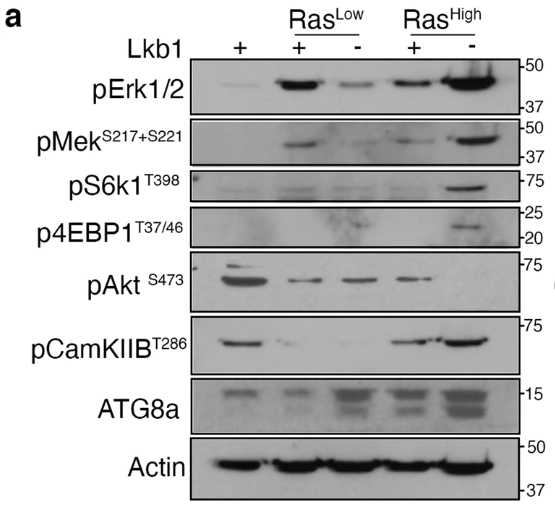 Figure 1. Western analysis to assay activation of the indicated molecular pathways in mosaic larval eye-imaginal discs of the indicated genotypes.
Egg multivesicular bodies elicit an LC3-associated phagocytosis-like pathway to degrade paternal mitochondria after fertilization
Sharon Ben-Hur, Shoshana Sernik, Sara Afar, Alina Kolpakova, Yoav Politi, Liron Gal, Anat Florentin, Ofra Golani, Ehud Sivan, Nili Dezorella, David Morgenstern, Shmuel Pietrokovski, Eyal Schejter, Keren Yacobi-Sharon, Eli Arama
Applications: IA
Reactive species: Fly strains
"Abstract: Mitochondria are maternally inherited, but the mechanisms underlying paternal mitochondrial elimination after fertilization are far less clear. Using Drosophila, we show that special egg-derived multivesicular body vesicles promote paternal mitochondrial elimination by activating an LC3-associated phagocytosis-like pathway, a cellular defense pathway commonly employed against invading microbes. Upon fertilization, these egg-derived vesicles form extended vesicular sheaths around the sperm flagellum, promoting degradation of the sperm mitochondrial derivative and plasma membrane. LC3-associated phagocytosis cascade of events, including recruitment of a Rubicon-based class III PI(3)K complex to the flagellum vesicular sheaths, its activation, and consequent recruitment of Atg8/LC3, are all required for paternal mitochondrial elimination. Finally, lysosomes fuse with strings of large vesicles derived from the flagellum vesicular sheaths and contain degrading fragments of the paternal mitochondrial derivative. Given reports showing that in some mammals, the paternal mitochondria are also decorated with Atg8/LC3 and surrounded by multivesicular bodies upon fertilization, our findings suggest that a similar pathway also mediates paternal mitochondrial elimination in other flagellated sperm-producing organisms."
Article snippet: Primary antibodies used in this study are biotin Anti-GFP antibody (1:100, *), anti-Drosophila melanogaster Atg8a polyclonal antibody (1:100, Creative-diagnostics,CABT-L1690), antipan polyglycylated Tubulin antibody, clone AXO 49 (1:5000, *). 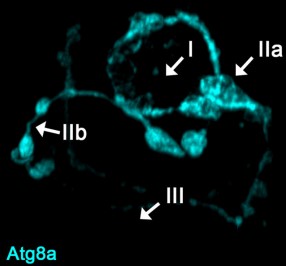 Figure 1. A representative confocal image of a WT egg fertilized by green-MD sperm and immunostained to visualize the axoneme and Atg8a

 COA
COA

 Loading ......

