
Inquiry Basket
 Loading ......
Copeptin is a glycosylated peptide consisting of 39 amino acids and is the C-terminal peptide of the precursor molecule of arginine vasopressin (AVP). The AVP precursor molecule can be divided into four parts, namely the signalling N-terminal peptide, AVP, neurophysin II, and copeptin. Copeptin is mainly involved in the folding of AVP precursors and regulates the processing, maturation and transport of AVP precursors through glycosylation. AVP is mainly synthesised by the supraoptic nucleus and paraventricular nucleus of the hypothalamus and stored in the posterior pituitary, belonging to one of the commonly used antidiuretic hormones in clinical practice, which can effectively promote vasoconstriction and has a more significant antidiuretic effect. It acts mainly through direct stimulation of smooth muscle receptors, regulates the body's osmotic pressure, keeps the cardiovascular system stable, and maintains haemodynamic as well as endo-environmental stability. When a stimulus is encountered, AVP and copeptin are released into the bloodstream in equimolar amounts, but AVP has a short and unstable half-life, whereas copeptin has a longer half-life, is stable and easy to detect, and therefore better reflects neurogenic stress levels. Copeptin is mostly used clinically instead of AVP to assess the patient's condition and prognosis, and has good clinical value in the early, acute, exacerbation and prognosis of cardiovascular disease, hepatic and renal disease, respiratory disease and stroke.
 Figure 1. Precursor hormone of AVP
(Source: Moodley N. 2023)
The short half-life and poor stability of AVP, as well as the time-consuming and technically demanding nature of the measurement, limit its clinical application. In contrast, the use of copeptin as a biomarker indirectly reflecting the level of AVP has the following advantages: firstly, good stability; secondly, the sample volume required for detection is small, only 50μL of sample is needed each time; thirdly, it is easy to detect, and plasma copeptin levels can be measured by conventional radioimmunoassay or double-antibody immunosandwich with high accuracy; fourthly, it is released in pulsed form in an equimolar amount to AVP, which can better reflect the release level of AVP.
By measuring copeptin levels at baseline normal osmolality in 359 healthy volunteers, the investigators determined their median plasma concentration to be 4.2pmol/L, with a range of 1.0-13.8pmol/L. Another study observed differences in copeptin levels between men and women, with slightly higher levels in men than in women and no correlation with age. The average copeptin level in children was 5.2pmol/L.
Table 1. Published copeptin cut-off values
| Clinical Scenario | Cut-off (pmol/L) |
| AVP resistance | >21.4 |
| Post-overnight water deprivation test | <2.6 indicative of AVP deficiency |
| Hypertonic saline infusion test | ≤4.9 |
| Arginine infusion test | ≤3.8 |
| Glucagon stimulation test | <4.6 |
| Post-pituitary surgery | |
| Day 1 | <2.5 = AVP deficiency; >30 = no AVP deficiency |
| Day2 | <3.1 = AVP deficiency |
| 3 months | <1.9+normal serum sodium = AVP deficiency; ≥3,5 = no AVP deficiency |
| 3 months + insulin tolerance test | <4.75 |
(Source: Moodley N. 2023)
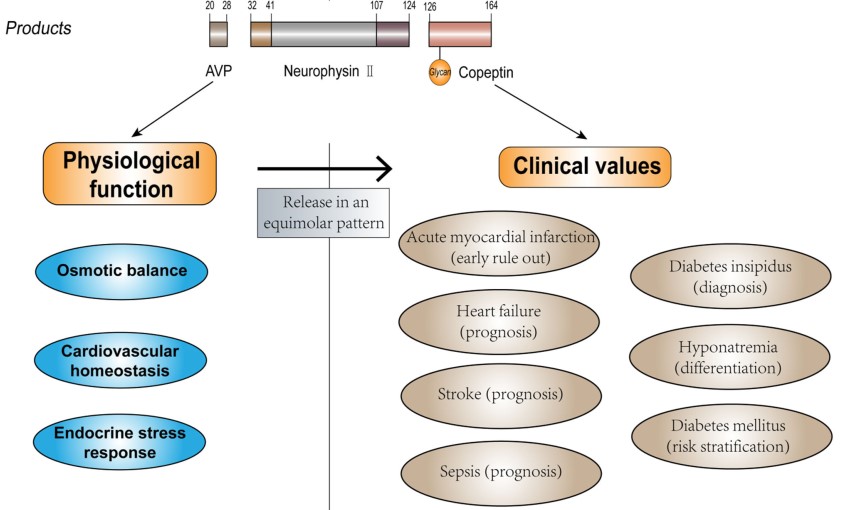 Figure 2. Clinical values of AVP and copeptin
(Source: Mu D, et al. 2022)
Copeptin is a non-specific marker of myocardial injury that rises and falls rapidly within hours of the onset of injury. This rapid release aids in the early diagnosis and assessment of cardiovascular disease. Although myoglobin, which is generally used to assess cardiovascular disease, appears early after myocardial injury, it peaks at only 6-9 h and is widespread in skeletal, cardiac, and smooth muscle, making it less specific. A meta-analysis of the accuracy of the combination of troponin and copeptin in the diagnosis of non-ST-segment elevation myocardial infarction showed that the combination of the two assays significantly increased the diagnostic sensitivity and negative predictive value, but the specificity and accuracy were reduced. Additional findings showed that the sensitivity and negative predictive value of the combination of copeptin, high-sensitivity cTnI, and modified HEART score (mHS) for risk stratification of patients with chest pain were 100%, suggesting that the combination of copeptin, cTnI, and mHS has good sensitivity and negative predictive value for short-term risk stratification of patients with chest pain.
Copeptin as a non-specific biomarker, which is also significantly elevated in patients with many humoral and stress-related diseases. Therefore, copeptin has low sensitivity and specificity when used alone for the diagnosis and exclusion of myocardial infarction and should be used in combination with other biomarkers. Clinical studies of copeptin in combination with troponin are increasing. In addition to its diagnostic value in acute myocardial infarction, copeptin levels also have a significant predictive value for the prognosis of patients with myocardial infarction. Copeptin, although differentially expressed between type 1 and type 2 myocardial infarction, has the same predictive value for the prognosis of both types of myocardial infarction. Immediate copeptin levels measured after percutaneous coronary intervention in patients with myocardial infarction are also of value for the prognosis of the patients concerned.
The main biomarkers currently used clinically for the diagnosis of heart failure are BNP and N-terminal brain natriuretic peptide precursors; however, elevated levels of BNP may be non-specific and can be elevated in the presence of a number of non-cardiac factors, such as pulmonary embolism, myocarditis and renal insufficiency. It was found that AVP was elevated in both acute and chronic heart failure and that copeptin, which is released in equimolar amounts with it, had the same trend. In addition to being elevated at the onset of heart failure, copeptin has good predictive value for the severity of heart failure. As cardiac function progressively declines and cardiac index gradually decreases, copeptin levels also progressively increase. Copeptin is also a good predictor of poor prognosis in patients presenting with dyspnoea in the advanced stages of heart failure.
It was found that haemodialysis patients with left ventricular dysfunction had significantly higher copeptin levels than haemodialysis patients with normal left ventricular function. The decrease in AVP during haemodialysis is associated with a decrease in osmolality, and hypertonic saline stimulates AVP release and prevents dialysis-induced hypotension. Although researchers have found that elevated plasma copeptin levels are associated with serious adverse outcomes in chronic kidney disease and hypertension, the exact mechanisms involved are unclear. A portion of the population believes that since copeptin is excreted and cleared by the kidneys, copeptin levels will rise as kidney function declines. The alternative view is that in patients with lower renal function, the AVP system is activated by the impaired ability to concentrate urine, releasing more AVP to maintain water balance.
The clinical features of diabetes insipidus are polydipsia and hypotonic polyuria, which can be classified according to the pathogenesis as central diabetes insipidus, nephrogenic diabetes insipidus, primary polydipsia, and diabetes insipidus in pregnancy. Copeptin has been proposed as a biomarker for the differential diagnosis of diabetes insipidus, with baseline levels identifying patients with nephrogenic diabetes insipidus and osmotic stimulation levels differentiating between central diabetes insipidus and primary polydipsia.
AVP can be directly or indirectly involved in the process of glucose metabolism regulation, for example, it can be involved in the regulation of hepatic glycogen catabolism and gluconeogenesis, as well as regulating the release of adrenocorticotropic hormone. Researchers have found that copeptin can be used as an independent predictor of diabetes development in addition to traditional blood glucose and insulin levels. Several studies of diabetic cardiovascular disease have shown that the more severe the coronary artery lesions and the greater the number of diseased branches in diabetic patients, the higher the plasma copeptin levels. In analysing the relationship between copeptin and the occurrence of cardiovascular events, it was found that copeptin remained as a predictor of coronary artery disease and heart failure in diabetic patients when compared with non-diabetic patients after correction for traditional risk factors, fasting glucose and glycated hemoglobin.
Copeptin has also been suggested as possibly having some predictive value in the early diagnosis and intervention of diabetic nephropathy. It has been found that as renal function becomes impaired, there is a gradual decrease in renal clearance and a gradual increase in plasma copeptin levels. Therefore, copeptin can reflect the renal function of diabetic nephropathy patients to some extent. Diabetic retinopathy is a serious eye complication of diabetes mellitus, which can lead to vision loss and even blindness. Early diagnosis and active intervention for diabetic retinopathy are of great significance. Analysis of serum copeptin levels in patients with type 2 diabetes mellitus revealed that high copeptin levels were not only associated with the development of diabetic retinopathy, but also that the higher the copeptin level, the higher the risk of diabetic retinopathy. There are more similar studies, but there is a need for further research related to exploring copeptin as an early predictor of diabetic retinopathy.
References
| Target | Cat. No. | Product Name | Size | Species Reactivity | Application | Detection Sample | |
| AVP | DEIA1101L | Human Copeptin ELISA Kit | 96T | Quantitative | Inquiry | ||
| CT-proAVP | DEIA-XYZ65 | Rat Copeptin ELISA Kit | 96T | Quantitative | Serum, plasma | Inquiry | |
| DEIA-XYZ66 | Human Copeptin ELISA Kit | 96T | Human | Quantitative | Serum, plasma | Inquiry | |
| DEIA-NS2307-86 | Human CPP(Copeptin) ELISA Kit | 96T | Human | Quantitative | Serum, plasma, tissue homogenates and other biological fluids. | Inquiry | |
| DEIA-NS2307-99 | Rat Copeptin ELISA Kit | 96T | Rat | Quantitative | Serum, plasma, cell culture supernatant and other biological samples. | Inquiry |
| Target | Cat. No. | Product Name | Expression System | Tag/Conjugate | Application | |
| CALCA | DAG-WT512 | Copeptin [BSA] | N/A | BSA | Calibrator, Immunogen | Inquiry |
| Target | Cat. No. | Product Name | Host | Isotype | Application | |
| CT-proAVP | CABT-L1118 | Mouse Anti-Human Copeptin(C-term) monoclonal antibody, clone 5915 | Mouse | IgG1 | ELISA | Inquiry |
| CABT-L1119 | Mouse Anti-Human Copeptin(C-term) monoclonal antibody, clone 5917 | Mouse | IgG1 | ELISA | Inquiry | |
| CABT-L1116 | Mouse Anti-Human Copeptin(N-term) monoclonal antibody, clone 5912 | Mouse | IgG1 | ELISA | Inquiry | |
| CABT-L1117 | Mouse Anti-Human Copeptin(N-term) monoclonal antibody, clone 5913 | Mouse | IgG1 | ELISA | Inquiry |
Loading ......
