
Inquiry Basket
 Loading ......
Bartonella henselae is the main pathogen of cat scratch disease (CSD). It belongs to the order Rickettsia, family Bartonellaceae, and genus Bartonella. It is a Gram-negative, slightly curved bacillus with a size of about 1 μm × 1.5 μm. Bartonella has strict nutritional requirements, is highly dependent on heme, and grows slowly. It takes 5 to 15 days, or even 45 days, to form visible colonies on most nutrient-rich blood-containing media. The traditional method of culturing Bartonella is to use a semi-solid medium containing fresh rabbit blood (sheep or horse blood can also be used). During the initial isolation and culture, white, dry, rough colonies can be formed, and the colonies are often trapped in the culture medium. The infected tissue pathology specimens were stained with Warthin-Starry silver and small bacilli were closely arranged in clusters.
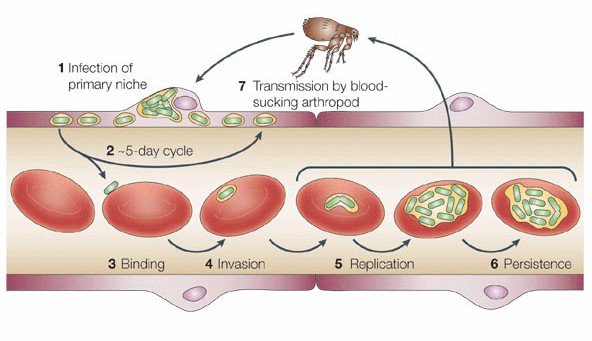 Figure 1. Bartonella henselae infection.( Dehio C.2005)
There have been many reports of human CSD bacillary hemangioma and bacillary purpura caused by Bartonella henselae in America, Europe, Japan, Australia and other regions. Cats are its main reservoir hosts, and the main source of infection is cats, especially kittens. More than 90% of patients have a history of contact with cats or dogs. When a person is scratched, bitten or licked by a cat, the pathogens in the cat's mouth and pharynx are infected through wounds or by intrusion through contaminated fur and paws. In some cases, it may be caused by contact with squirrels. Experiments on artificially infected cats have shown that intradermal inoculation of pathogens is more likely to cause bacteremia than intravenous inoculation, and no direct transmission between cats has been found. Bartonella may be transmitted from cat to cat mainly by the Ctenophora felis.
Although experimental infection can cause transient fever and loss of appetite in some cats, as well as mild histological damage to multiple organs, cats naturally infected with Bartonella henselae generally have no obvious clinical manifestations. Bacteremia caused by this bacterial infection can last for months, even years, and can be maintained despite the production of a high-level antibody response.
Most people infected with CSD are asymptomatic, or the symptoms are mild and go unnoticed. Once symptoms appear, they include local lymphadenopathy near the infection site, low-grade fever, anorexia, myalgia, etc. There is obvious pain in the lymph nodes, but generally there is no suppuration. 90% of cases recover spontaneously after experiencing mild symptoms, but symptoms may last for about 2 months. Complicated infections rarely occur and almost never cause death.
For immunocompromised patients, Bartonella henselae can cause serious infections, and CSD can cause sepsis and disseminated infection of multiple systems. A few cases manifest as bacillary hemangioma (BA) or bacillary purpura (BP). The main characteristic of BA is purple or colorless nodular lesions on the skin and internal organs caused by vascular tissue proliferative reaction. The main characteristic of BP is the formation of blood cysts in the liver, spleen and other reticuloendothelial tissues. Both conditions are fatal.
Immunofluorescence antibody technology can be used to detect serum antibodies for Bartonella henselae infection in cats, but it cannot determine whether the cat has bacteremia. Isolating the pathogen from blood can confirm the diagnosis, but it requires certain experimental technical conditions, and it takes several weeks to observe the growing colonies. Experimental studies have shown that Bartonella henselae can only be isolated intermittently from infected cats, which may be related to the intermittent discharge of the bacteria from infected organs.
Human CSD is mainly diagnosed based on clinical manifestations and history of contact with cats. Experimental diagnosis can use indirect immunofluorescence antibody technology with high sensitivity and specificity to detect serum antibodies. Antibody titers >1:64 can be judged as positive. In most patients, antibody levels increase a few weeks after lymphadenopathy occurs. Blood or lymphatic puncture can also be used to isolate and culture the pathogen, but it takes a long time.
Reference
| Target | Cat. No. | Product Name | Expression System | Tag/Conjugate | Application | |
| B. henselae | DAG-WT138 | Recombinant Bartonella henselae antigen (17 kDa) | E.coli | His | Immunoassays | Inquiry |
| B. henselae | DAG-WT139 | Recombinant Bartonella henselae antigen (26 kDa) | E.coli | His | Immunoassays | Inquiry |
| B. henselae | DAG-WT140 | Recombinant Bartonella henselae SucB antigen | E.coli | His | Immunoassays | Inquiry |
Loading ......
