
Inquiry Basket
 Loading ......
Pyrrolobenzodiazepines (PBDs) demonstrate their power in cancer treatment through their DNA damage induction capability and selective targeting of tumor cells. Clinical trial results demonstrate that these compounds effectively fight cancer because they create covalent DNA adducts which distort DNA structure. Pyrrolobenzodiazepines show therapeutic promise but require careful management of their serious toxicity issues to maximize clinical effectiveness. The study investigates the root causes of PBD toxicity through an examination of unintended DNA damage and its effects on liver function and bone marrow activity. The text presents methods to reduce risks which will enhance patient results and broaden PBD treatments' effective dose range.
Pyrrolobenzodiazepines function as anticancer agents by attaching to DNA to form covalent adducts which disrupt cellular replication and transcription. Although these treatments destroy cancer cells effectively they simultaneously inflict serious damage on healthy tissues. PBD toxicity poses a significant concern because these agents can cause off-target DNA damage in healthy cells which results in unintended genetic alterations. The unintended damage PBDs cause outside their target reduces their selectivity and leads to toxic effects that limit clinical application.
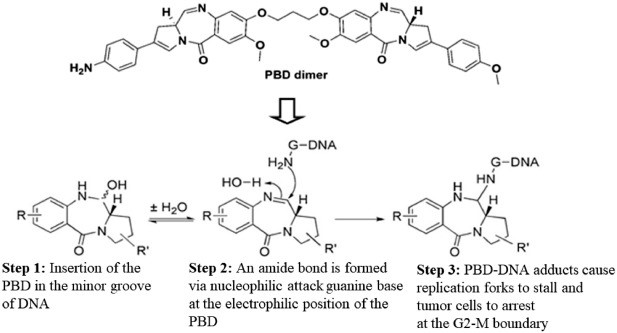 Figure 1. PBD-DNA complex formation. (Sources: Utsab Debnath, et al. 2022)
The presence of off-target DNA damage serves as a defining feature of PBD toxicity. The mechanism begins with PBDs inserting themselves into DNA structures while covalent bonds subsequently form that lead to DNA strand breaks or crosslinks. Damage to DNA strands interrupts essential cellular functions including replication, repair, and transcription which may ultimately cause cell death or the development of cancer. Healthy cells in tissues with rapid cell division such as bone marrow and liver show the highest vulnerability to these unintended DNA alterations.
PBDs produce double-strand breaks (DSBs) within cancer cells that the cells struggle to mend which leads to apoptosis. The mechanism which works to kill cancer cells results in toxicity when it affects healthy cells that divide rapidly.
The liver functions as a primary site for drug metabolism and elimination and also processes PBDs in this manner. Because the liver processes these compounds it becomes the main target for toxic effects. Liver damage stands as a frequent side effect across various chemotherapy drugs and PBDs share this characteristic.
During PBD metabolism reactive metabolites form in the liver which lead to oxidative stress and mitochondrial dysfunction in liver cells. Liver damage creates reduced functionality which results in jaundice and elevated liver enzymes while continued damage progresses the organ toward liver failure.
Clinical settings benefit from biomarker detection for liver toxicity because it allows earlier diagnoses and better monitoring of treatment. ALT enzymes alongside AST enzymes and bilirubin levels serve as the main biomarkers for assessing liver health. Medical professionals can measure liver damage through these markers and adjust drug dosages to block additional liver harm.
Bone marrow suppression remains the most common negative outcome of PBDs because it leads to hematologic toxicities including neutropenia, anemia, and thrombocytopenia. PBDs disrupt normal hematopoiesis resulting in improper blood cell production by the bone marrow.
Bone marrow suppression serves as a dose-limiting toxicity that impacts both chemotherapy treatments and PBDs. Patients develop infection risks from neutropenia because of reduced white blood cell counts and experience fatigue along with body system effects due to anemia. When thrombocytopenia lowers platelet counts it creates a heightened risk of bleeding episodes and bruising.
The therapeutic window of a drug establishes the dosage boundaries that ensure the drug remains effective while avoiding toxic effects. The main difficulty associated with PBDs is finding a dosage which delivers anticancer effects without causing substantial DNA damage or organ toxicity. Doctors must focus on preventing hepatotoxicity and bone marrow suppression since these toxicities frequently dictate the maximum allowable medication dose.
The therapeutic range for PBDs varies considerably depending on genetic factors within patients as well as their liver function status and the type of cancer being treated. Thorough monitoring during treatment allows clinicians to adjust dosages properly because of variability which helps prevent toxicity. Through pharmacogenomic profiling personalized medicine methods can identify patients who face severe toxicity risks allowing for tailored treatment strategies.
Developing strategies to reduce PBD-related side effects remains essential due to their considerable toxicity risks. Various methods have been examined to improve the therapeutic index of therapies involving PBDs.
Researchers must evaluate potential toxicity of new drugs using preclinical models prior to starting clinical trials. Early predictions about PBD effects on essential tissues can be obtained through in vitro cell-based assays including hepatocyte cultures and bone marrow models. Animal models serve as tools to mimic human metabolic processes while supplying extensive data about systemic toxicity.
Researchers have discovered molecular toxicity signatures through biomarker advancements which help identify both hepatotoxicity and bone marrow suppression. Early detection of these biomarkers enables clinicians to make data-backed choices about modifying the treatment plan or stopping the medication entirely. Real-time data from ALT, AST, and complete blood counts (CBC) biomarkers enables early detection of liver and bone marrow toxicity before it reaches a life-threatening level.
Targeted drug delivery systems represent a promising approach to minimize systemic toxicity from PBDs. Engineered nanoparticles and liposomes along with other delivery systems enable PBDs to target tumor cells directly while protecting healthy tissues from toxic side effects. Scientists are developing targeted nanoparticles for PBD encapsulation and cancer-marker-recognizing antibody conjugates to enhance drug delivery to tumors while minimizing normal tissue exposure.
Through personalized medicine researchers can customize PBD treatment for each patient to achieve the best possible mix of therapeutic effectiveness and safety. Through pharmacogenomic profiling healthcare professionals can identify patients whose genetic markers signal higher chances of negative drug reactions. TDM enables healthcare providers to adjust drug dosages immediately according to patient reactions to ensure safe and effective treatment.
The deepening understanding of PBD toxicity allows researchers to create innovative solutions that address these compounds' limitations. Researchers design next-generation PBD analogs to achieve improved safety profiles which may reduce both off-target DNA damage and organ toxicity. Researchers are investigating combination treatments that use PBDs together with immunotherapy or targeted therapy to enhance therapeutic effects and reduce adverse reactions.
Pyrrolobenzodiazepines stand as an effective anticancer class with transformative potential for cancer treatments. The clinical application of these agents faces considerable obstacles due to toxic effects such as DNA damage outside targeted cells and liver toxicity along with bone marrow suppression. Advancing knowledge of toxic mechanisms alongside early detection and personalized medicine approaches will expand the therapeutic window for treatments using PBDs. Through continuous research and technological development PBDs will achieve higher safety standards and effectiveness which will produce better cancer treatment results for patients worldwide.
Reference
| Target | Cat. No. | Product Name | Host | Isotype | Application | |
| PBD | CABT-L3116 | Rabbit Anti-PBD SG3199 polyclonal antibody | Rabbit | IgG | ELISA | Inquiry |
| CABT-L3117 | Mouse Anti-PBD SG3199 monoclonal antibody, clone 8I7I0B7 | Mouse | IgG | ELISA | Inquiry |
| Target | Cat. No. | Product Name | Expression System | Tag/Conjugate | Application | |
| PBD | DAG-WZ1008 | PBD SG3199[BSA] | BSA | ELISA, LFIA | Inquiry | |
| DAG-WT677K | MC-Val-Ala-PBD [KLH] | N/A | KLH | N/A | Inquiry | |
| DAG-WT677B | MC-Val-Ala-PBD [BSA] | N/A | BSA | N/A | Inquiry |
Loading ......
