
Inquiry Basket
 Loading ......
Tumor associated antigens (TAA) are biomolecules that can indicate the presence or progression of cancer. They can include proteins, antigens, and enzymes, typically produced by the tumor itself or the body's response to cancer. Unlike tumor specific antigens unique to cancer cells, tumor associated antigens may also exist in normal cells but are significantly overexpressed in malignant tissues. This overexpression makes them excellent targets for detection and measurement in serum, plasma, and other body fluids, providing a relatively non-invasive approach for cancer management. The quantitative ELISA kit for tumor associated antigens provides values that can be tracked over time, enabling clinicians and researchers to establish individual patient baselines, monitor disease progression, and evaluate treatment efficacy. The standardization of ELISA protocols between laboratories has promoted comparability of results and improved their practicality in different patient populations and studies.
In terms of innate immunity, NK cells, macrophages, and dendritic cells launch early and widespread attacks on cancer cells. Meanwhile, adaptive immunity enables B cells (secreting antibodies) and T cells (CD4+and CD8+subsets) to participate in sustained antigen-specific tumor elimination. TAA is a key molecular target that enables immune cells to distinguish between cancer cells and healthy tissues. Tumor associated antigen ELISA kits are indispensable in oncology research as they can accurately quantify these TAAs. By measuring TAA levels, researchers can reveal how these antigens regulate immune recognition, explore mechanisms of tumor immune evasion (such as TAA downregulation), and evaluate the efficacy of immunotherapy (such as TAA based vaccines or checkpoint inhibitors).
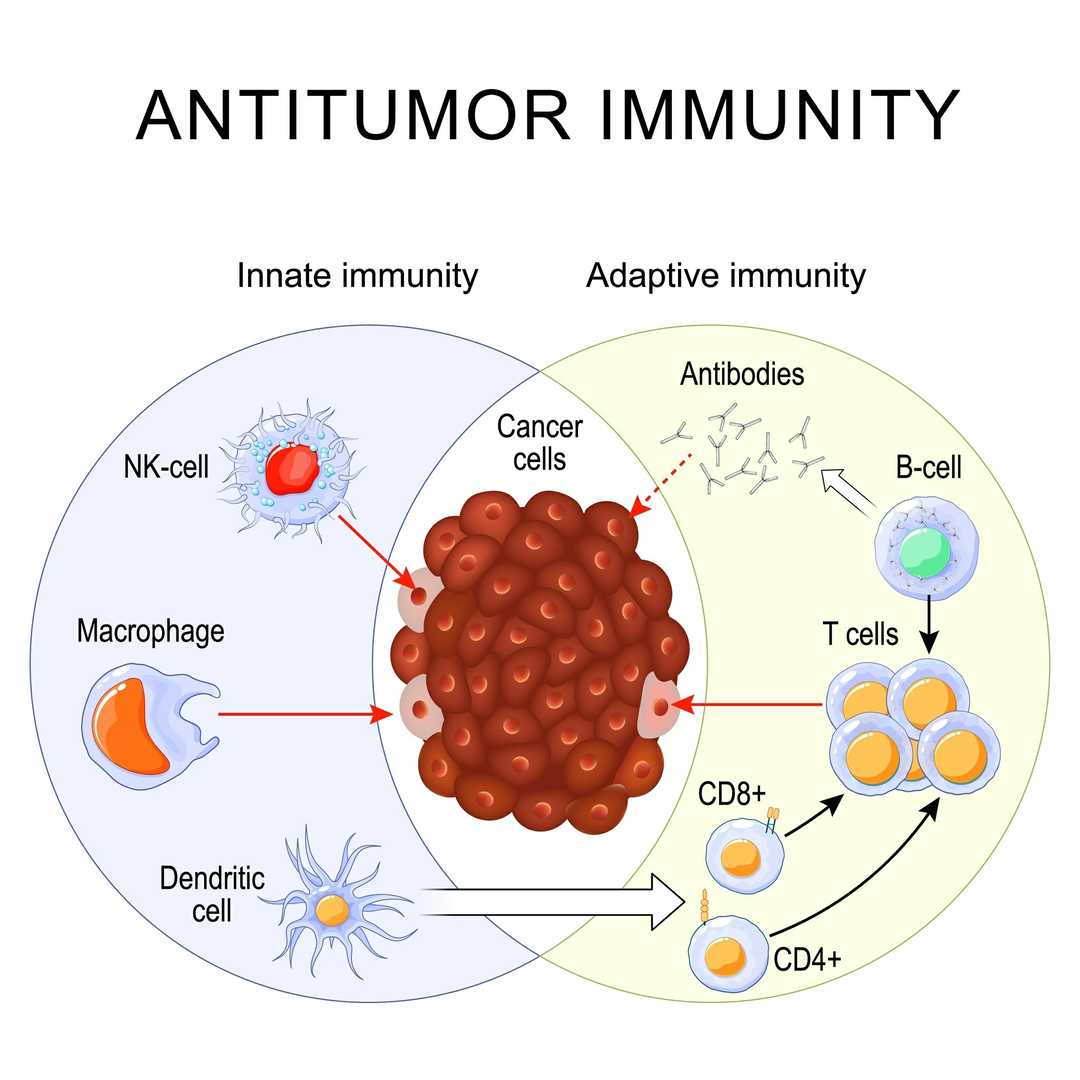 Figure 1. Antitumor Immunity.
The ELISA method, especially the sandwich ELISA format, is widely used for TAA detection due to its enhanced specificity and sensitivity. This technique typically uses two different antibodies that bind to different epitopes on the target TAA:
 Figure 2. Tumor-Associated Antigen Detection.
The TAA-ELISA kit has multiple applications in oncology:
The global market of tumor marker ELISA kits includes various cancer types, including lung cancer, breast cancer, stomach cancer, liver cancer and esophageal cancer, reflecting its extensive diagnosis and research applications.
A series of tumor associated antigens (TAAs) have become key targets in oncology research, and specialized ELISA kits can achieve precise quantification. For example, the human EMMPRIN ELISA kit targets EMMPRIN - a TAA that is crucial for tumor cell invasion and matrix metalloproteinase regulation. It is compatible with human cell culture supernatants, serum, plasma, saliva, urine, and milk, supporting multi tissue studies of tumor microenvironment dynamics. For TAAs associated with inflammation driven tumorigenesis, the alpha-1-antitrypsin (alpha-1-protease inhibitor) ELISA kit can be used to quantitatively detect TAAs in human feces, plasma, or serum. Additionally, the α1-Microglobulin ELISA Kit focuses on α1-Microglobulin, a TAA with aberrant expression in hepatocellular carcinoma and other malignancies. It enables quantitative analysis in human plasma, serum, and urine, facilitating research into its potential as a diagnostic or prognostic biomarker. Our feature products are as follows:
| ELISA Kit Name | Target | Species Reactivity | Detection Sample Types | Application |
| Human EMMPRIN ELISA Kit | EMMPRIN | Human | Cell culture supernatants, serum, plasma, saliva, urine, milk | Tumor cell invasion, matrix metalloproteinase regulation, and tumor microenvironment research |
| α1-Antitrypsin (Alpha-1-Proteinase-Inhibitor) ELISA Kits | α1-Antitrypsin (Alpha-1-Proteinase-Inhibitor) | Human | Stool | Inflammation-driven tumorigenesis and tumor-related inflammatory processes research |
| α1-Antitrypsin Clearance ELISA Kit | α1-Antitrypsin (Alpha-1-Proteinase-Inhibitor) | Human | Plasma, serum, stool | Inflammation-cancer crosstalk mechanism and disease progression research |
| α1-Microglobulin ELISA Kit | α1-Microglobulin | Human | Plasma, serum, urine | Diagnostic and prognostic biomarker research in hepatocellular carcinoma and other malignancies |
Case Study 1: Quantifying α1-Microglobulin with High Accuracy and Precision – Performance Validation of a Novel ELISA Kit for Early Organ Damage Assessment

This kit has been used to study early organ damage in patients with hypertension. Research has shown that measuring serum levels of alpha 1-MG and other biomarkers can help diagnose early injury, usually before traditional markers such as serum creatinine become abnormal.
Case Study 2: Unveiling the Role of PAI-1 in Thrombosis and Cancer – Research Applications of a Sensitive ELISA Kit for a Pivotal Biomarker

This kit has been proven to have significant value in cardiovascular and oncology research. For example, a study on acute pulmonary thromboembolism (APE) showed that plasma PAI-1 levels were significantly elevated in APE patients compared to healthy controls

At Creative Diagnostics, we understand that your research and diagnostic results depend on the quality and reliability of your tools. When it comes to tumor associated antigen ELISA kits, we stand out as your trusted partner for the following reasons:
Excellent performance and precision
Our TAA-ELISA kit has excellent sensitivity, wide dynamic range, and outstanding reproducibility, with intra - and inter assay CVs typically below 10%. This ensures that you obtain reliable and publishable data for oncology research.
A wide range of tumor biomarker combinations
We offer the most comprehensive TAA ELISA kit in the industry, covering established biomarkers (CEA, CA19-9, PSA) for various types of cancer, including gastrointestinal cancer and other cancer.

We collect and process clinical samples (serum/plasma) to eliminate hemolysis/hyperlipidemia and ensure compliance with pre analytical quality standards prior to testing.

We initialize the ELISA kit by preparing calibration samples constructed from standard curves and running low/high concentration quality control materials.

We add the processed sample to a pre coated microplate, incubate to form a sandwich complex, and perform sequential washing to remove non-specific binding.

We measured absorbance using a microplate reader, and calculated tumor marker concentrations using a validated regression model.

We cross validate the results based on the quality control scope, address potential interferences (such as hook effects), and generate clinically actionable reports.

Simplified Sample Processing
Unlike competing kits that require complex sample preprocessing, this kit allows direct use of homogenates, serum, or plasma after simple centrifugation.

Versatile Sample Compatibility
These kits support wide-ranging sample types, including serum, plasma, cell culture supernatants, urine, stool, saliva, and milk. This versatility allows researchers to investigate TAA expression across different tissues.

High Specificity for Human GHRF
The antibodies used in this kit have been selected for high specificity to human tumor-associated antigen, showing minimal cross-reactivity with related molecules. This ensures accurate measurement of TAA in complex sample.
The tumor associated antigen ELISA kit is an indispensable tool in modern oncology research and clinical practice. By reliably and quantitatively measuring cancer-related molecules, these kits connect laboratory science with patient care, providing critical data and information for understanding disease mechanisms, diagnostic strategies, and treatment methods. The continuous improvement of ELISA technology, which enhances sensitivity, multiplexing capability, and workflow efficiency, is expected to further expand its application scope. In addition, the development of new methods, such as nanopore based ELISA (NEISA), provides significantly improved sensitivity and the ability to simultaneously detect multiple biomarkers, indicating an exciting future for biomarker detection technology.
The key parameters include:
Sensitivity: The lowest concentration that can be reliably distinguished from zero.
Detection range: the interval between the lowest and highest measurable concentrations.
Accuracy: Typically measured through intra - and inter batch coefficient of variation (CV), values below 10% are considered clinically applicable.
Blood samples should be collected using standardized protocols, typically using serum separation tubes with appropriate clot formation prior to centrifugation.
Hemolysis or lipid samples should be avoided as they may interfere with detection performance.
For short-term storage (up to 24 hours), samples can usually be kept at 2-8 ° C.
For long-term preservation, it is recommended to freeze at -20 ° C or -80 ° C and divide equally to avoid repeated freeze-thaw cycles that may degrade antigens.
Yes, multiple immunoassays can simultaneously quantify multiple TAAs in a single small volume sample. These platforms use color coded magnetic microspheres coated with different capture antibodies, allowing for mixed detection in one well. While providing comprehensive analysis and sample preservation, multiple detection may have slightly different performance characteristics compared to single analyte ELISA, and should be validated for specific research applications.
False positives may arise from cross reactivity with non target proteins (mitigated by highly specific antibodies) or hemolysis/lipid samples. False negatives are usually caused by sample dilution exceeding the range of the reagent kit or improper storage. Always run positive/negative controls to validate the results.
Loading ......
