
Inquiry Basket
 Loading ......
Transfer RNA (tRNA) is the key adaptor molecule in protein synthesis. The modifications of tRNA are essential for proper folding, stability, and accurate decoding of genetic information during translation. To date, ~170 RNA modifications discovered in RNAs, about half of which are present in tRNAs. Abnormalities in these modifications have been linked to a variety of diseases, highlighting the importance of reliable analysis techniques. The techniques for analyzing tRNA modifications often face challenges in specificity, sensitivity, and scalability. The Antibody-based analysis offer a promising choice, providing specificity and sensitivity for identifying specific tRNA modifications.
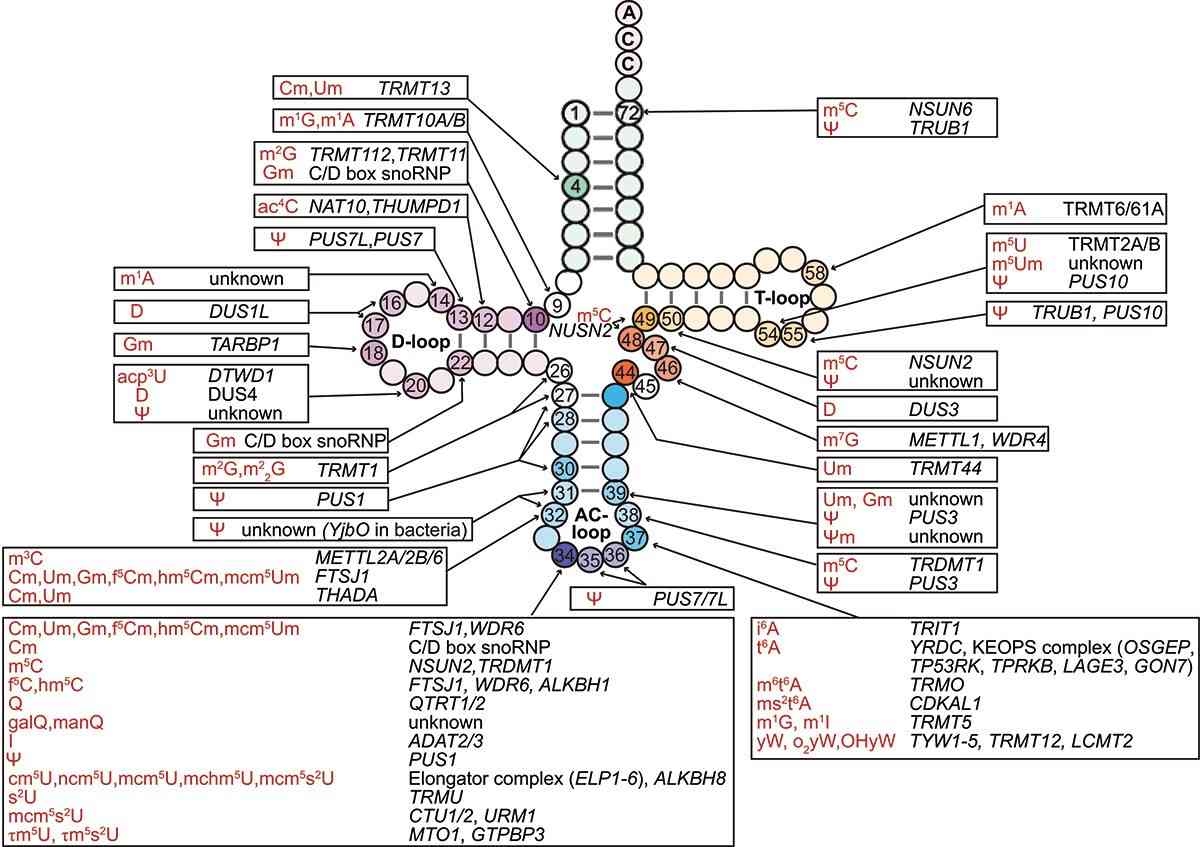 Fig. 1 Schematic representation of human cytoplasmic tRNA modifications and their writer enzymes.
(Zhang M, Lu Z. RNA Biol. 2025)
The common modifications can be broadly classified based on their chemical nature:
Methylation: This is the most prevalent type of tRNA modification, involving the addition of a methyl group (CH3) to a nucleotide base or ribose sugar.
Thiolation: Involving the replacement of an oxygen atom with a sulfur atom in a nucleotide base.
Pseudouridylation: Isomerization of uridine to pseudouridine (Ψ), impacting tRNA folding and stability.
Dihydrouridylation: Reduction of uridine to dihydrouridine (D), often found in the D-loop of tRNAs, contributing to tRNA flexibility.
Acetylation: Addition of an acetyl group (COCH3), for example, acetylation of cytidine at position 12 in tRNA, which can influence tRNA recognition by aminoacyl-tRNA synthetases.
Post-transcriptional modifications of tRNA nucleosides are ubiquitous and occur at specific nucleotide positions. These modifications play several critical roles in some processes.
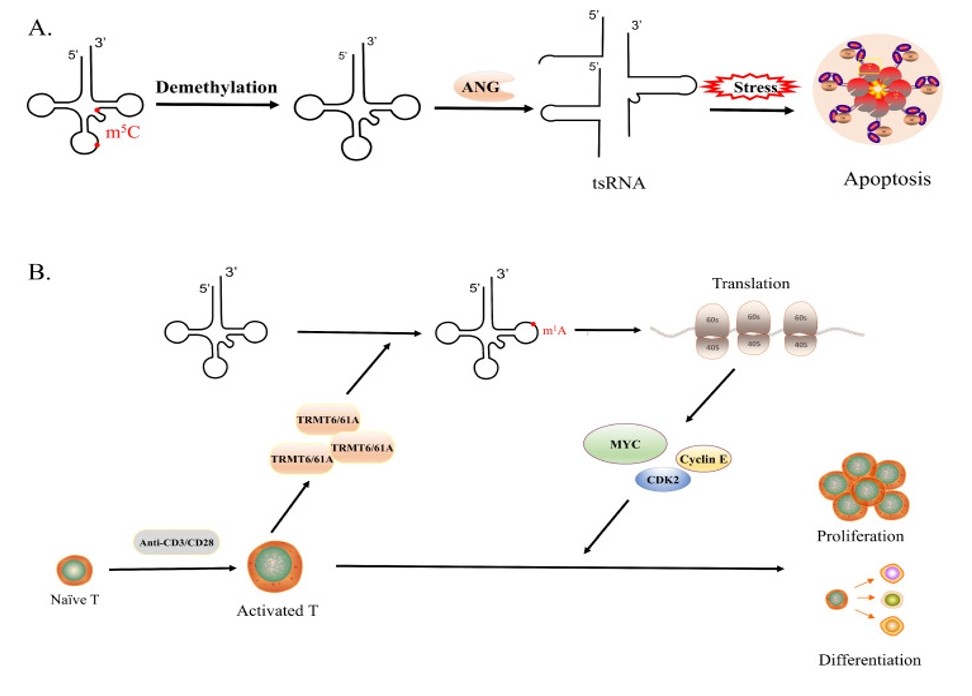 Fig. 2 tRNA modifications and biological processes.
(Cui W.; et al. Int J Biol Sci. 2023)
Structural Stability: Modifications such as pseudouridine (Ψ) and 5-methylcytosine (m5C) enhance the structural integrity of tRNA, promoting correct folding and thermal stability.
Decoding Accuracy: Modifications in the anticodon loop, like inosine (I) and queuosine (Q), improve codon-anticodon interactions, reducing misincorporation of amino acids and ensuring translational fidelity.
Regulation of Gene Expression: Dynamic modulation of tRNA modifications can adjust translation rates in response to cellular signals and stress conditions, affecting protein synthesis globally or selectively.
Adaptation to Environmental Stress: Certain modifications enable organisms to adapt to changes in temperature, nutrient availability, and other environmental factors by altering tRNA function.
Defects in tRNA modifications, known as "RNA modopathies," lead to pathological effects in a wide range of tissues and cell types. These abnormal modifications can destabilize tRNA molecules, disrupting normal protein translation and contributing to the onset of various diseases, including cancer, neurological disorders, diabetes, and mitochondrial diseases.
| tRNA modifications | Diseases |
| m7G | Glioblastoma multiforme, Liposarcoma, Melanoma, Acute myeloIntellectual Disabilities leukemia, Intrahepatic cholangiocarcinoma, hepatocellular carcinoma, Cervical cancer, etc. |
| m5C | Ovarian cancer, Intellectual Disabilities, depression-like behavior, Dubowitz-like syndrome, etc. |
| m6A | Glioblastoma multiforme, Pancreatic cancer |
| m3C | Developmental delay and early-onset epileptic encephalopathy |
| m1A | Cervical cancer, Prostate cancer, Hepatocellular carcinoma, Bladder cancer, Glioblastoma multiforme, Alzheimer's disease, Mitochondrial disorders |
| m1G | Childhood diabetes |
| PSU | Glioblastoma multiforme, Neurodevelopmental disorder, Mental disorder, Amyotrophic lateral sclerosis, MLASA |
| mcm5U34/mcm5s2U34 | Bladder cancer, Breast cancer, Ovarian cancer, Colon cancer, Melanoma |
| ac4C | Syndromic intellectual disability |
| ms2t6A37 | Type 2 diabetes |
| τm5U | MELAS |
The importance of tRNA modifications for tRNA function necessitates adequate methods to reliably determine tRNA modifications in complex samples. This has been a focus of active research and development in recent years. Techniques that have emerged include liquid chromatography coupled with mass spectrometry (LC-MS), antibody-based immunoassays, and methodologies that utilize reverse transcription followed by next-generation sequencing (RT-NGS). However, LC-MS and NGS often require extensive sample processing, which can compromise RNA integrity and obscure the structural context essential for understanding functional implications. Antibody-based analysis may offer a promising alternative. By harnessing the high specificity and affinity of antibodies toward particular modified nucleosides, researchers can achieve quantification of tRNA modifications within complex biological samples. Antibodies can be employed in various assay formats, including immunoprecipitations (IP), and immunofluorescence (IF) and dot blot. These techniques often require minimal sample preparation, preserving the native structure of tRNAs and allowing for the exploration of modifications in their physiological context.
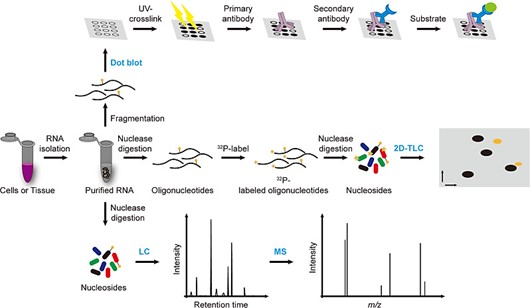 Fig. 3 Schemes of RNA modification quantification methods.
(Zhang Y.; et al. Exp Mol Med. 2022)
Creative Diagnostics offers a range of highly validated antibodies for tRNA modifications detection. These antibodies have been thoroughly validated in many immunological applications. Please check out our highly sensitive and specific antibodies in the product list.
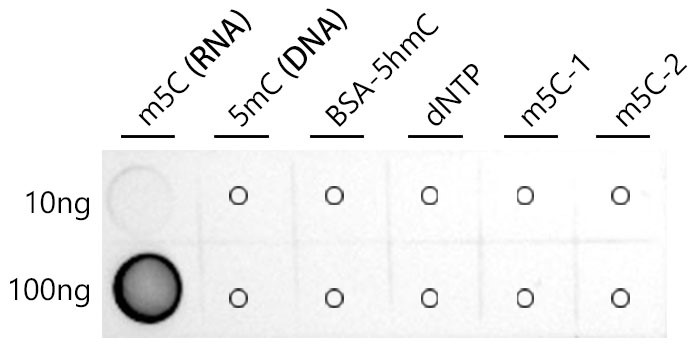 Fig. 4 Dot blot analysis of 5-hmC, 5mC and unmodified adenosine using m5C (RNA) Rabbit mAb (Cat. No. DMABC-JX060)
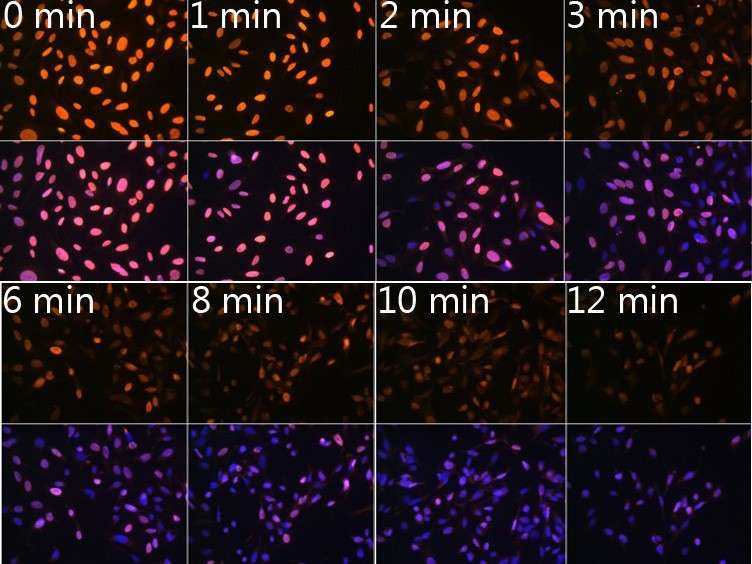 Fig. 5 Immunofluorescence analysis of U2OS cells pre-treated with BrdU (subjected UVC irradiation incubated at 37 °C) using m6A Rabbit mAb. (Cat. No. CABT-CS610)
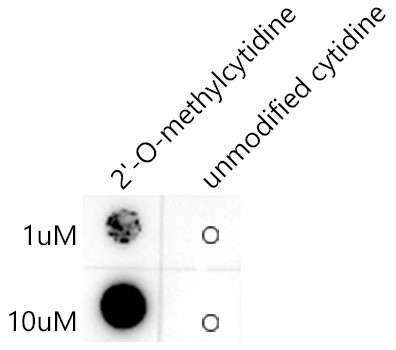 Fig. 6 Dot Blot analysis of 2'-O-methylcytidine and unmodified cytidine using Cm Rabbit mAb (Cat. No. DMABB-JX352)
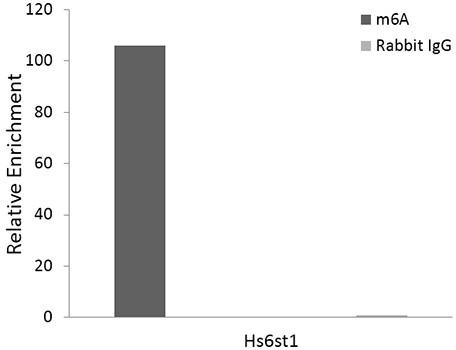 Fig. 7 RNA Immunoprecipitation analysis of 100 µg mouse liver total RNA ,using m6A Rabbit mAb. (Cat. No. DPABC-JX034)
References
| m1A Antibodies | ||||
| Cat. No. | Product Name | Application | ||
| DMABB-JX51 | Mouse Anti-1-methyladenosine (m1A) monoclonal antibody, clone 346 | IF, IHC, IP | Inquiry | |
| DMABC-JX071 | Mouse Anti-1-Methyladenosine (m1A) monoclonal antibody, clone 3G3 | Dot, ELISA | Inquiry | |
| m6A Antibodies | ||||
| Cat. No. | Product Name | Application | ||
| DMABC-JX061 | Rabbit Anti-N6-methyladenosine (m6A) monoclonal antibody, clone 6114 | Dot, ICC/IF, IP, ELISA | Inquiry | |
| CABT-CS609 | Rabbit Anti-N6-methyladenosine / m6A Monoclonal Antibody, clone 2H2 | Dot, ELISA | Inquiry | |
| CABT-B1203 | Mouse Anti-N6-methyladenosine / m6A monoclonal antibody, clone 28-4-5-2 | Dot, RIP | Inquiry | |
| DPABB-JX05 | Rabbit Anti-N6-methyladenosine / m6A polyclonal antibody | Dot, RIP | Inquiry | |
| m6,6A Antibodies | ||||
| Cat. No. | Product Name | Application | ||
| DPABB-JX04 | Rabbit Anti-N6N6-dimethyladenosine / m6,6A polyclonal antibody | Dot, RIP | Inquiry | |
| m8A Antibodies | ||||
| Cat. No. | Product Name | Application | ||
| DMABC-JX075 | Rabbit Anti-8-methyladenosine (m8A) monoclonal antibody, clone 236-2 | ELISA, IP | Inquiry | |
| m4C Antibodies | ||||
| Cat. No. | Product Name | Application | ||
| DPABB-JX163 | Rabbit Anti-N4-Methylcytidine?polyclonal antibody | ELISA, WB | Inquiry | |
| DMABC-JX074 | Rabbit Anti-N4-methylcytidine (m4C) monoclonal antibody, clone 219 | IP, ELISA | Inquiry | |
| m5C Antibodies | ||||
| Cat. No. | Product Name | Application | ||
| DMABC-JX060 | Rabbit Anti-5-methylcytidine (m5C) monoclonal antibody, clone 65688 | Dot, ELISA | Inquiry | |
| DPABC-JX040 | Rabbit Anti-5-methylcytidine (m5C) polyclonal antibody | Dot, ELISA | Inquiry | |
| DPABC-JX041 | Rabbit Anti-N5-Methylcytidine (m5C) polyclonal antibody | ICC/IF, ELISA | Inquiry | |
| m1I Antibodies | ||||
| Cat. No. | Product Name | Application | ||
| DPABB-JX03 | Rabbit Anti-1-methylinosine polyclonal antibody | Dot | Inquiry | |
| m1G Antibodies | ||||
| Cat. No. | Product Name | Application | ||
| DMABC-JX076 | Rabbit Anti-1-methylguanosine (m1G)) monoclonal antibody, clone 261 | Dot, IP, ELISA | Inquiry | |
| m3G Antibodies | ||||
| Cat. No. | Product Name | Application | ||
| DMABB-JX52 | Mouse Anti-2,2,7-trimethylguanosine?monoclonal antibody, clone 340 | IF, IP | Inquiry | |
| m7G Antibodies | ||||
| Cat. No. | Product Name | Application | ||
| DMABC-JX059 | Mouse Anti-7-Methylguanosine (m7G) monoclonal antibody, clone 4F21 | IHC, Dot, ELISA | Inquiry | |
| m2,2G Antibodies | ||||
| Cat. No. | Product Name | Application | ||
| DMABC-JX072 | Rabbit Anti-N2,N2-dimethylguanosine (m2,2G) monoclonal antibody, clone 51 | Dot, IP, ELISA | Inquiry | |
| Ψ Antibodies | ||||
| Cat. No. | Product Name | Application | ||
| DMABB-JX55 | Mouse Anti-Pseudouridine monoclonal antibody, clone 358 | RIP | Inquiry | |
| DMABC-JX073 | Mouse Anti-Pseudouridine monoclonal antibody, clone 2H8 | Dot, ELISA | Inquiry | |
| ac4C Antibodies | ||||
| Cat. No. | Product Name | Application | ||
| DPABC-JX034 | Rabbit Anti-N4-acetylcytidine (ac4C) polyclonal antibody | Dot, ELISA | Inquiry | |
| Inosine Antibodies | ||||
| Cat. No. | Product Name | Application | ||
| DMABB-JX53 | Mouse Anti-Inosine monoclonal antibody, clone 362 | RIP | Inquiry | |
| Nm Antibodies | ||||
| Cat. No. | Product Name | Application | ||
| DMABB-JX352 | Rabbit Anti-2'-O-methylcytidine/Cm monoclonal antibody, clone BSD61740 | ELISA, Dot | Inquiry | |
| DPABB-JX167 | Rabbit Anti-2'-O-methylcytidine/Cm polyclonal antibody | ELISA, Dot | Inquiry | |
| DMABB-JX351 | Rabbit Anti-2'-O-methyluridine(Um) monoclonal antibody, clone BSD61861 | ELISA, Dot | Inquiry | |
| DPABB-JX166 | Rabbit Anti-2'-O-methyluridine(Um) polyclonal antibody | ELISA, Dot | Inquiry | |
| DMABB-JX350 | Rabbit Anti-2'-O-Methylguanosine(Gm) monoclonal antibody, clone BSD61883 | ELISA, Dot | Inquiry | |
| DPABB-JX165 | Rabbit Anti-2'-O-Methylguanosine(Gm) polyclonal antibody | ELISA, Dot | Inquiry | |
| DPABB-JX168 | Rabbit Anti-2'-O-methyladenosine/Am polyclonal antibody | ELISA, Dot | Inquiry | |
Loading ......
