
Inquiry Basket
 Loading ......
The adaptive immune system depends on T cells to identify and fight against foreign invaders and diseased cells. The immune system produces T cells from hematopoietic stem cells (HSCs) found in bone marrow before these cells move to the thymus for development and finally become different types of cells which defend the body. Scientists use particular surface markers and functional indicators to study T cell classification and functional analysis which enables them to determine cell identity and track cellular development.
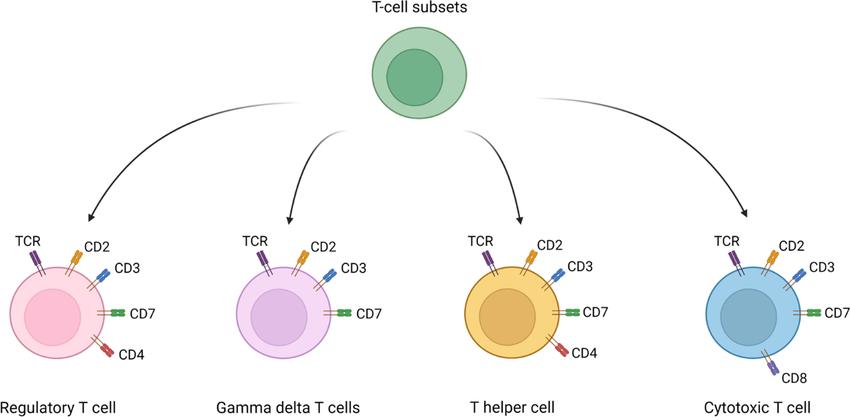 Figure1. Differentiation of T-cell subsets and their respective cell surface marker.(Gosmann D, et al. 2022)
1. Naïve T Cells
Naïve T cells represent mature T cells which have not encountered their particular antigens. Naïve CD4+ T cells display CD4+ and CD45RA+ and CD45RO- and CCR7+ surface markers which indicate they have not encountered antigens and they can migrate to secondary lymphoid organs. Naïve CD8+ T cells express CD8+ and CD45RA+ and CD45RO- and CCR7+ and CD28+ surface markers and they release IFN-γ and IL-2 cytokines after activation. The combination of these markers enables scientists to identify unactivated T cells through standard procedures.
2. CD4+ T Cell Subtypes
The immune system uses CD4+ T cells (helper T cells) to identify different subtypes through their cytokine production and transcription factor expression. The immune system depends on different subtypes of T cells to execute their functions.
Th1 Cells: The main cytokine produced by Th1 cells is interferon-γ (IFN-γ) while T-bet functions as their transcription factor. The surface markers of Th1 cells include CD4+ and CxCR3+ and CCR5+ and IL12Rβ2+. The immune system depends on Th1 cells to fight viruses and tumors because they activate macrophages and boost cytotoxic T cell activity.
Th2 cells: The surface markers of Th2 cells include CD4+ and CxCR4+ and IL12Rβ2- while they produce IL-4 and IL-5 through GATA3 transcription factor regulation. The immune system depends on Th2 cells to fight parasites and trigger allergic reactions and to help B cells transform into antibody-producing cells.
Th9 cells: The IL-9 secretion of Th9 cells occurs through their CD4+ CCR3+ CCR6+ surface markers while PU.1/Spil functions as their transcription factor. The immune system depends on Th9 cells to fight tumors and maintain mucosal defenses and they also contribute to specific allergic reactions.
Th17 cells: The immune system depends on Th17 cells to fight bacterial and fungal infections because these cells produce IL-17 while expressing CD4+ and CCR6+ and CCR4+ and NK1.1+ surface markers. The immune system depends on Th17 cells to combat infections because these cells control autoimmune diseases through their dual function of inflammation management and tissue protection.
Th22 cells: The IL-22 secretion of Th22 cells occurs through their surface expression of CD4+ CCR10+ CCR4+ and CCR6+ markers. The immune system depends on Th22 cells to protect epithelial tissues because these cells help with tissue repair and control local inflammation.
Tfh cells (follicular helper T cells) activate B cell development and antibody production through IL-21 release which the immune system requires for its operation. The surface markers of Tfh cells include CD4+ and CxCR5+ and CD40L+ and ICOS+ while they express Bcl-6 transcription factor. The immune system depends on Tfh cells to generate high-affinity antibodies because they serve as vital elements for humoral immunity.
3. CD8+ T Cells
The environment causes CD8+ T cells to develop into cytotoxic CD8+ T cells. The cells display CD8+ and CD45RA+ and CD45RO- and CCR7+ and CD28+ surface markers and they produce IFN-γ and IL-2 as functional indicators. The immune system depends on CD8+ T cells to detect and destroy virus-infected cells and cancer cells because they serve as its main cellular protection mechanism.
4. γδ T Cells
The immune system includes γδ T cells which operate as an independent T cell subset because they express γδ T cell receptors. The immune cells between innate and adaptive immunity function as rapid defenders which protect mucosal surfaces from invading pathogens. The immune cells of γδ T cells produce various cytokines which enable them to direct local immune reactions and promote tissue repair.
5. Regulatory T Cells (Treg Cells)
Treg cells maintain immune tolerance by suppressing excessive immune responses. Their markers include CD4+ and FOXP3+ (functional markers). Treg cells play a crucial regulatory role in autoimmune diseases, transplant rejection, and chronic inflammation.
6. NKT Cells (Natural Killer T Cells)
NKT cell population exists as a unique cell type which combines T cell characteristics with natural killer cell capabilities. The surface of NKT cells displays CD3 markers together with NK1.1 and other NK cell markers which allow them to produce cytokines quickly while fighting tumors and viruses. NKT cells serve as immune system connectors between innate and adaptive responses through their ability to direct the actions of other immune cells.
The surface markers and functional molecules of T cells create a wide range of diversity between different cells. Naïve T cells maintain an inactive state through particular markers which enable CD4+ and CD8+ T cells to develop into distinct subtypes that execute particular immune functions. The immune system requires Helper T cells (Th1, Th2, Th9, Th17, Th22, Tfh) to perform their specific roles in different immune environments while CD8+ T cells perform cytotoxic functions and γδ T cells and Treg cells and NKT cells protect the body from infections and maintain immune equilibrium. Scientists use these markers to identify T cell subsets which allows them to study immune responses and create vaccines and immunotherapies for cancer treatment and autoimmune disease research.
Reference
Loading ......
