

Inquiry Basket
 Loading ......
Filter By Product Search for
TBG
TBG Full Name
Thyroxine Binding Globulin
TBG Introduction
Thyroxine-binding globulin (TBG), encoded by the SERPINA7 gene, is a critical plasma transport protein responsible for binding and carrying the majority of circulating thyroxine (T4) and a portion of triiodothyronine (T3) in the bloodstream. By maintaining a stable reservoir of thyroid hormones, TBG plays an essential role in regulating hormone bioavailability, ensuring that target tissues receive a consistent supply of thyroid hormones for metabolic and developmental processes. Alterations in TBG levels, whether due to genetic mutations or acquired conditions, can significantly affect total circulating thyroid hormone levels without necessarily altering free hormone concentrations, making it a key focus for clinicians investigating unexplained thyroid function abnormalities.
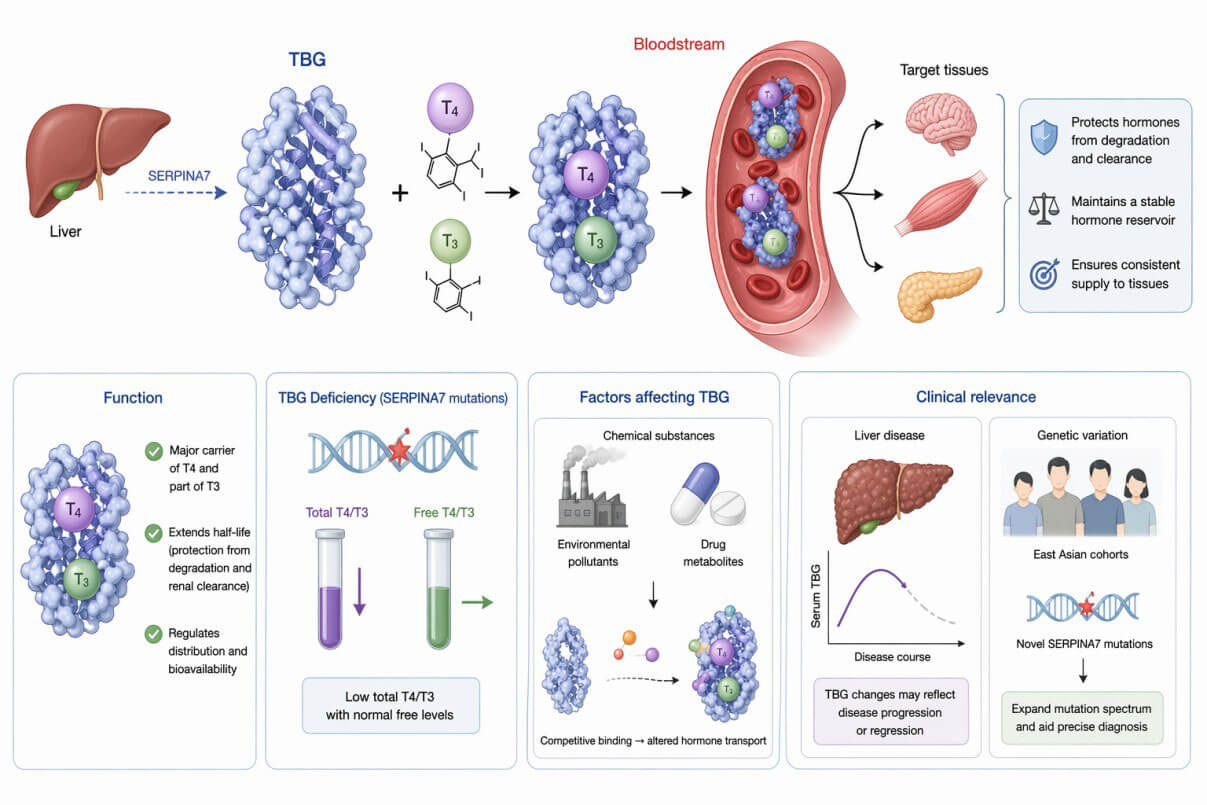
Functionally, TBG serves as the principal carrier of thyroid hormones, protecting them from rapid degradation and renal clearance while modulating their distribution to tissues. Studies have shown that mutations in the SERPINA7 gene can lead to partial or complete TBG deficiency, which manifests as reduced total T4 and T3 levels while free hormone levels remain relatively normal. This unique feature often causes confusion in routine thyroid testing, underscoring the importance of understanding TBG dynamics in the context of differential diagnosis. Beyond classical thyroid disorders, TBG's binding affinity can be affected by various chemical substances, including environmental pollutants and drug metabolites, which may competitively interfere with hormone transport and impact systemic hormone availability.
Emerging research also highlights TBG's broader clinical relevance beyond thyroid hormone transport. Altered serum TBG levels have been observed in patients with liver disease, such as chronic hepatitis B, where dynamic changes in TBG may reflect disease progression or regression, suggesting its potential as a serological biomarker. Additionally, population-based studies, particularly in East Asian cohorts, have identified novel SERPINA7 mutations that expand the spectrum of known genetic variations, emphasizing the importance of genetic screening in patients with atypical thyroid profiles. Understanding TBG's molecular mechanisms and its interaction network not only aids in precise diagnosis of thyroid-related disorders but also provides insights into hormone regulation under diverse physiological and pathological conditions.
Alternate Names for TBG
TBG; ERPINA7; serpin peptidase inhibitor; member 7; TBG; FLJ17820; alpha-1 antiproteinase; antitrypsin; Serpin A7; Serpin peptidase inhibitor clade A (alpha 1 antiproteinase antitrypsin) member 7; SERPINA7; T4 binding globulin
Loading ......
