
Inquiry Basket
 Loading ......
Sendai virus, also known as HVJ (Hemaggluting virus of Japan), is a type B parainfluenza virus. Belonging to the genus Paramyxovirus. The Sendai virus has an envelope containing RNA with a molecular weight of 6-7×10⁶, but it is not a template for protein synthesis. Not heat-resistant. Sendai virus is the earliest isolated species in this genus (M. Kuroya). The plasmid is polymorphic with a diameter of 150-600 nanometers. It can agglutinate almost all types of red blood cells and has hemolytic properties. Proliferation occurs in the cytoplasm of cultured cells from chicken embryos and various animal kidneys. Infected cell lines are prone to secondary infections. Due to its ability to fuse various cells, it is widely used for the formation of heterokaryotes and the cultivation of hybrid cells. It is also commonly used for interferon induction along with Newcastle disease virus. This virus is commonly found in mice and pigs, and has also been isolated from humans as a virus that exchanges antigens with Sendai virus (HA2, etc.). The inactivated Sendai virus has no infectivity, but it has antigenicity.
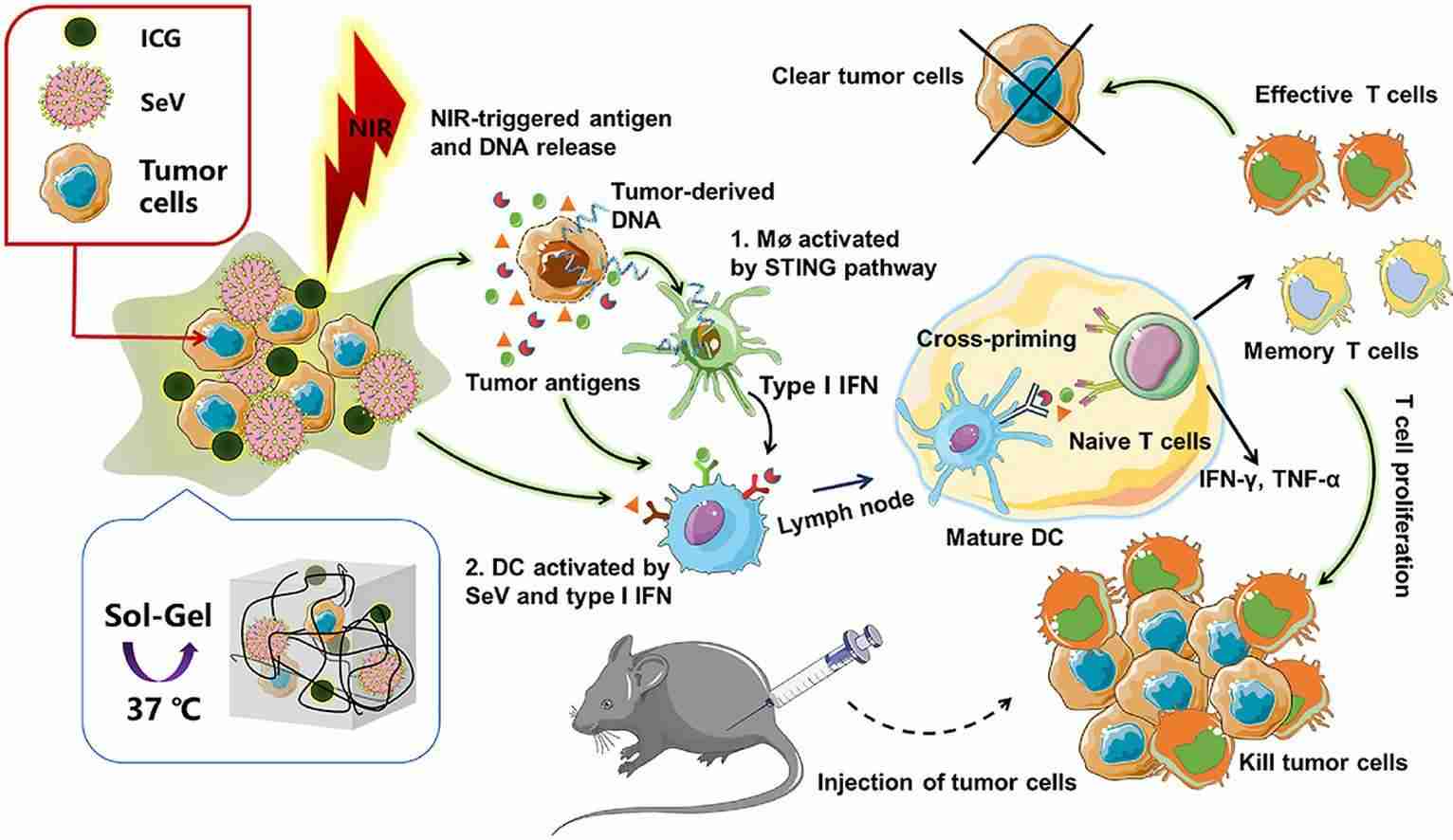 Fig. 1. Schematic diagram of SeV-based hydrogel vaccine (SHV) in preventing tumorigenesis.(Zheng, Bin, et al. 2021)
The basic principle of cell fusion technology, which was mainly applied in cell engineering, is that HVJ contains binding sites for cell surface receptors, which can promote the aggregation of different cells and ultimately fuse cell membranes. The site that directly produces this effect is the outer shell of the HVJ virus, not the internal RNA. However, the application of HVJ technology has many drawbacks, such as low cell infection rate, slow fusion speed, high reaction conditions, and difficulty in virus-free fusion Cell fusion technology mainly adopts techniques such as polyethylene glycol (PEG) and electrical stimulation fusion. The clinical trial lasts about one and a half years. After the safety is confirmed, the vaccine may become the first AIDS vaccine put into practical use in the world. In both research and process control, specific reagents play critical roles. For instance, the Sendai Virus (SV) ELISA Kit enables precise quantification of viral particles, aiding in the standardization of fusion protocols and ensuring the removal of infectious virus in final products. Additionally, Anti-Sendai Virus Polyclonal Antibody can be used to confirm viral antigen presence or clearance, monitor immunogenicity, and evaluate the safety of viral-based systems.
The pathogenesis of Sendai virus exhibits significant host and age dependent variations. Its tendency towards the respiratory tract is triggered by the binding of viral hemagglutinin neuraminidase (HN) protein to sialic acid receptors on airway epithelial cells. The subsequent entry is mediated by the fusion (F) protein, which is a key target of fusion inhibitors and directly promotes host virus membrane fusion. A key immune evasion strategy involves viral C proteins, which are critical virulence factors that antagonize the host JAK-STAT signaling pathway by inhibiting STAT protein phosphorylation and nuclear translocation, thereby suppressing antiviral interferon response. Although innate interferon response is crucial, recovery ultimately depends on a strong humoral immune response, in which neutralizing antibodies mainly target surface HN and F glycoproteins, confirming that they are essential protective immunogens. Studies on cyclophosphamide treated mice lacking antibody response have shown that they can become infected, emphasizing the indispensable role of antibodies against these glycoproteins in virus clearance and survival.
As a single negative stranded RNA virus, Sendai virus vector has become a live vector vaccine for research on new vaccines. Its advantages as a viral vector are:
Sendai virus can be widely used as a gene therapy vector and also for constructing live vector vaccines. The application of Sendai virus vector in vaccines is mainly based on its ability to stimulate strong cellular immunity, which can be used for vaccines that traditional methods cannot achieve.
SeV belongs to the family Paramyxoviridae, which is a group of enveloped RNA viruses that include clinically relevant human pathogens such as measles virus, respiratory syncytial virus (RSV), and human parainfluenza virus (HPIV).
| Taxonomy and Classification | Details |
| Genus and species | It is the prototype species of the respiratory virus genus, which also includes HPIV-1 and HPIV-3. |
| Phylogenetic relationship | SeV and HPIV-1 have approximately 60-70% nucleotide identity, with the highest homology among genes encoding replication related proteins such as L polymerase. |
| Strain diversity | There is limited genetic diversity among SeV strains, with most isolates clustered into a single serotype. Laboratory adapted strains such as Z strain and Cantell strain are widely used for research due to their reduced pathogenicity and enhanced cell culture growth. |
| Host Range and Transmission | Details |
| Natural hosts | Natural hosts: Mice, rats, and other rodents (such as hamsters) are the main hosts. SeV infects rodents of all ages, newborns, and immunocompromised animals who are most susceptible to severe diseases. |
| Transmission routes | Transmission routes: mainly through respiratory droplets and direct contact with infected animals or contaminated surfaces. Aerosol transmission is effective in crowded rodent communities, such as laboratory facilities and breeding grounds. |
| Human infection | Human infection: rare, usually asymptomatic or mild. There are reports of sporadic cases in humans, such as laboratory workers, due to limited replication in human respiratory epithelial cells, resulting in mild upper respiratory symptoms (cough, nose leak). |
Sendai virus is a multifunctional pathogen and research tool with significance across veterinary science, basic virology, and translational biology. Its well-defined genome, efficient replication cycle, and low pathogenicity in the human body make it a model for studying the biology of paramyxoviruses, as well as a promising carrier for gene therapy and vaccines. Although SeV remains a concern for rodent populations, its biomedical applications are constantly expanding, providing new avenues for treating human diseases. Further research on its molecular mechanism and carrier optimization will unleash more potential in basic science and clinical practice.
Reference
| Target | Cat. No. | Product Name | Host | Isotype | |
| Sendai virus | DPATB-H83546 | Magic™ Anti-Sendai virus Polyclonal antibody | Chicken | IgY | Inquiry |
| Target | Cat. No. | Product Name | Host | |
| Sendai virus | DAG-WT5878 | Sendai virus Stock (Qualitative) | N/A | Inquiry |
| Target | Cat. No. | Product Name | Size | Applications | |
| Sendai virus | DEIA-JY2461 | Mouse Sendai Virus (SV) Antibody ELISA Kit | 96T | Qualitative | Inquiry |
| DEIA-JY2473 | Rat Sendai Virus (SV) Antibody ELISA Kit | 96T | Qualitative | Inquiry | |
| DEIA-JY2482 | Hamster Sendai Virus (SV) Antibody ELISA Kit | 96T | Qualitative | Inquiry |
Loading ......
