
Inquiry Basket
 Loading ......
Rous sarcoma virus (RSV) was the first confirmed tumor virus discovered by Francis Peyton Rous in 1911 through chicken tumor transplantation experiments. This virus belongs to the family of retroviruses, and its genome contains genes for gag, pol, env structures, and the oncogenic src gene. It is integrated into host cell DNA through RNA reverse transcription mechanism. Research has found that the tyrosine protein kinase encoded by its src gene can induce cellular carcinogenesis through abnormal signal transduction. This mechanism not only reveals that the viral oncogene (v-onc) originates from the mutation and recombination of the host oncogene (c-onc), but also promotes the study of cancer molecular mechanisms, resulting in five Nobel Prize winners.
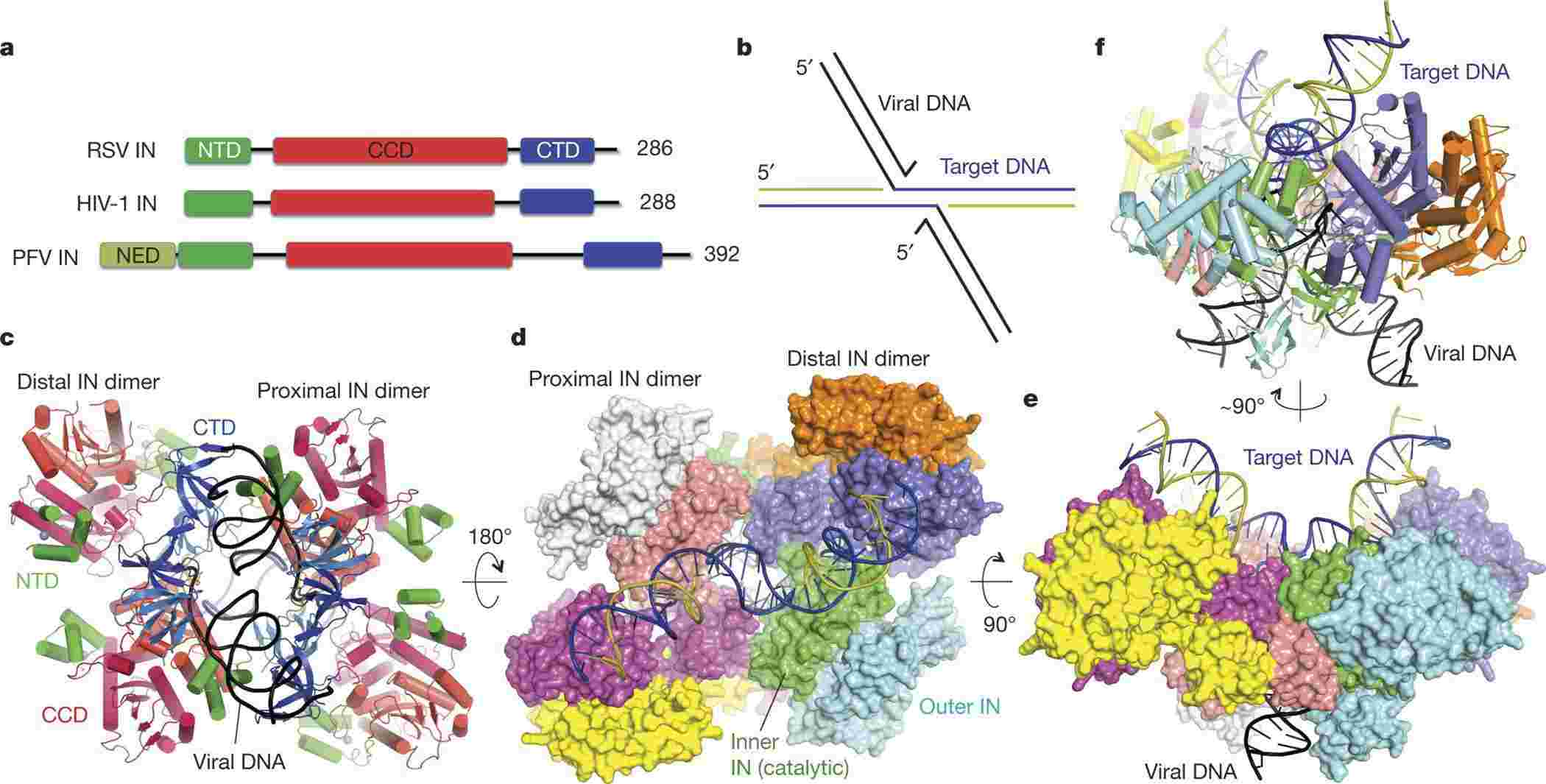 Figure 1. Crystal structure of the Rous sarcoma virus intasome. (Yin, Zhiqi,et al, 2016)
The Rous sarcomavirus (RSV), identified by Peyton Rous as a tumor-causing agent in 1911 contains an RNA genome which encodes three genes required for replication. These genes, gag, pol and env, are translated to yield three large precursor polyproteins: Gag, Gag-Pol and Env. During virus maturation, Gag and Gag-Pol are cleaved into eight different mature proteins by a viral specific protease. It does not appear that a host cell protease is required for this maturation process. The viral protease, known originally as the p15 protein, is located at the C-terminal region of the 76 kDa Gag polyprotein. The protease is active only as a homodimer and is referred to as PR. RSV belongs to a group of avian retroviruses that includes avian myeloblastosis virus (AMV). The avian myeloblastosis virus retropepsin and Rous sarcomavirus retropepsin differ by only two amino acid residues and are biochemically indistinguishable.
The RNA genome of RSV contains an extremely long 3' UTR that ranges between 5–7 kb in length which would usually direct it toward nonsense mediated decay (NMD) within the eukaryotic host cell. A conserved secondary structure element has been identified within the 3'UTR and is known as the Rous Sarcoma Virus Stability Element (RSE). This element has been shown to prevent the degradation of the unspliced viral RNA. The RSE element was first identified in the genome of the Rous Sarcoma Virus but appears to be widely conserved across the avian retrovirus family. The RSE element is ~300 bp in length and located downstream of the gag natural translational termination codon. The secondary structure of the RSE element has been determined by RNAse digestion and SHAPE chemistry analysis.
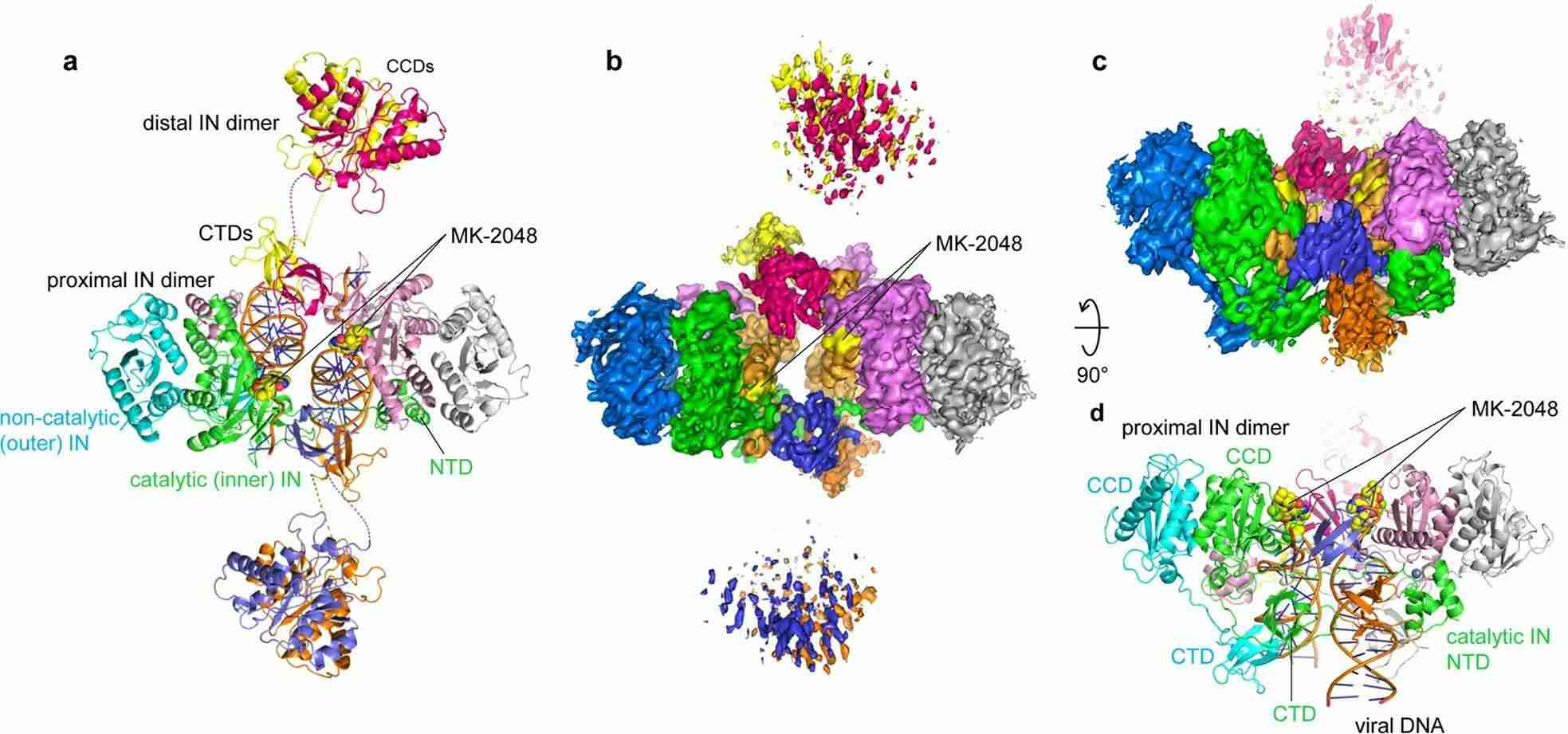 Figure 2. Cartoon representation of RSV CSC viewed down its pseudo twofold axis, with the 8 IN and viral DNA molecules colored differently.( Pandey, Krishan K, et al, 2002)
| Viral Oncogene / Protein | Key Host Target / Pathway | Molecular Mechanism & Pathological Consequence |
| pp60v-src (v-Src Tyrosine Kinase) | Focal Adhesion Complex (FAC) | Phosphorylates FAK (Focal Adhesion Kinase) and paxillin, disrupting normal focal adhesion dynamics. This leads to loss of cell adhesion (anchorage-independent growth), cytoskeletal rearrangement, and increased cell motility/invasion. |
| PI3K-Akt-mTOR Pathway | Phosphorylates and activates PI3K or its substrates, leading to Akt activation. This promotes cell survival (by inhibiting apoptosis), growth, and metabolism, all critical for transformation. | |
| STAT Signaling Pathway | Can activate STAT3 and STAT5 transcription factors, promoting the expression of genes involved in proliferation and survival. | |
| Beta-catenin (Wnt Pathway) | Phosphorylation of beta-catenin can stabilize it, leading to its nuclear translocation and activation of proliferative genes, mimicking Wnt signaling. | |
| RSV Long Terminal Repeats (LTRs) | Host Transcription Machinery | The integrated proviral LTR acts as a strong promoter. It can drive overexpression of the *v-*src gene and may also influence the expression of nearby host genes upon integration (insertional mutagenesis), potentially contributing to oncogenesis. |
| Diagnosis | Details |
| Biological Characteristics | The virus particles are spherical in shape, with a diameter of about 100 nanometers, and the outer layer is a lipid envelope. The genome consists of two single stranded RNAs, including: Structural genes: gag (encoding capsid protein), pol (encoding reverse transcriptase), env (encoding envelope glycoprotein) Oncogene: The long terminal repeat (LTR) of src (encoding p60src tyrosine protein kinase) regulates viral gene integration and expression, and its insertion can activate host oncogenes. |
| Carcinogenic Mechanism | After the virus completes infection by binding to host cell receptors through env protein, reverse transcriptase converts viral RNA into DNA and integrates it into the host genome. The src gene triggers carcinogenesis through the following pathways: The virus src gene is derived from a recombinant variation of the host c-src gene, which lacks introns and undergoes point mutations P60src protein continuously phosphorylates target proteins, interfering with cell growth regulatory signaling pathways Abnormal activation of MAPK, PI3K Akt and other proliferation related signaling cascades |
There are two ways viruses can enter the host cell: cell receptor endocytosis or fusion. Fusion occurs when the virus fuses together with the target cell membrane and releases its genome into the cell. RSV enters the host cell through fusion of the host cell membrane.
In order for the RSV genome transcription to occur, a primer is required. 4S RNA is the primer for RSV and 70S RNA serves as the template for DNA synthesis. Reverse transcriptase, an RNA-dependent DNA polymerase, transcribes viral RNA into the full length DNA complement.
Rous Sarcoma Virus is the cornerstone of molecular oncology. Its unique oncogene encodes the constitutive active pp60v-src tyrosine kinase, which acts as the main switch for disrupting the host signaling node group. By long-term activation of pathways such as Ras MAPK and PI3K Akt, while dismantling focal adhesions, it reprograms normal cellular physiology into a malignant state. The discovery of SRC provides the first clear link between viral genes, cellular genes, and cancer, which continues to inform the development of targeted cancer therapies such as tyrosine kinase inhibitors.
References
| Target | Cat. No. | Product Name | Host | |
| RSV src | DAGC569 | Rous Sarcoma Virus A (RSV(RAV)-A) Tissue Culture | N/A | Inquiry |
| DAGC570 | Rous Sarcoma Virus B (RSV(RAV)-B) Tissue Culture | N/A | Inquiry | |
| REV | DAG-WT5793 | Reticuloendotheliosis Virus (T) Antigen Concentrate | SPF chicken embryos | Inquiry |
Loading ......
