
Inquiry Basket
 Loading ......
Retroviruses are a unique family of enveloped, single-stranded RNA viruses characterized by their ability to reverse transcribe their RNA genome into double-stranded DNA, which is then integrated into the host cell's genome. First identified in the early 20th century as the causative agent of avian sarcoma, retroviruses have since been shown to infect a wide range of vertebrate hosts, including humans, primates, cats, dogs, and birds. The name "retrovirus" derives from the reverse direction of genetic information flow—from RNA to DNA—opposite to the typical DNA-to-RNA transcription observed in most organisms. This distinctive replication strategy allows retroviruses to establish lifelong persistent infections, often evading the host immune system and contributing to the development of various diseases, including cancers, immunodeficiencies, and neurological disorders. This resource article provides a detailed overview of retroviruses, including their structure, classification, replication cycle, pathogenesis, key molecular targets, and current research directions, serving as a foundational reference for students, researchers, and healthcare professionals.
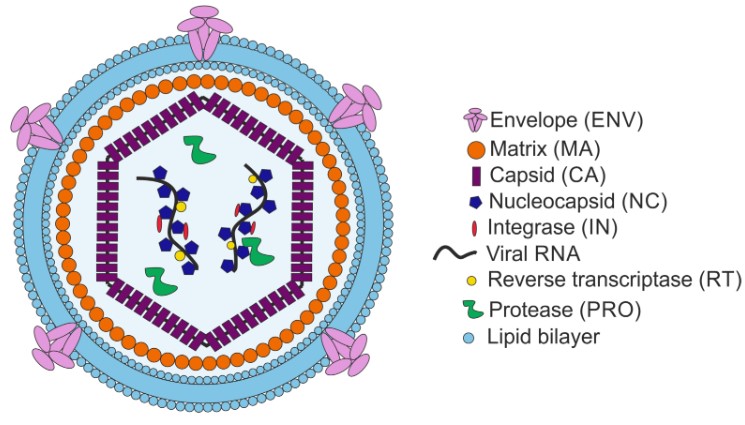 Figure 1. Scheme of retroviral particle and genome structure. (Kemeter L M, et al. 2023)
Retroviruses are enveloped viruses with a virion diameter of 80–100 nanometers, surrounded by a lipid bilayer derived from the host cell membrane, which contains viral glycoproteins (gp120 and gp41 in human immunodeficiency virus, HIV) that mediate attachment to host cell receptors. Beneath the envelope lies a conical or cylindrical capsid composed of the capsid protein (CA), which encloses the viral genome, reverse transcriptase (RT), integrase (IN), protease (PR), and other accessory proteins. The viral genome is a single-stranded, positive-sense RNA molecule, typically 7–11 kilobases (kb) in length, and most retroviruses have a diploid genome (two identical RNA molecules). The retroviral genome contains three core structural genes, arranged in the order gag, pol, and env, which are common to all retroviruses. The gag gene encodes structural proteins, including the capsid (CA), matrix (MA), and nucleocapsid (NC) proteins, which form the virion core and protect the viral genome.
The family Retroviridae is classified into two subfamilies: Orthoretrovirinae and Spumaretrovirinae. Orthoretrovirinae, the more clinically relevant subfamily, is further divided into five genera: Alpharetrovirus, Betaretrovirus, Gammaretrovirus, Deltaretrovirus, and Lentivirus. Spumaretrovirinae includes the genus Spumavirus, which are non-pathogenic in humans but can cause persistent infections in primates and other animals.
Key retrovirus species of medical and veterinary importance include: Human Immunodeficiency Virus (HIV-1 and HIV-2), the causative agents of Acquired Immunodeficiency Syndrome (AIDS); Human T-cell Leukemia Virus Type 1 (HTLV-1), associated with adult T-cell leukemia/lymphoma (ATLL) and tropical spastic paraparesis; Feline Immunodeficiency Virus (FIV), which causes immunodeficiency in cats; and Avian Leukosis Virus (ALV), a common cause of cancer in poultry. HIV-1 is the most well-studied retrovirus, affecting over 38 million people worldwide and remaining a major global public health challenge despite advances in antiretroviral therapy.
Understanding the pathology of retroviral infection requires looking at the signaling pathways and cytokines that the virus either exploits or triggers. Retroviral disease is often a combination of direct viral damage and an overactive or exhausted immune response.
One of the primary targets is TNF-alpha (Tumor Necrosis Factor). Many retroviruses trigger a massive release of TNF, which promotes systemic inflammation and can actually enhance viral replication by activating the NF-κB pathway. Viruses often manipulate JAK1 and JAK3 to bypass normal immune signaling, leading to uncontrolled cellular proliferation or the "cytokine storm" often seen in advanced stages of infection.
Interferons, particularly IFN-alpha and IFN-beta, are the body's first line of defense. However, retroviruses have evolved sophisticated proteins to block IFN signaling, preventing the cell from entering an antiviral state. Furthermore, the CCR5 and CXCR4 co-receptors are essential "gateways" for viral entry; individuals with specific mutations in these genes are often naturally resistant to certain retroviral infections. In the context of oncogenic retroviruses (like HTLV), the activation of the PI3K/Akt/mTOR pathway is a key pathological event, driving the malignant transformation of infected T-cells.
Retroviruses cause disease through a variety of mechanisms, including direct cytotoxicity to infected cells, immune dysregulation, and transformation of host cells into cancerous cells. The pathogenesis of retroviral infections is often linked to the virus's ability to establish persistent infections, either as latent proviruses (which are not actively replicating) or as actively replicating viruses that evade the host immune system. HIV-1 infection is characterized by progressive depletion of CD4+ T cells, the key cells of the adaptive immune system, leading to profound immunodeficiency. This immunodeficiency makes individuals susceptible to opportunistic infections (e.g., tuberculosis, Pneumocystis jirovecii pneumonia) and malignancies (e.g., Kaposi's sarcoma), which define AIDS. HTLV-1, in contrast, causes transformation of CD4+ T cells, leading to ATLL, a rare but aggressive leukemia, as well as chronic neurological disorders such as tropical spastic paraparesis. Other retroviruses, such as ALV, induce cancer by integrating their proviral DNA near proto-oncogenes, disrupting their normal regulation and promoting uncontrolled cell proliferation.
Retroviruses are a unique and clinically important family of viruses, characterized by their ability to reverse transcribe their RNA genome into DNA and integrate into the host cell's genome. Their ability to establish lifelong persistent infections and cause a range of diseases, including AIDS and cancer, makes them a major global health concern. This resource article provides a comprehensive overview of retroviruses, covering their structure, classification, replication cycle, pathogenesis, key molecular targets, and current research directions. As research advances, further insights into viral-host interactions and the development of novel therapeutic and preventive strategies will be critical for improving the management and eventual elimination of retroviral-associated diseases.
Reference
| Target | Cat. No. | Product Name | Host | |
| Viral Protein U | DAG-P2931 | Retroviruses Viral Protein U | E. coli | Inquiry |
Loading ......
