
Inquiry Basket
 Loading ......
Respiratory syncytial virus (RSV) is a leading cause of severe lower respiratory tract diseases in infants, and a significant cause of severe disease in adults aged 60 years and older. Each year in the United States, RSV leads to approximately 58,000 - 80,000 hospitalizations among children aged<5 years and 60,000 - 160,000 hospitalizations among adults aged ≥65 years. Currently, the FDA has licensed two RSV vaccines, RSVPreF3 (GSK's Arexvy) and RSVPreF (Pfizer's Abrysvo), for use in adults over 60 years of age, and two RSV monoclonal antibodies, palivizumab (Synagis) and nirsevimab (Beyfortus) for infants and some young children.
The RSV fusion (F) glycoprotein is the current leading target for the majority of vaccines and immunotherapies under development. RSV F is a class I fusion glycoprotein that is synthesized as a precursor (F0) that requires proteolytic cleavage for activation. The mature protein contains three copies of two polypeptides (F2 and F1) that are held together by two disulfide bonds. After initially folding into a metastable pre-fusion conformation (preF), RSV F undergoes a dramatic rearrangement that results in a stable post-fusion conformation (postF), leading to fusion of the viral and cellular membranes. Inhibition of any of these steps during the fusion process may prevent entry and infection of the host cells and could thus serve as a target for therapeutic intervention. Among RSV neutralizing antibodies, preF-specific neutralizing antibodies are the most effective in preventing infection. Several antigenic sites have been identified in preF (I, II, III, IV, V, Ø and cleavage-dependent epitope) associated with neutralizing activity.
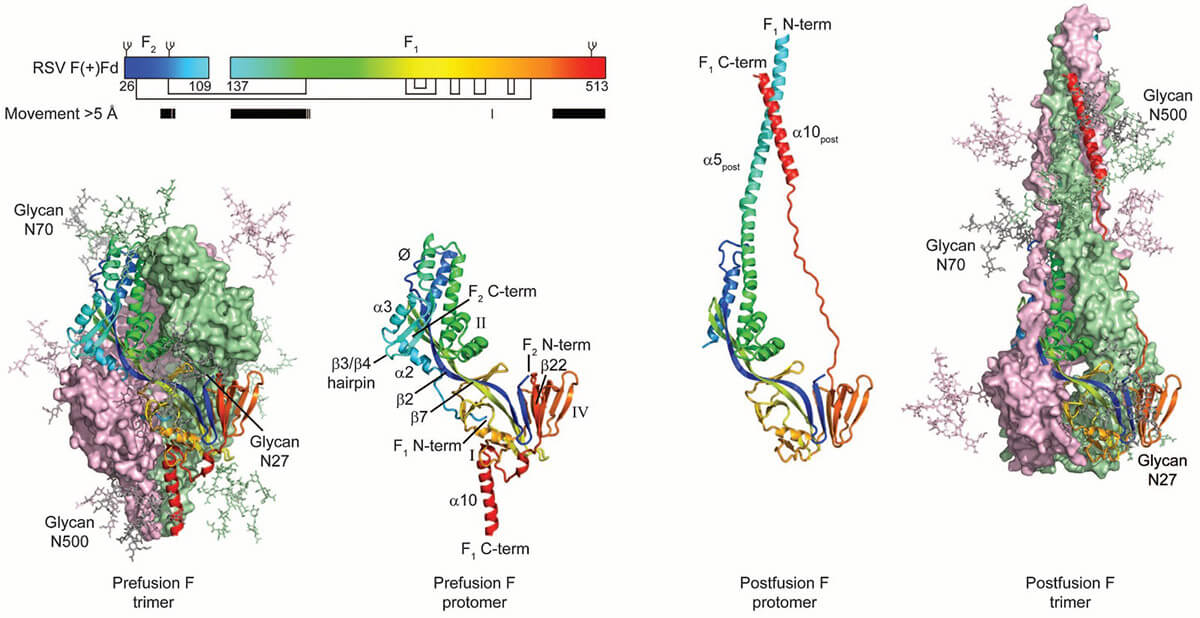 Fig 1. Structural rearrangement of RSV F (McLellan, J. S., et al. 2013)
Creative Diagnostics has launched high-quality recombinant preF protein, recombinant postF protein, RSV-F reference antibody and preF antibody, which can be used for the development of antigen and antibody diagnostic reagents, as well as preclinical research and quality control for vaccine and drug development.
 Fig 2. Immobilized RSV Post-fusion glycoprotein F0 protein (Cat. No. DAG-WT1180) at 5 μg/mL (100 μL/well) can bind Anti-RSV-F Reference Antibody (pallvizumab) (Cat. No. DMAB-JXL23114) with a linear range of 0.1-2 ng/mL and not bind Human Anti-RSV Pre-F Monoclonal Antibody, clone D25 (Cat. No. DMAB-JXL2372)
 Fig 3. Immobilized RSV PreFusion glycoprotein F0 protein (Cat. No. DAG-WT1165) at 5 μg/mL (100 μL/well) can bind Human Anti-RSV Pre-F Monoclonal Antibody, clone D25 (Cat. No. DMAB-JXL2372) with a linear range of 0.2-125 ng/mL
 Fig 4. Immobilized RSV PreFusion glycoprotein F0 protein (Cat. No. DAG-WT1165) at 5 μg/mL (100 μL/well) can bind Anti-RSV-F Reference Antibody (pallvizumab) (Cat. No. DMAB-JXL23114) with a linear range of 0.1-15 ng/mL
References
| Cat. No | Product Name | Source/Host | |
| DAG-WT1165 | Recombinant RSV PreF glycoprotein F0 | HEK293 cells | Inquiry |
| DAG-WT1180 | Recombinant RSV PostF glycoprotein F0 | HEK293 cells | Inquiry |
| DMAB-JXL2372 | Anti-RSV Pre-F Monoclonal Antibody, clone D25 | Human | Inquiry |
Loading ......
