
Inquiry Basket
 Loading ......
Papillary thyroid carcinoma (PTC) is the most common form of well-differentiated thyroid cancer about 80% of all cases, and the most common form of thyroid cancer to result from exposure to radiation. Papillary carcinoma appears as an irregular solid or cystic mass or nodule in a normal thyroid parenchyma. Despite its well-differentiated features, these tumors may easily spread to other organs.
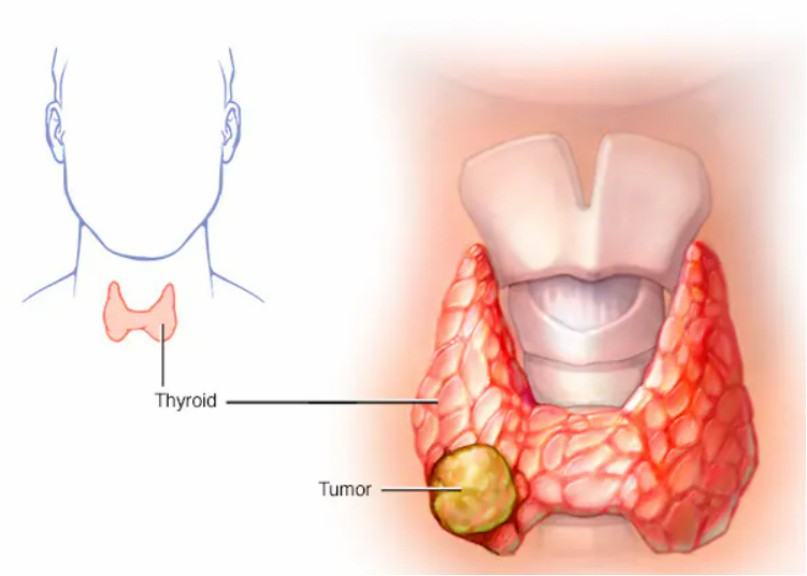 Fig. 1 Thyroid cancer
Most papillary thyroid cancers do not cause any symptoms, it might only be found out because of an imaging test for another problem. Or, during a routine physical exam, a lump be felt, called a nodule, on the thyroid. Nodules are growths that may be solid or filled with fluid. They're very common, but about 1 in 20 are cancer. As a nodule gets bigger, it may cause compression symptoms, including difficulty swallowing, pressure when lying flat, or shortness of breath. If advanced cancer invades into surrounding structures, the patient may experience hoarseness or difficulty swallowing.
The exact cause of papillary thyroid cancer is unknown. However, the following factors may increase the risk of developing papillary thyroid cancer:
Thyroid cancer is a common malignant tumor within the endocrine system and has become fastest-growing cancer among all malignant tumors. Its development, progression, invasion and metastasis are closely related to the regulations of various signaling pathways and molecules. Aberrant activation of the WNT/β‑catenin pathway plays an important role in carcinogenesis. Genes involved in the WNT/β‑catenin signaling pathway were activated in papillary thyroid cancer, and WNT10A expression was found to be upregulated >4-fold. Enhanced WNT10A/β‑catenin signaling pathway activation promotes cell proliferation and migration and plays a crucial role in human papillary thyroid cancer. Moreover, PTC is often characterized by RET chromosomal rearrangement, or point mutation of RAS or BRAF proto-oncogenes, all of which are able to trigger the activation of mitogen-activated protein kinase (MAPK) cascade. Other signaling pathways include Src, Janus kinase (JAK)-signal transducer and activator of transcription (STAT), phosphoinositide 3-kinase (PI3K)/Akt, NF-κB, thyrotropin receptor (TSHR), and Notch signaling pathways. Each signaling pathway can function individually or through a network with other pathways.
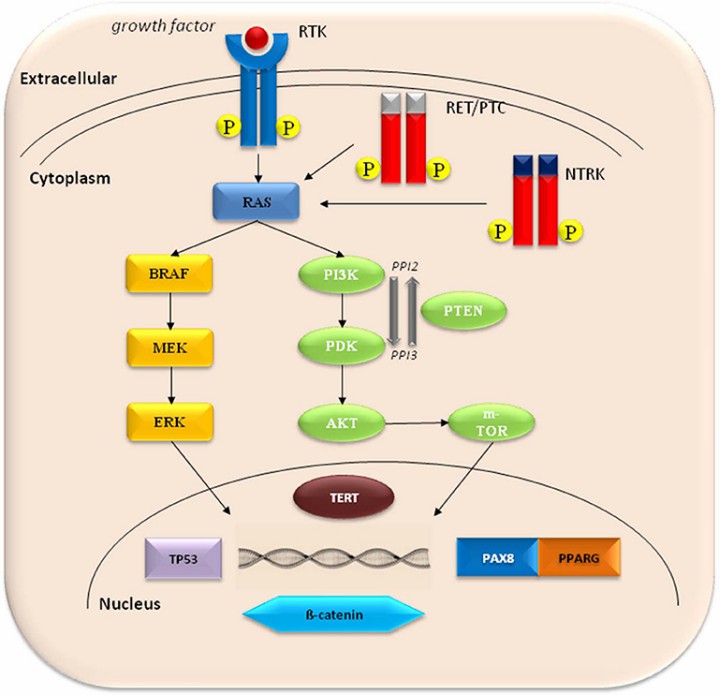 Fig. 2 The molecular pathogenesis of thyroid cancer
When a thyroid nodule is found, a complete history and physical examination should be performed, as well as testing of TSH levels to determine if the patient is euthyroid. The accurate diagnosis method mainly relies on ultrasound, for screening benign and malignant thyroid nodules, percutaneous fine needle aspiration (pFNA) or intraoperative frozen pathological detection is required. Nodules larger than 0.5 cm should be biopsied if the patient has risk factors for thyroid cancer (particularly a family history of thyroid cancer or prior radiation therapy) or suspicious findings by USG.
In addition, a variety of biomarkers showed potential in the diagnosis and prognosis of papillary thyroid cancer, such as HBME-1 and GAL-3 showing the highest specificity and highest sensitivity respectively, in the diagnosis of thyroid cancer. The overexpression of EGFR in thyroid cancer is proportional to the severity of advanced thyroid cancer. Fibrinogen alpha and complement C4A/B (serum markers) are considered potential markers for the diagnosis of PTC. Preoperative detection of thyroglobulin (biomarker of thyroid function) can help predict tumor burden and lymph node metastasis. Thyroid-stimulating hormone (TSH), a major growth factor for thyroid cells, has been widely recognized as a predictor of thyroid cancer risk.
Surgery to remove the thyroid gland (thyroidectomy) along with radioactive iodine therapy is the mainstay of treatment for thyroid cancer. If cancer has spread to multiple places, RAI and other treatments are hardly helping, a combination of targeted therapies that target different thyroid cancer receptors and biomarkers could reduce side effects and improve treatment efficiency.
Targeted therapy drugs, such as Multikinase inhibitors (Lenvatinib, sorafenib, and cabozantinib), RET inhibitors (Selpercatinib), and Larotrectinib (Vitrakvi) and entrectinib (Rozlytrek) target and block the abnormal TRK protein produced by the NTRK gene.
Loading ......
