
Inquiry Basket
 Loading ......
Neuroendocrine tumors (NETs) start in specialized cells of the body's neuroendocrine system. These cells have characteristics of both hormone-producing endocrine cells and nerve cells, and can be found throughout organs within the body. They link the endocrine system, which manages hormones, and the nervous system. Most neuroendocrine tumors occur in the gastrointestinal system. Neuroendocrine tumors are divided into two subtypes. One is functional NETs with excessive secretion of hormones, and the other is nonfunctional NETs, which do not release hormones or do not release enough hormones to cause symptoms.
NETs generally do not cause signs and symptoms at the initial stage. However, during the development of the tumors, symptoms may occur depending on the tumor location and whether it has produced too much hormone. In general, signs and symptoms may include pain from tumor growth, a lump under skin, unusual tiredness, and weight loss; in addition, functional NETs may cause: flushing of the skin, diarrhea, frequent urination, dizziness, rash, etc.
The exact cause of neuroendocrine tumors is unknown. These cancers begin in neuroendocrine cells that have traits similar to those of nerve cells and hormone-producing cells. Neuroendocrine tumors begin when neuroendocrine cells develop changes (mutations) in their DNA. Smoking may increase risk, and the risk of neuroendocrine tumors is higher in people who inherit genetic syndromes, examples include multiple endocrine neoplasia type 1 /2(MEN 1/ 2), Neurofibromatosis Type 1, Von Hippel-Lindau disease, etc.
NETs express a variety of activating and inhibitory receptors. They transduce signals through frequently interacting or overlapping pathways. The EGF receptor activates multiple signaling cascades, including Ras/Raf, MAPK, AKT, and JNK, regulating DNA synthesis and cell proliferation. Activated MAPK signaling is a common feature of GEP-NETs ("carcinoids"). IGF1R is present in the majority (>70%) of GEP-NETs and is coupled to the Ras/Raf, MAPK and PI3K-AKT-mTOR pathways. The phosphatidylinositol 3-kinase-Akt (PI3K-Akt) pathway has been shown to play a role in cell proliferation, survival, and motility. The mTOR pathway regulates key cell functions involved in cell survival, proliferation, and metabolism. The somatostatin receptor is coupled to PKA/cAMP pathway and calcium channels, leading to activate the secretion of inhibitory cells. Interferon has the ability to activate IFNGR1/2 and the JAK/STAT signal, resulting in apoptosis. Additionally, certain subtypes of enteric NETs express serotonin receptors, usually 5-HT2A/B, activation of which inhibits serotonin secretion and cell proliferation by inhibiting MAPK signaling. Besides, other potential signaling pathways include hedgehog (SHH - overexpressed in metastases) and NOTCH signaling.
 Fig 1. The PI3K/Akt/mTOR pathway in NETs
Physical examination (swollen lymph nodes or symptoms related to excess hormones), imaging tests such as ultrasound, CT, MRI, etc., microscopy, blood and/or urine tests, and tissue biopsies are common methods used in the clinical diagnosis of neuroendocrine tumors. Biomarkers used in blood and urine testing include Ki-67, chromogranin A, trystatin, neurokinin A, neuron-specific enolase, progastrin, pancreatic polypeptide, and 5-HIAA, etc. In addition, chromogranin A (CHGA) and synaptophysin (SYP) are the most differentiation-specific markers in immunohistochemical assays to confirm the neuroendocrine property and its pancreatic origin. Biomarkers are also used for prognostic indication. For example, PAM is an independent prognostic indicator for NETs, high levels of PAM indicate a better prognosis. Ki-67 is an antigen associated with cell proliferation, A higher proportion of cells expressing Ki-67 stands for a worse prognosis.
Treatment for neuroendocrine tumors depends on the type and location of the tumor along with whether the tumor is producing excess hormones. In general, options may include surgery, chemotherapy, radiation therapy, somatostatin analog and targeted therapy, as well as peptide receptor radionuclide therapy (PRRT).
Somatostatin Analogs drugs bind to the somatostatin receptors, such as Octreotide (Sandostatin) and Lanreotide (Somatuline Depot).
Targeted drug therapy focuses on specific abnormalities present within tumor cells. By blocking these abnormalities, targeted therapy can cause tumor cells to die, and is often combined with chemotherapy for advanced neuroendocrine tumors.
Everolimus, which blocks mTOR, is used for the treatment of advanced pancreatic NETs.
Sunitinib, a VEGFR inhibitor, for the treatment of advanced, well-differentiated pancreatic NET
Belzutifan, a HIF inhibitor, blocks HIF-2a, for the treatment of pancreatic NET.
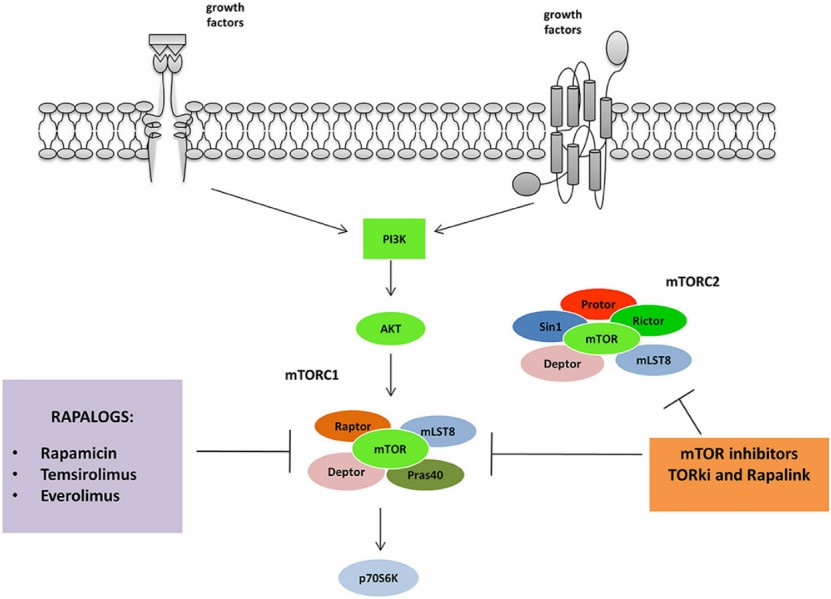 Fig 2. mTORC 1 and 2 are inhibited by mTOR inhibitors
PRRT combines somatostatin analogs with a small amount of radioactive material. It allows radiation to be delivered directly to cancer cells, such as Lu 177 dotatate (Lutathera) for the treatment of advanced neuroendocrine tumors.
Loading ......
