
Inquiry Basket
 Loading ......
Lung cancer is the leading cause of cancer deaths in the United States. It starts in the lungs but may spread to lymph nodes or other organs in the body, called metastases. Based on the appearance of cancer cells, lung cancer can be divided into two types: small-cell lung cancer (SCLC) and non-small cell lung cancer (NSCLC), where NSCLC is more common. Smoking is the leading cause of lung cancers, whereases other factors such as radiation therapy, exposure to secondhand smoke and other carcinogens as well as family history can also increase the risk. Over the years, lung cancer rates have been decreasing nationally, largely due to the decreased number of smoking people and the improvement of cancer diagnosis, prognosis as well as treatment.
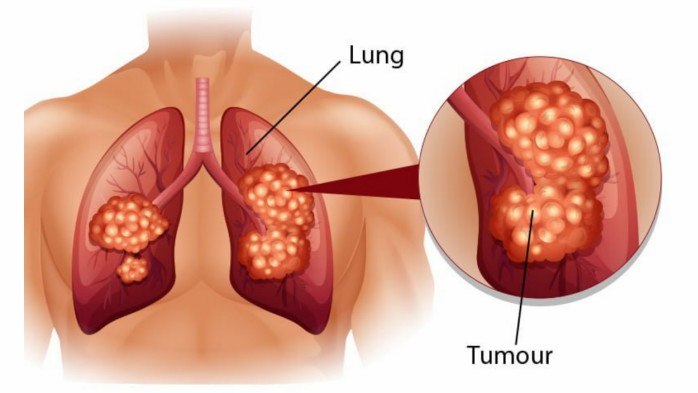 Fig.1. Lung cancer
In some cases, especially for NSCLC, specific gene changes can be found in the cancer cells. approximately 20-25% of NSCLCs have changes in the KRAS gene which encodes abnormal KRAS protein to help the cancer cells grow and spread. Less frequently, EGFR accounts for 10-20% of gene mutations in NSCLCs. ALK gene changes can often be seen in patients who do not smoke or have the adenocarcinoma subtype of NSCLC. Besides, ROS1, RET, BRAF, and MET gene changes could also be found in lung cancer cells, which not help with the diagnosis but also guide the targeted drugs therapy for lung cancers.
Although lung cancer is the most often diagnosed cancer in the world, it is usually detected at its advanced stage. Imaging tests including the use of x-rays, magnetic fields, sound waves, and radioactive substances can be done both before and after a diagnosis of lung cancer. Biopsy and bronchoscopy are also used depending on the situation. In some cases, tests for certain proteins on tumor cells can be done. For instance, NSCLC cells might be tested for the PD-L1 protein to indicate the presence of tumor. Currently, biomarkers are more frequently used combined with traditional diagnostic tools. RET, MET, HER2 and BRAF are potential markers for lung cancer which have been undergoing clinical trials.
Lung cancer can be treated in several ways, depending on the type and how far it has spread. Basically, lung cancer can be treated with surgery, chemotherapy, targeted therapy, radiation therapy or combination therapy. For people diagnosed with SCLC, radiation therapy and chemotherapy are more recommended. Besides, some complementary and alternative medicines are also used.
Immune system uses “checkpoint” proteins on immune cells as switches to regulate an immune response. However, cancer cells sometimes use these checkpoints to avoid themselves being recognized and attacked by the immune system. Therefore, immune checkpoint inhibitors (ICIs) are widely used in immunotherapy to treat people with lung cancer. PD-1/PD-L1 inhibitors are the most commonly used ICIs in both NSCLC and SCLC. Nivolumab (Opdivo), pembrolizumab (Keytruda) and cemiplimab (Libtayo) target PD-1 to boost the immune response against cancer cells, whereas atezolizumab (Tecentriq) and durvalumab (Imfinzi) can target PD-L1, which have been used in different situations to treat NSCLC. In addition to PD-1/PD-L1 inhibitors, CTLA-4 inhibitors with their representative drug lpilimumab (Yervoy) are also involved in immunotherapies.
Targeted drugs work differently from the chemotherapy drugs, and they are the most often used medications for advanced lung cancers, either along with chemo or by themselves. There are many targets have been suggested to have the therapeutic potential for lung cancer. Angiogenesis inhibitors, KRAS inhibitors, EGFR inhibitors, ALK inhibitors, ROS1 inhibitors, BRAF inhibitors, MET inhibitors, and NTRK inhibitors are the most commonly used medications for lung cancer treatment.
Loading ......
