
Inquiry Basket
 Loading ......
Granulocytes are polymorphonuclear (PMN) cells that comprise neutrophils, basophils, and eosinophils, of which neutrophils are the most frequent type found in the blood. Granulocytes are produced in the bone marrow and released into the blood and tissues, where they act as the first line of defense in host resistance and wound healing. Granulocytes have granules (small particles) with enzymes that are released during infections, allergic reactions, and asthma. Granulocytes rely on inflammatory signals to be recruited to sites of injury, infection, or allergic reactions, thereby activating them and having effective functions. In addition to responding to viral and parasitic infections, granulocytes are involved in a variety of diseases, including chronic inflammation, asthma, allergy, immune regulation, autoimmunity, and cancer.
Granulocytes have several effective mechanisms against target cells:
Granulocytes are components of the immune microenvironment that regulate tumorigenesis and progression. Eosinophils are a source of anti-tumorigenic (eg, TNF-α, granzymes, cationic proteins, and IL-18) and pro-tumorigenic molecules (eg, pro-angiogenic factors). Basophils are present in the immune system of human lung adenocarcinoma and pancreatic cancer, and can promote inflammation-driven Skin tumor growth. The neutrophil-to-lymphocyte ratio (NLR) has been shown to be an independent prognostic marker in cancer patients.
Neutrophils are the main immune cells, and play a complex and important role in cancer. Neutrophils recruited to sites of inflammation contribute to cancer development primarily by increasing DNA damage, angiogenesis, and immunosuppression.
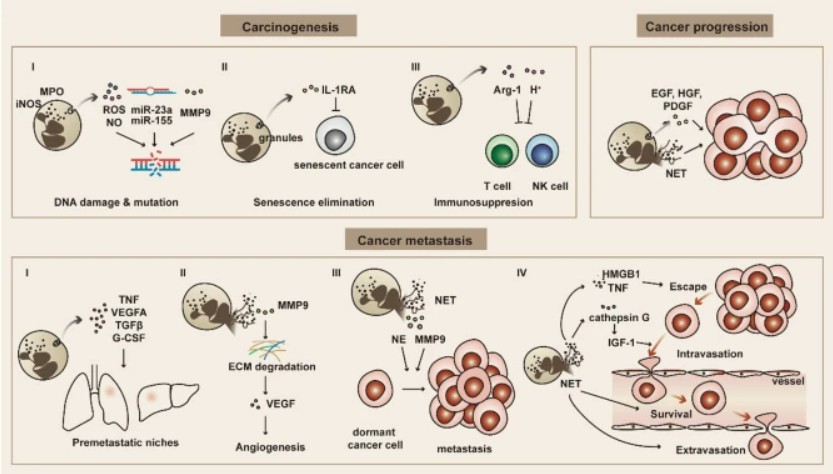 Fig. 1 Neutrophils promote cancer initiation, progression and metastasis
Inflammation plays an important role in cancer development by destroying tissue, and neutrophils are a key component of this process. ROS released by neutrophils during chronic inflammation, such as hypochlorous acid leads to DNA damage, and in clinical samples from patients with inflammatory bowel disease and other injury models, activated tissue Infiltrating neutrophils release granules carrying proinflammatory microRNAs, including miR-23a and miR-155, which increase DNA double-strand breaks and genomic instability. miR-155 is also responsible for neutrophil-induced DNA repair in acute colon injury, leading to the occurrence and even progression of colorectal cancer.
Granule proteins (MMP-9 and ARG-1) released by activated neutrophils are associated with cancer progression. MMP-9 degrades the extracellular matrix, which releases vascular endothelial growth factor (VEGF) and promotes angiogenesis. In addition, ARG-1 released by neutrophils depletes arginine in T cells, inhibiting CD3-mediated T cell activation and proliferation, resulting in immunosuppression.
Neutrophil extracellular traps (NETs) extruded by activated neutrophils are involved in the occurrence and development of various diseases. NETs are large extracellular complexes composed of cytosolic, granular proteins, and chromatin. NETs are the main cause of thrombosis. In autoimmune diseases such as systemic lupus erythematosus and rheumatoid arthritis, NETs are thought to be antigens that contribute to the production of anti-autoantibodies.
PMN cells express CD11b, CD66b, CD16, and CD32 which can be measured by flow cytometry, whereas PMN production of myeloperoxidase, IL-17, and TNF can be measured with ELISA. What is more, neutrophils play both pro-cancer and anti-cancer effects on the occurrence, growth, and metastasis of cancer, and these different functions are accompanied by the existence of different neutrophil subsets. Specific surface markers used to identify neutrophil subsets in cancer include CD101 and CD177 (associated with cancer regression); CD117, PDL1, CD170, LOX1, CD84, and JAML (associated with T-cell immunosuppression), etc.
 Fig. 2 Dual roles and plasticity of neutrophils in cancer
700 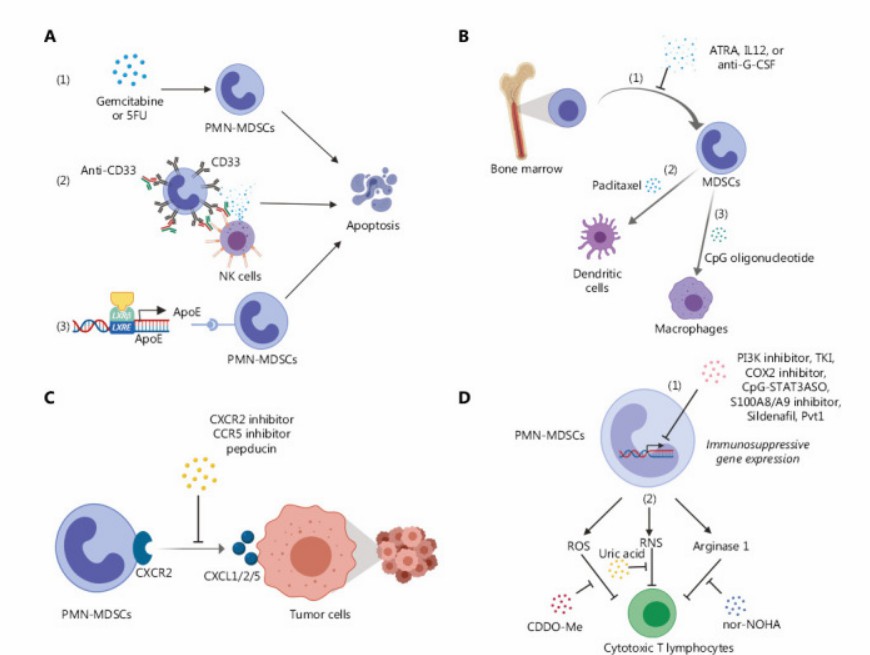 Fig. 3 Different strategies of targeting immunosuppressive neutrophils
Loading ......
