
Inquiry Basket
 Loading ......
Genitourinary cancers only develop in the male reproductive system and adrenal glands that are a part of the GU tract – the equivalent cancers in women are called gynecologic cancers. The GU tract is comprised of several urinary, reproductive and adrenal system organs, including the bladder, kidneys, ureters (the tubes that carry urine from the kidneys to the bladder), urethra and the testicles and prostate. Among Genitourinary cancer, renal cell carcinoma (RCC), bladder cancer (BCa), and prostate cancer (PCa) are the most common types.
 Fig. 1 Genito-Urinary System
Genitourinary cancer covers a number of different cancers, and the symptoms of each cancer can vary widely. Take bladder cancer as an example, the symptoms may be noticed early, such as pain when urinating or blood in urine. Other cancers, such as prostate cancer, rarely show early symptoms.
The exact cause of this type of cancer is unknown, but a number of risk factors have been identified. Controllable and environmental risk factors include cigarette smoking, occupation, exposure to radiation therapy, cyclophosphamide, etc. Uncontrollable risk factors include age, African American race, and family history, especially among first-degree relatives of patients with bladder cancer. Individuals with a family history of bladder cancer and those who smoke significantly increase their risk of bladder cancer by 6.87-fold.
The research of molecular signaling pathways in genitourinary cancer is the basis for developing therapeutic strategies and monitoring disease progression. Take the three most common genitourinary cancers as examples, the major signaling pathways implicated in bladder cancer, including PI3K/AKT/mTOR, Ras/Raf/MEK/MAPK, NF-κB, Wnt/β-catenin, Notch, Hedgehog, Hippo, JAK/STAT, and TGF-β pathways, as well as major cellular receptors central to cancer pathophysiology, including EGFR, Her2, FGFR, and VEGF. In renal cancer, the KEGG pathway, cell adhesion molecule (CAMs) pathway, p53 signaling pathway, and ECM receptor and cell cycle pathways are significantly dysregulated. The most commonly known genomic alterations in prostate cancer involve four pathways/genes: the androgen receptor pathway, the PI3K pathway, rearrangements that place members of the ETS transcription factor family under the control of the androgen-responsive promoter TMPRSS2, and the prostate tumor suppressor Loss of function of NKX3.
In addition to the pathways above, hypoxia-inducible factor (HIF) mediates hypoxia signaling, and as a transcription factor regulates the expression of more than 200 genes involved in key pathways related to tumorigenesis, including angiogenesis, invasion, and mitosis. Target proteins regulated by HIF include VEGF, PDGF, EGFR TGFα, HEF-1, GLUT1, and MUC1, etc. VHL factor is a negative regulator of HIF and is lost in >75% of clear cell RCC.
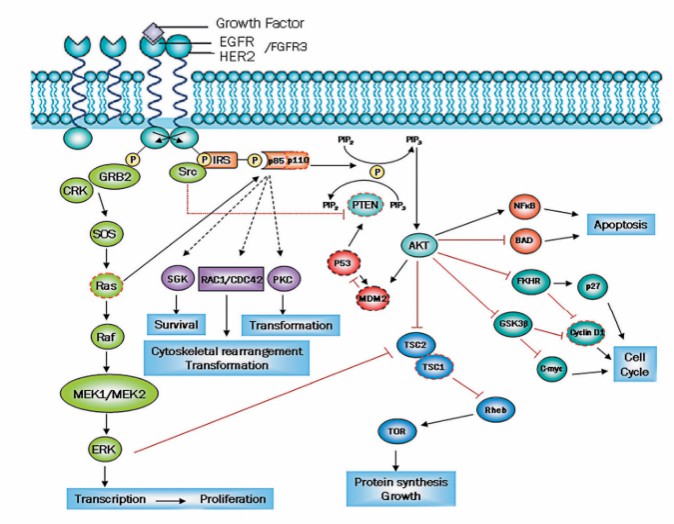 Fig. 2 Various molecular pathways involved in bladder cancer
Tools and tests used to diagnose urogenital cancers include imaging, endoscopy, biopsy, and immunohistochemistry. In kidney cancer, about 70 percent of cases are diagnosed by ultrasound, CT, or MRI scans. For prostate and bladder cancer, invasive diagnostic tools, such as prostate biopsy and cystoscopy are relied upon respectively. In addition, some biomarkers are also used for the auxiliary diagnosis and prognosis of urogenital cancer, such as prostate cancer specific antigen (PSA), bladder tumor antigen (BTA), and ERCC1 can be used as an independent prognostic marker for bladder cancer, p53 is useful in assessing progression levels and predicting urothelial cell carcinomas.Furthermore, studies in prostate cancer show that piRNAs contribute to cancer progression by affecting key oncogenic pathways such as PI3K/AKT, and could serve as potentially useful biomarkers allowing for early cancer detection and therapeutic interventions at the stage of non-advanced tumour. Moreover, there are emerging methods like circulating tumor cell detection and gene methylation analysis.
Surgical removal of the tumor or affected organ, chemotherapy, radiotherapy, and hormone therapy are all commonly used treatments for genitourinary system cancer. Besides, new drugs including molecularly targeted drugs and immune checkpoint inhibitors have emerged in recent years, greatly changing the treatment options and prognosis of metastatic urogenital cancer, such as immune checkpoint inhibitors pembrolizumab and avelumab. In addition to immunotherapy, there are targeted therapies against various targets, including mTOR inhibitors, (Temsirolimus and deferolimus), KIT Oncogene inhibitors (sunitinib and sorafenib), and Enzalutamide (androgen receptor inhibitor), Abiraterone (target CYP17A1, for metastatic castration-resistant prostate cancer, mCRPC), Olaparib (PARP inhibitor, for mCRPC), bevacizumab (VEGF neutralizing antibody, inhibits tumor angiogenesis), Erdafitinib (FGFR kinase inhibitor, for metastatic bladder cancer), and Pluvicto (targeting ligand conjugating with radioisotope therapy, targeting PSMA-positive cells, causing DNA damage through radioisotopes to kill tumor cells, for mCRPC).
 Fig. 3 Checkpoint inhibitors in bladder cancer treatment
Loading ......
