
Inquiry Basket
 Loading ......
Cervical cancer develops in a woman's cervix (the lower part of the uterus that connects to the vagina), and is the fourth most common cancer in women. Almost all cervical cancer cases (99%) are related to infection with high-risk human papillomaviruses (HPV). Although most infections with HPV resolve spontaneously, persistent infection can cause cervical cancer in women.
Early-stage cervical cancer generally shows no signs or symptoms. Symptoms of advanced cervical cancer may include: 1. Vaginal bleeding after intercourse, between periods, or after menopause; 2. watery, bloody vaginal discharge that may be heavy and have a foul odor; 3. Pelvic pain or pain during intercourse.
Cervical cancer begins when the cervical cells grow and multiply out of control. It isn't clear what exactly causes cervical cancer, but it's certain that HPV plays an important role. Other risk factors for cervical cancer include: 1. Many sexual partners, 2. Early sexual activity, 3. Other sexually transmitted infections (STIs), such as chlamydia, gonorrhea, syphilis and HIV/AIDS, 4. A weakened immune system, 5. Smoking, 6. Genetic factors, etc.
Human papillomavirus (HPV) is a main factor of cervical cancer. HPV can use different mechanisms to evade the proper autoimmune response of the host, through its oncoproteins. During infection two proteins (E6 and E7) are involved in the process of pathogenicity. The PI3K/AKT pathway is essential for mediating growth and survival in response to extracellular stimulus. Both the E6 and E7 maintain the status of the phosphorylation through Akt phosphatase PP2A inhibition and also activate the signaling of Akt/mTOR. Cellular machinery and extracellular signal communications are confirmed by pathways mediated by MAPK. The activity of the various effectors for pathways of MAPK is increased via the expression of E6 and E7. Additionally, this virus also has Wnt/β-catenin and JAK/STAT pathways through which cancer is developed. Apart from the common cancer-associated signaling pathways and virus infection pathways, the IL-17 signaling pathway, VEGF signaling pathway and endocrine resistance also were also demonstrated to be associated with cervical cancer progression.
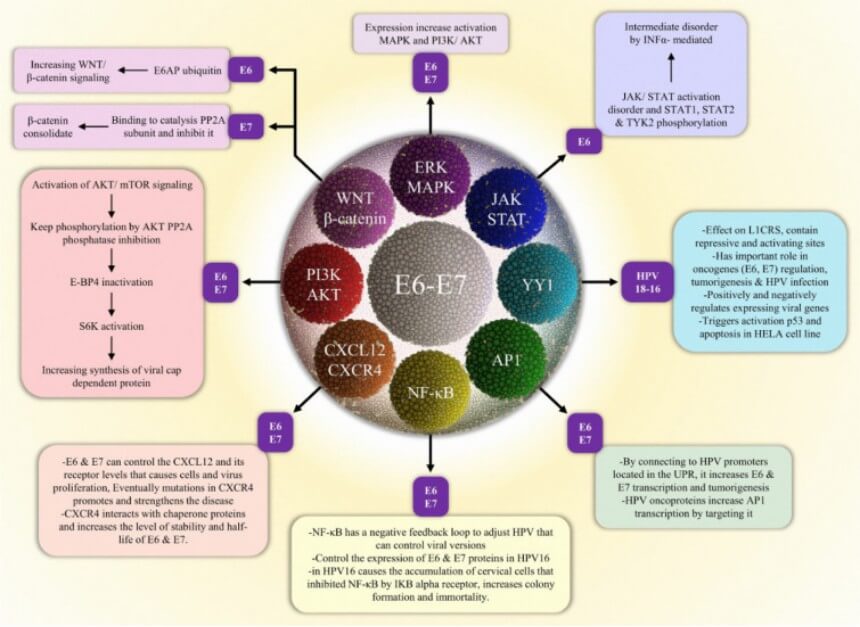 Fig. 1 The role of E6/E7 oncoproteins in HPV-associated cervical cancer development
Screening tests for cervical cancer include the Pap test and HPV DNA testing. Tissue biopsy, imaging tests (X-ray, CT, MRI, and PET), endoscopy, and serum marker testing are common diagnostic modalities. The common serum tumor markers used for the diagnosis of cervical cancer are mainly SCC-Ag, CEA, CA125, CA19-9. In IHC applications, the main biomarkers associated with cervical neoplasms include E6/E7 mRNA, Ki-67, cyclin-dependent kinases and their inhibitors, surrogate marker of HPV infection p16INK4a which is associated with active expression of HPV E7), pRb protein, p53 gene products, anti-apoptotic protein BCL-2, and pro-apoptotic protein BAX. The most commonly used immunohistochemical markers for verifying the phases of the cell cycle are the following,
There are different treatments for cervical cancer, and the options depend on the type of cervical cancer and how far it has spread. Treatment includes surgery, chemotherapy, and radiation therapy. In addition, targeted therapy and immunotherapy are also commonly used in the treatment of cervical cancer. In the treatment of advanced cervical cancer, bevacizumab is the most commonly used anti-angiogenic drug, and has shown good efficacy in combination with chemotherapy. Generally, bevacizumab is combined with cisplatin and paclitaxel in the treatment of advanced cervical cancer. Pembrolizumab is an immune checkpoint PD-1 inhibitor that mainly prevents tumor cells from evading immune responses, thereby killing tumors.
Other drugs in development and clinical research as follows,
Sunitinib, a multi-receptor tyrosine kinase inhibitor, targets of action include PDGFR (PDGFRα and PDGFRβ), VEGFR (VEGFR1, VEGFR2, VEGFR3), FLT-3, CSF-1R, KIT and RET. A phase II clinical trial showed that sunitinib combined with chemoradiotherapy can improve the treatment effect of advanced and metastatic cervical cancer.
Cetuximab, a human-mouse chimeric IgG1 monoclonal antibody that acts on EGFR. A study shows that the combination of Cetuximab with chemoradiotherapy can improve the treatment effect of patients with advanced or recurrent cervical cancer.
Veliparib, an oral PARP inhibitor, a study shows, veliparib combined with topotecan in the treatment of recurrent or advanced cervical cancer resulted in a partial response in 7% and stable disease in 37%.
Loading ......
