Overview
Brain tumors are lumps formed by abnormal cell growth in the brain. There are different types of brain tumors, some are benign and some are malignant. Brain tumors can start in the brain (primary brain tumors), or start elsewhere in the body and spread to the brain as secondary (metastatic) brain tumors.
Symptoms
General signs and symptoms caused by a brain tumor may include headaches, headaches that gradually become more frequent and severe, unexplained nausea or vomiting, vision problems, gradual loss of sensation or movement of arms or legs, difficulty with balance, and difficulty with speaking.
Causes
Secondary brain tumors occur most often in people with a history of cancer. Any type of cancer can spread to the brain, common types include breast, colon, kidney, lung, and melanoma. In most patients with primary brain tumors, the etiology of the tumor is unknown. But some factors have been identified that may increase the risk of developing a brain tumor, including exposure to ionizing radiation and family history of brain tumor.
Pathways
The litany of genetic abnormalities attributed to brain cancers is extensive and includes a list of molecular and signaling cascades that partake in the development and sustenance of organ systems outside of the CNS. In the development of brain tumors, marked abnormalities are shown in key cellular pathways that mediate cell growth and replication, such as over activation of RTK/PI3K and MAPK pathways, and inactivation of p53 and RB. Aberrant expression of developmental pathways, such as WNT, Hedgehog, Notch, and transforming growth factor-beta/bone morphogenetic protein, has been demonstrated in brain tumors. Besides, altered expression profiles of EGF, PDGF, and VEGF, and their respective receptors as well as the mutation of IDH have each been implicated in the development and progression of primary brain tumors.
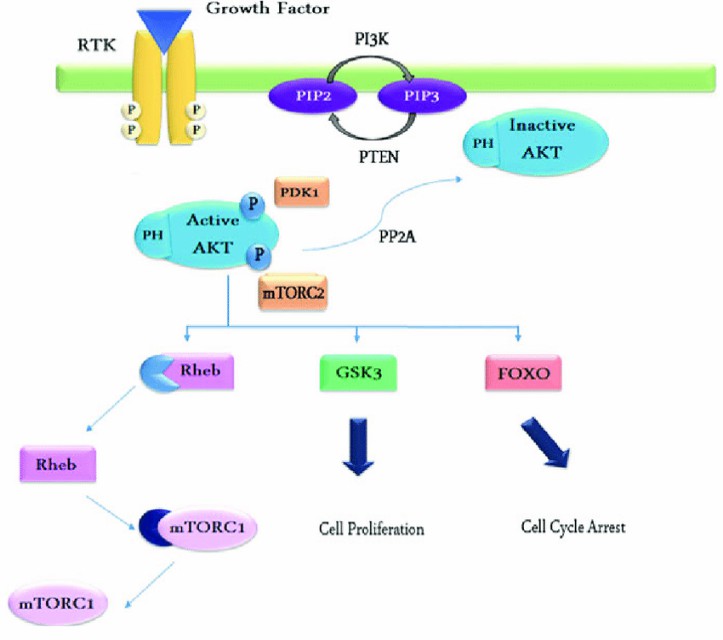 Fig. 1 Signaling pathway of PI3K-Akt in Brain Tumors
Diagnosis and Prognosis
- Neurological tests.
- Imaging test.
- Abnormal tissue biopsy.
In addition, a variety of biomarkers have also been shown to be useful in the auxiliary diagnosis and prognosis of brain tumors, such as IDH (protection against intracellular oxidative damage) mutations, 1p19q co-deletion, MGMT (prognostic and predictive biomarkers, involved in DNA repair and preventing apoptosis), EGFR (migration, proliferation, survival and tumorigenesis, a potential biomarker for glioblastoma), GFAP (correlated with the degree of tissue necrosis), pTERT mutations (brain tumor prognosis), and TP53 mutations (expression up-regulated), etc.
Treatment
Treatment for brain tumors mainly includes surgery, radiation therapy, chemotherapy, and targeted therapy. Commonly used chemotherapy drugs are Temozolomide, Lomustine, Carmustine, Procarbazine, and Vincristine. Targeted therapies are designed to specifically target and attack tumor cells, thereby reducing damage to normal cells. For brain tumors, two targeted therapy drugs are already approved for treatment:
- Avastin (bevacizumab): an anticancer drug that targets tumor-induced neovascularization. It is currently approved to treat patients with recurrent glioblastoma.
- Afintor/everolimus: Approved to treat subependymal giant cell astrocytoma (SEGA).
Related Targets
ACTH,AKT1,ATRX,BAX,BCL2,BDNF,CCM2,CCP110,CD20,CD3,CD34,CD99,CDKN1A,CDKN1B,CIC,CLP1,CMPK1,COX2,DMBT1,DONSON,EGFR,EID1,EMA,F8,FAT1,FGF1,FGF4,FGFR1,FSHB,FTL,GFAP,GGH,GH1,GHR,HIF1A,HRAS,IDH1,IL6,IQGAP1,Ki67,KIAA1549,KRIT1,LGALS3,LH,LRP5,LRRN2,MAPK1,MGMT,MMP-1,MMP2,MYC,NFkB,NKX2-2,NME1,NOTCH2,OLIG2,PANK1,PBX1,PCNA,PDCD10,PDGFA,PDGFRB,PIK3CA,PRKAR1A,PTEN,PTPRC,PTPRK,PTTG1,RAB27A,RAF1,Ras,ROS1,RTEL1,S-100,S100A6,Syn,TERT,TGFB,TOP2A,TP53,TRIM15,TSH,VEGF,VIM

 Loading ......
