
Inquiry Basket
 Loading ......
Bladder cancer (BCa) is the leading common urinary tract malignancy with approximately 400,000 new cases and 165,000 deaths worldwide each year. The bladder is a hollow, muscular organ in the lower abdomen that stores urine. Bladder cancer most often starts in cells inside the bladder (eg, urothelial cells). Types of bladder cancer include urothelial carcinoma, squamous cell carcinoma, and adenocarcinoma. Urothelial carcinoma is by far the most common type of bladder cancer.
Symptoms of bladder cancer may include blood or blood clots in the urine, frequent urination, painful or burning sensation during urination, back pain, etc.
Bladder tumors form when cells in the bladder grow abnormally. Risk factors that may contribute to bladder cancer include 1. Smoking, causes harmful chemicals to accumulate in the urine that increases the risk of bladder cancer; 2. Age, as growing old, the risk of bladder cancer increases; 3. Gender, men are more likely to develop bladder cancer than women; 4. Exposure to certain toxic chemicals; 5. Cancer treatment with cyclophosphamide, or radiation therapy to the pelvis; 6. chronic bladder inflammation, and family history of cancer.
Pathological subtypes of bladder cancer can be divided into papillary and invasive carcinomas. Papillary carcinomas often exhibit activation of the MAPK pathway as a result of oncogenic mutations in FGFR3 or HRAS, accompanied by increased Cyclin D1 expression. Aggressive bladder cancer is characterized by severe disturbance of adjacent cell cycle regulators, eg. RB1 and CDKN2A, which reduce the reliance of cancer cells on mitotic signaling. Bladder cancer aggressiveness is also associated with mutations in p53 and retinoblastoma (RB) pathways that regulate the cell cycle by interacting with the Ras/MAPK signaling pathway. In addition, other signaling pathways associated with bladder cancer, include PI3K/AKT/mTOR, NF-κB, Wnt/β-catenin, Notch, Hedgehog, Hippo, JAK/STAT, and TGF-β, as well as those Major cellular receptors, which critical for cancer pathophysiology, including EGFR, Her2, FGFR, and VEGF.
 Fig. 1 Key interactions in the Rb and p53 pathways
Urinalysis, cystoscopy, tissue biopsy, urine cytology, or imaging methods (eg, CT, MRI, ultrasound) are generally used in the diagnosis and prognosis of bladder cancer. Bladder cancer biomarkers that are usually used in IHC detection include CK7, ck20, p63, p53, ki-67, high molecular weight CK (34βE12), CK5/6, S-100P, and Uroplakin II, etc. Urine biomarkers including, bladder tumor antigen (BTA), nuclear matrix protein 22 (NMP22), and urine fibrin fibrinogen degradation products (FDP) have all been approved for clinical use. PAX2 has been identified as a diagnostic marker for nephrogenic adenoma. Additionally, Bladder primary clear cell adenocarcinoma and nephrogenic adenoma/metaplasia generally express PAX8 and AMACR, but not GATA3. ABO(H), CEA, NAG, and HA-HAase can also be used for auxiliary diagnosis and prognosis.
Surgery, chemotherapy (intravesical or systemic), radiation therapy, immunotherapy, and targeted therapy can be used alone or in combination as the treatment of bladder cancer.
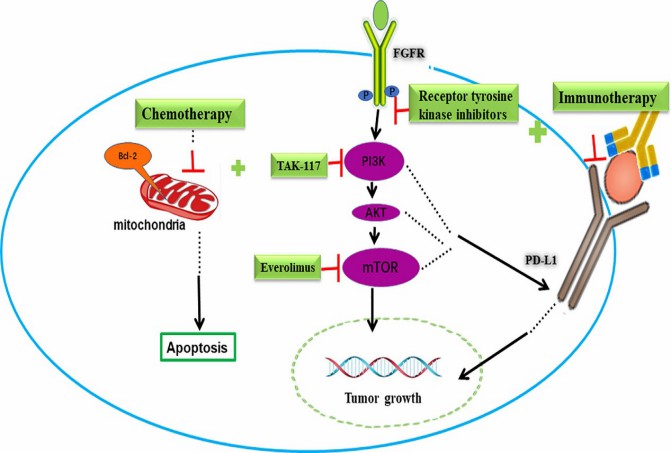 Fig. 2 Combination of targeted therapy with immunotherapy or chemotherapy in bladder cancer
Among them, targeted therapy drugs are increasingly applied, such as Erdafitinib, an FGFR inhibitor, which can be used to treat locally advanced or metastatic bladder cancer; Ramucirumab (IgG1 VEGFR-2 antagonist) combined with docetaxel for the treatment of locally advanced or metastatic urothelial carcinoma after platinum-based chemotherapy; Cabozantinib targeted TKI in MET/HGF1, which is with clinical activity in relapsed or refractory metastatic urothelial carcinoma. In addition, there are drugs that target EGFR, including Gefitinib, Erlotinib, Cetuximab, and Panitumumab; and drugs that target HER2, such as Trastuzumab and Lapatinib.
Immunotherapy
BCG vaccine was originally used to prevent pulmonary tuberculosis. However, after a large number of clinical observations and studies, the result shows BCG infusion therapy for residual bladder cancer can effectively reduce the recurrence rate of bladder cancer and delay the tumor recurrence and disease progression.
Such as Atezolizumab (PD-L1 inhibitor) and Pelivizumab (PD-1 inhibitor).
Loading ......
