
Inquiry Basket
 Loading ......
Severe fever with thrombocytopenia syndrome (SFTS) is an emerging arboviral infectious disease with a high rate of lethality in susceptible humans and caused by severe fever with thrombocytopenia syndrome bunyavirus (SFTSV). SFTSV is a growing public health problem that may become more prominent owing to multiple competent tick-vectors and the expansion of human populations in areas where the vectors are found. In 2018 annual review of the Blueprint list of priority diseases, World Health Organisation (WHO) has listed SFTSV infection as prioritised diseases for research and development in emergency contexts. Currently, there are no specific therapeutics or vaccines to combat infections of SFTSV.
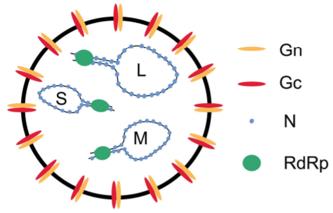 Fig. 1 Schematic diagram of the SFTSV virion.
(Li J.; et al. Crit Rev Microbiol. 2021)
SFTSV is a spherical, enveloped and segmented minus-strand RNA virus. It contains segmented, tripartite genome: L, M and S segment. The L segment encodes the RNA-dependent RNA polymerase (RdRp), the M segment encodes the viral surface glycoproteins Gn and Gc. The S segment includes 1,746 nucleotides, encoding nucleocapsid protein (NP) and nonstructural protein (NSs). The Gc protein is a class II fusion protein and has been shown to be involved in the fusion of SFTS viral and host membranes. The Gn protein has been shown to be vital to the incorporation of Gc into the envelope surface and also encodes neutralizing epitopes. NP serves as a carrier of genomic RNA and provides ribonucleoprotein complexes to participate in viral replication, whereas NSs is a virus-encoded interferon (IFN) antagonist.
Because of the lack of preventive vaccines or useful antiviral drugs, diagnosis of SFTS is the key to prevention and control of the SFTSV infection. SFTSV infection may be diagnosed by isolation of the virus, detection of viral RNA, and antibody against SFTSV. Virus isolation is difficult and needs special facilities. Amplification of viral nucleic acid using Reverse Transcription (RT)-Polymerase Chain Reaction (PCR) has been widely performed for the diagnosis of SFTS. However, genome amplification techniques are limited by their need for expensive equipment and technical expertise. The enzyme-linked immunosorbent assay (ELISA) is the most common immunoassay for clinical biomarker detection because of its good specificity, low cost, and simple reading method. Methods for the detection of viral antigens by Ag-capture sandwich ELISA have been described previously, and the sensitivity of this assay is comparable to RT-PCR. Among viral proteins, NP is known to show major antigenicity in the production of antibody against SFTSV. Some researchers have established an IC assay to detect antibodies using recombinant NP.
Creative Diagnostics provides a series of SFTSV-related antigens and antibodies, which facilitate the development of laboratory diagnostic methods for SFTS.
References
| Cat. No | Product Name | Application | |
| CABT-NS1427 | Mouse Anti-SFTSV Nucleoprotein Mab, clone MN2266 | ELISA, LFIA | Inquiry |
| CABT-NS1426 | Mouse Anti-SFTSV Nucleoprotein Mab, clone MN2268 | ELISA, LFIA | Inquiry |
| DMAB-JX238251 | Mouse Anti-SFTSV Gc protein Mab, clone 1334 | ELISA, LFIA | Inquiry |
| DMAB-JX238252 | Mouse Anti-SFTSV Gc protein Mab, clone 1331 | ELISA, LFIA | Inquiry |
| DMAB-JX238253 | Mouse Anti-SFTSV Gn protein Mab, clone 1324 | ELISA, LFIA | Inquiry |
| DMAB-JX238254 | Mouse Anti-SFTSV Gn protein Mab, clone 1327 | ELISA, LFIA | Inquiry |
Loading ......
