
Inquiry Basket
 Loading ......
In the realm of neuroscience, understanding the intricate processes underlying neural development is crucial. Radial glia are one of the key players in this complex journey, serving as guides and scaffolds for neuronal growth during embryonic and postnatal brain development. By expressing specific molecular markers, radial glia cells can be identified and studied, shedding light on their functions and the overall mechanisms driving neurogenesis.
Browse all Radial Glial Progenitor Cell (RGP) Marker Antibodies
All neurons in the mammalian nervous system originate from neural stem cells, which have the characteristics of self-renewal and pluripotency. Before neurogenesis, these stem cells formed a single layer of neuroepithelium that makes up the neural plate and neural tube. Neuroepithelial cells are primarily driven by Notch1 signaling, giving rise to related cell types known as radial glia and Schwann cells.
Radial glia cells are a specialized type of neural stem cell that serves as a scaffold during embryonic development, guiding the migration of neurons and certain glial cells. These cells are characterized by their distinct radial morphology, with long processes extending from the ventricular zone to the pial surface of the developing brain. The radial glia scaffold provides structural support and acts as a conduit for neuronal migration, ensuring the proper formation and organization of the CNS.
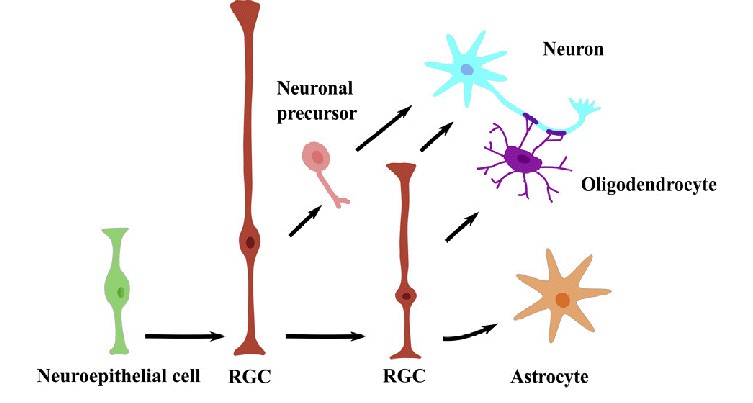 Fig. 1 Differentiation of radial glial cells (RGCs) during CNS development. (Xing L, et al., 2014)
Glial fibrillary acidic protein (GFAP) is a type III intermediate filament protein that exhibits high specificity for glia. During central nervous system (CNS) development, GFAP is expressed by various cell types, including astrocytes and ependymal cells. Its expression pattern allows for the reliable identification and characterization of these glial cell populations. Mutations in the gene encoding GFAP cause Alexander's disease, a rare astrocyte disorder of the CNS.
BLBP, or Brain Lipid-Binding Protein, is a protein that plays a role in lipid metabolism and the synthesis of cell membranes. It has been found to be associated with the neurogenic and gliogenic potential of radial glia cells. In non-mammalian vertebrates, such as amphibian embryos and adult zebrafish, BLBP expression has been detected in radial glia cells in the telencephalon. However, BLBP expression alone is not sufficient to differentiate between radial glia cells and NECs.
Vimentins are a type of class-III intermediate filament that is primarily found in non-epithelial cells, particularly mesenchymal cells. These filaments provide structural support and stability to the cells. Vimentin filaments are connected to various cellular structures such as the nucleus, endoplasmic reticulum, and mitochondria. They can be attached laterally or terminally, contributing to the overall organization and integrity of the cell.
Nestin is a protein initially identified as a marker for neural stem and progenitor cells during CNS development. It is downregulated as these cells differentiate, and its expression is also observed in CNS tumor cells. The level of nestin expression can provide valuable information about the malignancy of the CNS tumor and the undifferentiated state of CNS cells.
SOX2 is an HMG box transcription factor and a persistent marker of multipotent neural stem cells derived from embryonic stem cells, embryonic or adult. It is a key regulator of PSC and neural progenitor cell maintenance and induction. SOX2 is expressed in proliferating cells and cells acquiring glial fates but is downregulated in postmitotic neurons.
PAX6 is a gene belonging to the Pax gene family. It is responsible for encoding the Pax-6 protein, which is crucial for the development of various structures in the body. One of its primary roles is in the development of the eyes and other sensory organs. PAX6 also plays a significant role in the formation and organization of certain neural and epidermal tissues. Additionally, it contributes to the development of homologous structures derived from ectodermal tissues.
HES1 is a protein that belongs to the basic helix-loop-helix family of transcription factors. It is expressed in neuroepithelial cells and radial glial cells, both of which are neural stem cells. HES1 was reported to be involved in the regulation of stem cells and progenitor cells, primarily by controlling the timing of cell differentiation and influencing binary cell fate decisions.
GLAST is a glutamate transporter that is localized on the cell membrane of mature astrocytes and is expressed in the ventricular zone during brain development. Studies indicate that GLAST is expressed from radial glia through astrocytes during spinal cord development.
The enzyme glutamine synthetase (GS) is primarily found in the brain, kidneys, and liver. In the brain, GS plays multiple roles in metabolic regulation. It is involved in regulating the levels of glutamate, detoxifying brain ammonia, assimilating ammonia, recycling neurotransmitters, and terminating neurotransmitter signals. Furthermore, GS activity serves as a valuable marker for identifying astrocytic cells in the brain.
Creative Diagnostics has a wide range of high-quality antibodies and customized services, making us your reliable partner in the field of neuroscience research. By harnessing the power of radial glia markers, you can unlock new insights into neurodevelopmental processes, identify biomarkers for neurological disorders, and pave the way for innovative therapeutic approaches. Explore our comprehensive product offerings and let us support your groundbreaking research in the field of radial glia markers and beyond.
References
Loading ......
