
Inquiry Basket
 Loading ......
Poliovirus is a virus that causes poliomyelitis. The disease is widely spread and is an acute infectious disease. Viruses often invade the central nervous system, damage the spinal cord anterior horn motor nerve cells, and cause limb flaccid paralysis, which is more common in children and is therefore also known as infantile paralysis. Polio is a key infectious disease controlled by WHO through immunization programs.
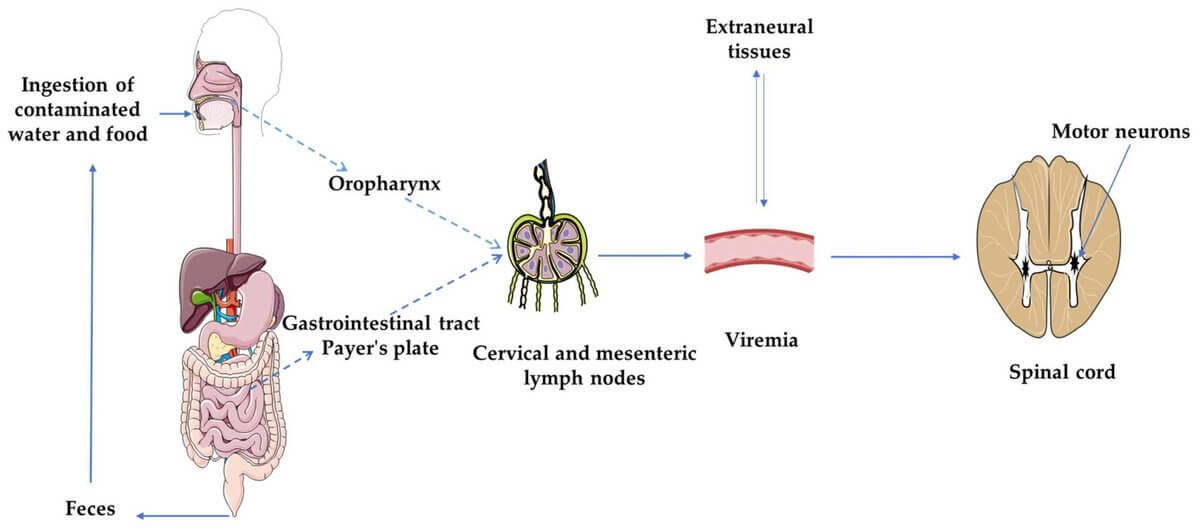 Figure 1. Pathogenesis of Poliovirus. (Mbani, Chaldam Jespère, et al.2023)
Poliovirus belongs to the enterovirus genus of the picornaviridae family, which includes small ribonucleic acid (RNA) viruses. The invasion of poliovirus into the human body is mainly transmitted through the digestive tract. This type of virus shares certain physical, chemical, and biological characteristics. Under electron microscopy, it appears as relatively small spherical particles with a diameter of 20-30 nm and presents a stereosymmetric icosahedron. The center of the virus particle is a single stranded positive stranded ribonucleic acid, with 60 capsid particles on the periphery, forming an outer capsid. This type of virus capsid is exposed without a capsule. The nucleocapsid contains four structural proteins, VP1 and VP3, as well as VP2 and VP4, which are split from VP0. VP1 is the main exposed protein containing at least two epitopes, which can induce the production of neutralizing antibodies. VP1 has a special affinity for receptors on the human cell membrane (possibly located on chromosome 19), which is related to the pathogenicity and toxicity of the virus. VP0 ultimately splits into VP2 and VP4, which are closely bound to the intrinsic protein and RNA. VP2 and VP3 are semi exposed and have antigenicity.
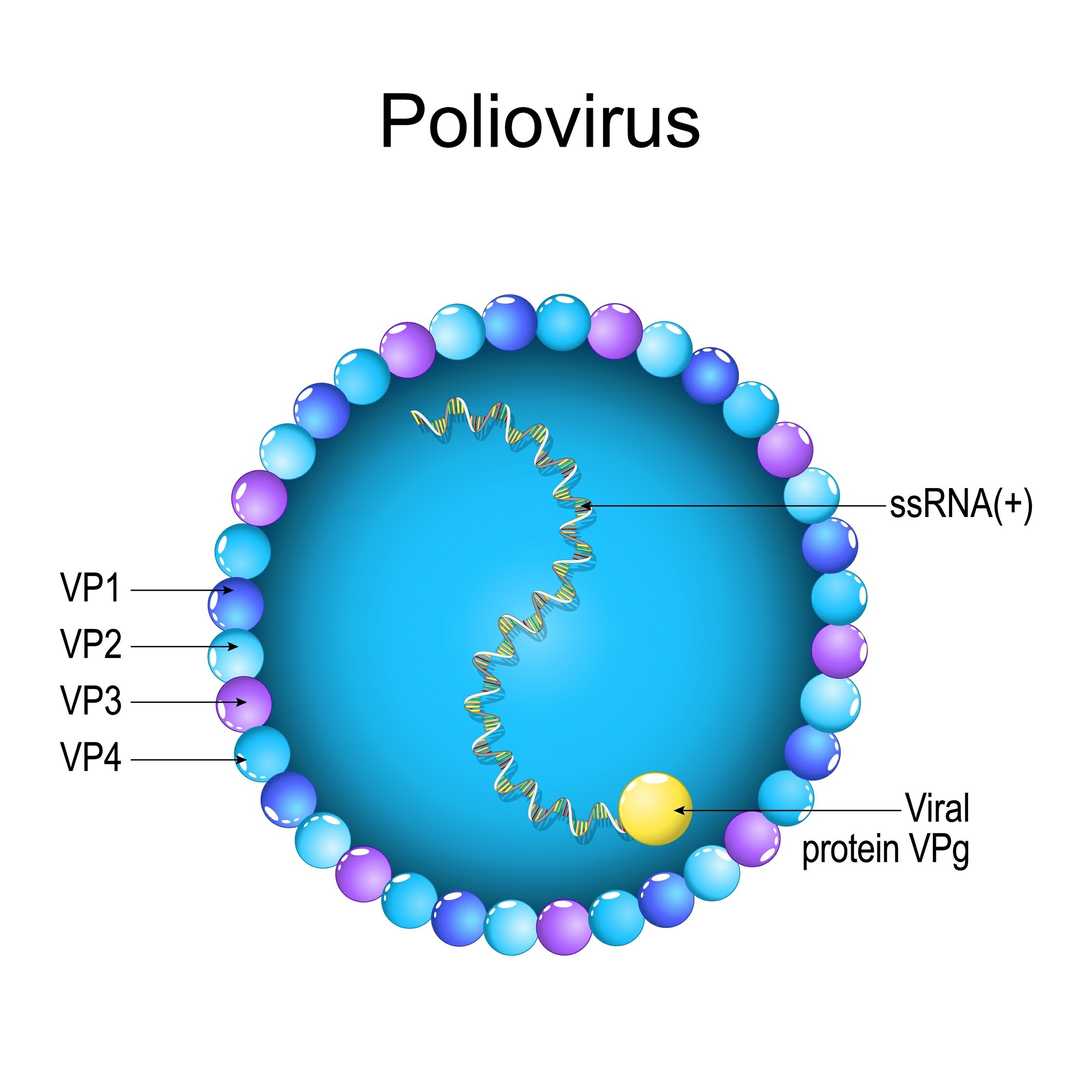 Figure 2. Biological Characteristics.
Poliovirus can be divided into three serotypes based on antigen immunogenicity, namely type I, type II, and type III, with no cross reactivity between the three types.
Poliovirus enters the intestine orally and first targets CD155 (core receptor, VP1 canyon binding) on the surface of intestinal epithelial cells. It is enriched with heparan sulfate (HS) to release RNA into cells; During the replication phase, RNA replication is catalyzed by its own RNA dependent RNA polymerase (RdRp, 3D encoding), which cleaves the host eIF4G (blocking host translation) with 2A protease, and generates functional components by cleaving viral polyprotein with 3C protease, hijacking the host ribosome; In immune escape, 3C protease degrades the host NF - κ B p65 subunit (anti-inflammatory factor), and VPg protein binds to IRF3 (inhibiting type I interferon production); After the virus reaches the central nervous system through the bloodstream/lymphatic system, it invades the surface of neurons with CD155. Microglia release IL-1 β and bind to neuronal IL-1R, causing neuroinflammation. The virus 2C protein disrupts the calcium homeostasis of neuronal endoplasmic reticulum and activates caspase-3, leading to neuronal apoptosis; During the period of intestinal infection, it can also affect epithelial cell brush border enzymes (sucrase isomaltase), causing digestive disorders and ultimately leading to paralysis.
Poliovirus has strong vitality in natural environments, can survive for several months in feces and sewage, is relatively stable in acidic environments, has strong resistance to stomach acid and bile, and is resistant to Japanese vine. Various oxidants, such as potassium permanganate, hydrogen peroxide, bleach, etc., can inactivate it. It can be inactivated by heating at 56 ° C for 30 minutes and can be stored for a long time at negative 70 ° C for UV, drying, and thermal sensitivity.
Poliomyelitis is commonly seen in temperate zone, which is sporadic all the year round, mainly in summer and autumn, and can be a minor epidemic or a pandemic, while in tropical zone, the incidence rate is similar in four seasons. There are cases all over the world, but the incidence rate in areas with universal vaccines has greatly decreased, almost no cases (such as Nordic Finland, Switzerland, the Netherlands and other countries), and there are still epidemics in areas without vaccines. In the past, type 1 viruses were the most common, while types 2 and 3 viruses are correspondingly more common in recent times. During epidemics, asymptomatic latent infections and mild symptoms without paralysis are more common. In tropical areas, densely populated areas and areas without extensive vaccine use, the highest incidence rate is still found in children aged 1-5 years. Since the widespread use of vaccines in infants and young children, there has been a gradual increase in the age of onset worldwide, with school-age children and adolescents being the majority, and adult patients also increasing. The number of patients under 1 year old has also increased. The sources of infection are patients and asymptomatic carriers of the virus, who are not only numerous in number but also difficult to detect and control, thus playing an important role in the spread and prevalence of this disease.
 Figure 3. Epidemiology of poliovirus.
After invading the human body through the oral, pharyngeal, or intestinal mucosa, poliovirus can reach local lymphoid tissues such as tonsils, pharyngeal wall lymphoid tissues, and intestinal wall lymphoid tissues within one day, grow and reproduce, and excrete the virus locally. If the human body produces a large amount of specific antibodies at this time, the virus can be controlled locally, forming a latent infection; Otherwise, the virus will further invade the bloodstream (the first viremia), and on the third day, it will reach various non neural tissues such as the respiratory tract, intestines, skin and mucous membranes, heart, kidneys, liver, pancreas, adrenal glands, etc. It will multiply, especially in lymphoid tissues throughout the body. A small number of patients may experience paralysis due to the strong virulence of the virus or insufficient antibodies in their blood. The virus can flow through the blood-brain barrier and invade the central nervous system, and in severe cases, paralysis may occur. Occasionally, viruses can also spread along the peripheral nervous system to the central nervous system. Specific neutralizing antibodies are difficult to reach the central nervous system and intestines, resulting in longer virus retention time in cerebrospinal fluid and feces. Therefore, the presence, timing, and quantity of specific antibodies in the human blood circulation are important factors determining whether the virus can invade the central nervous system.
| Types | Clinical Manifestations |
| Mild | The symptoms resemble influenza, including fever, fatigue, headache, muscle pain, and sometimes accompanied by pharyngitis, tonsillitis, and gastroenteritis. The symptoms will subside after 4-5 days. |
| Non numbing type | Patients have typical aseptic meningitis symptoms, lower limb pain, neck or back pain, mild neck stiffness and meningeal irritation symptoms, and increased lymphocytes in cerebrospinal fluid. |
| Paralytic Type | The virus invades the central nervous system from the bloodstream, and when it affects the anterior horn motor nerve cells of the spinal cord and lumbar enlargement, it causes muscle relaxation and atrophy, ultimately developing into flaccid paralysis. |
In the research, diagnosis, and potential treatment of poliomyelitis, Anti-Poliovirus Antibodies (including monoclonal and polyclonal variants) play an important role, especially targeting key structural proteins of the virus to achieve specific recognition and functional intervention. The main types and characteristics are as follows:
| Anti-Poliovirus Antibody | Applications |
| Rabbit Anti-Poliovirus 2 (Sabin) VP1 Polyclonal Antibody | This antibody was prepared by immunizing rabbits with the VP1 protein of poliovirus type 2 (Sabin strain, a live attenuated vaccine strain). As the main exposed structural protein of poliovirus, VP1 contains a key epitope that induces neutralizing antibodies and is closely related to the virus's ability to bind to host cell receptors. |
| Guinea Pig (G. Pig) Anti-Poliovirus 2 (Sabin) VP1 Polyclonal Antibody | Prepared by immunizing guinea pigs with the VP1 protein of poliovirus type 2 (Sabin strain), its target is the same as rabbit derived polyclonal antibody, but it has species-specific biological characteristics. |
| Human Anti-Poliovirus Capsid VP3 Monoclonal Antibody | This is a fully human monoclonal antibody targeting the poliovirus VP3 capsid protein. VP3, as a semi exposed structural protein of the virus, is involved in maintaining the stability of the virus capsid and the shedding process after the virus invades host cells. The human source ensures extremely low immunogenicity in the human body, avoiding immune rejection reactions that may be caused by animal derived antibodies. |
Use human immunoglobulin to protect contacts of poliovirus. This globulin often contains antibodies against type III viruses, and timely administration can neutralize viruses in the blood. Passive immunization is only used for children who have undergone tonsillectomy, medical personnel and relatives who have not received immunization but must come into contact with spinal cord gray matter patients, and pregnant women who have not received immunization. The immune effect is maintained for 3-5 weeks.
Reference
Loading ......
