
Inquiry Basket
 Loading ......
Zika virus (ZIKV) was once considered an obscure member of the large and diverse family of mosquito- borne flaviviruses, and human infections with ZIKV were thought to be sporadic, with mild and self- limiting symptoms. The current evidence shows that ZIKV has acquired several properties that are distinct from other flaviviruses. In particular, ZIKV can cross the placenta and cause severe congenital defects, including intrauterine growth restriction, fetal microcephaly, miscarriage and other neurodevelopmental malformations. ZIKV epidemics in the Americas and the unexpected uncovering of a link to congenital birth defects escalated ZIKV infections to the status of a global public health emergency. Recent studies that combined reverse genetics with modelling in multiple systems have provided evidence that ZIKV has acquired additional amino acid substitutions at the same time as congenital Zika syndrome and other birth defects were detected. Here, we summarize some pathogenic factors of ZIKV virus.
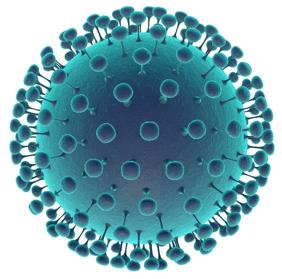 Fig 1. Zika Virus
ZIKV encoded polyprotein precursor is further processed by viral and host proteases into three structural proteins (capsid (C), premembrane (prM) or membrane (M), and envelope (E)), which form the virion particle, and seven nonstructural proteins (NS1, NS2A, NS2B, NS3, NS4A, NS4B and NS5), which are responsible for viral genome replication and modification of host cellular functions and immune responses. Many of the ZIKV proteins have conserved functions; however, sequence divergence and subsequent functional diversification may help to explain the virulence properties of ZIKV. In addition, some findings suggest that the nonstructural proteins of zika virus may contain unique motifs and/or domains that determine viral pathogenesis.
New reverse genetics tools
Now, specific reverse genetics systems for flaviviruses have been developed. Through cloning the entire viral cDNA downstream of a phage derived T7 or SP6 promoter, mutations can be easily engineered into the viral cDNA genome and viral RNA can be obtained by in vitro transcription of the modified cDNA. Transfection of cells in culture with the in vitro transcribed viral RNA will result in the recovery of the mutant viral progeny. Using those flavivirus reverse genetics systems, the effects of various mutations can be readily assessed by comparing the phenotypes of the mutants with those of the wild- type virus.
In ZIKA pathogenicity studies, phylogenetic analysis demonstrated that ZIKV diverged into two lineages: an African and an Asian lineage. A panel of nucleotide and amino acid substitutions that emerged during the spread of zika virus from Asia to the Americas. The first one was the substitution of serine to asparagine at position 139 (S139N)33 in the prM protein, which is exposed on the surface of the immature virion. The second critical site implicated in zika virus pathogenesis is residue 982 in the NS1 protein, which is located at the dimer interface (fig. 1c). The secretion of the NS1 protein into the host circulatory system has been shown to be required for the efficient infection of haematophagous mosquitoes when they feed on the infected host.
In addition to the identified amino acid substitution mentioned above, the amino acid substitution in residue 2634 in NS5 (the viral RNA- dependent RNA polymerase (RdRp) is also interesting from an evolutionary and mechanistic perspective. The African strains, the Southeast Asian strains and the Pacific strains contain 2634M, whereas strains from Malaysia in 1966 contain 2634T and the American strains contain 2634V, most recently, the Americas strains M2634V. In other study, in the related alphavirus, chikungunya virus, in which the A226V substitution in the E protein emerged multiple times by convergent evolution. This mutation has been shown to affect vector specificity and increase disease severity. Moreover, in WNV lineage I, the positively selected substitution of 249T to proline (T249P) in the NS3 protein has also occurred repeatedly82. The T249P mutation has been shown to increase viraemia and virulence of WNV in the avian reservoir host, which might be crucial for WNV transmission.
Apart from the amino acid substitutions mentioned above, there are some additional mutations that may affect ZIKV pathogenesis. First, a unique substitution: T233A, in the NS1 protein of a ZIKV; Second, the substitution of aspartic acid to glutamic acid at position 683 (D683E) in domain III of the E protein and the V763M and T777M substitutions in the E protein transmembrane region strain; Third, the substitution of A or glycine to 2283S in NS4B and three mutations in NS5 (A/T3046 to isoleucine, G/R3107 to lysine and R/S3167N) may inhibit the intracellular interferon pathway and increase viral replication. Fourth, a series of amino acid substitutions in the prM protein was found by homology modelling to cause a dramatic structural change in the protein and has been suggested to affect infectivity in humans62. Finally, variations in the 3ʹ UTR and sfRNA between different ZIKV strains have been identified, some of which could potentially affect the stability of the dumbbell and 3ʹ stem–loop structures85.
Non- viral factors have also been suggested to contribute to the wide spread and pathogenesis of ZIKV. Including growing human populations in endemic areas(especially immunologically naive populations), climatic conditions, people who have been infected with related flaviviruses, and antibody dependent immune enhancement might also contribute to the severe disease outcomes.
References
| Target | Cat. No. | Product Name | Size | Species Reactivity | Application | Detection Sample | |
| ZIKV | DEIABL43 | Zika Virus IgM ELISA Kit | 96T | Human | Quantitative, Qualitative | Serum, plasma | Inquiry |
| DEIAJX001 | Human Anti-ZIKV NS1(Zika Virus Non-structural Protein) IgG ELSIA Kit | 96T | Human | Quantitative | Serum and other biological fluids | Inquiry |
Loading ......
