
Inquiry Basket
 Loading ......
Creative Diagnostics has developed a range of native and recombinant staphylococcal enterotoxin antigens. These antigens are well-validated in double-antibody sandwich enzyme-linked immunosorbent assay (ELISA). The newly launched antigens consist of five most prevalent staphylococcus aureus enterotoxins and are ideal for in vitro detection and diagnosis research.
Staphylococcus aureus is a Gram-positive spherical bacterium of approximately 1 μm in diameter and forms clusters. Staphylococcus is ubiquitous in the environment and can be found in the air, dust, sewage, water, environmental surfaces. It colonizes humans as well as domestic animals, frequently found in the upper respiratory tract and on the skin. S. aureus is one of the leading causes of foodborne bacterial intoxications worldwide. The most notable virulence factors associated with S. aureus are staphylococcal enterotoxins (SEs) that cause toxic shock-like syndromes and have been implicated in food poisoning.
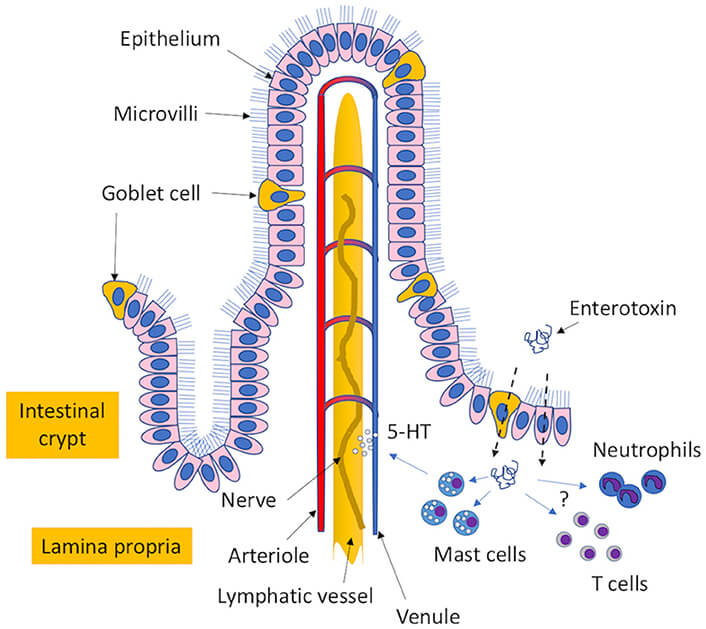 Fig.1 Proposed mechanism of enterotoxin-induced emesis (Fisher EL, et al. 2018)
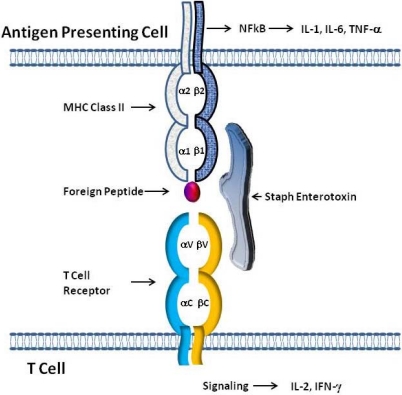 Fig.2 Model of SE interaction with T cell Receptors and class II MHC Molecules (Pinchuk IV, et al. 2010)
The SEs are potent gastrointestinal exotoxins synthesized by S. aureus throughout the logarithmic phase of growth or during the transition from the exponential to the stationary phase. SEs and enterotoxin like (SEls) are globular single-chain proteins with low molecular weight (19–29 kDa). These SEs have a remarkable ability to resist heat and acid. Staphylococcal enterotoxins have been proposed to be named according to their emetic activities, only superantigens that induce vomiting after oral administration in a primate model will be designated as SEs. The repertoire of S. aureus SEs/SEls comprised 22 members, excluding molecular variants. The most common staphylococcal enterotoxins are SEA and SEB. TSST-1, initially designated as SEF, lacks emetic activity. SEs function not only as potent gastrointestinal toxins but also as superantigens that bind to class II MHC molecules on antigen presenting cells and stimulate T-cell proliferation. If this stimulation is sustained, a massive cytokine overload is produced preluding the clinical hallmarks of toxic shock syndrome.
| Cat_N | Product Name | |
| DAG-WT619 | Native Staphylococcus aureus Enterotoxin A (SEA) | Inquiry |
| DAG-WT626 | Recombinant Staphylococcus aureus Enterotoxin A (SEA) | Inquiry |
| DAG-WT627 | Recombinant Staphylococcus aureus Enterotoxin B (SEB) | Inquiry |
| DAG-WT621 | Native Staphylococcus aureus Enterotoxin C2 (SEC2) | Inquiry |
| DAG-WT622 | Native Staphylococcus aureus Enterotoxin C3 (SEC3) | Inquiry |
| DAG-WT628 | Recombinant Staphylococcus aureus Enterotoxin C (SEC) | Inquiry |
| DAG-WT623 | Native Staphylococcus aureus Enterotoxin D (SED) | Inquiry |
| DAG-WT629 | Recombinant Staphylococcus aureus Enterotoxin D (SED) | Inquiry |
| DAG-WT624 | Native Staphylococcus aureus Enterotoxin E (SEE) | Inquiry |
| DAG-WT630 | Recombinant Staphylococcus aureus Enterotoxin E (SEE) | Inquiry |
Loading ......
