
Inquiry Basket
 Loading ......
The Lassa virus causes Lassa fever which presents as a lethal viral hemorrhagic disease threatening public health throughout West Africa. The zoonotic properties of Lassa virus turn it into an ongoing danger in areas with inadequate sanitation and crowded living spaces because humans often come into contact with rodents there. Healthcare professionals face increased risk because human-to-human transmission of the virus happens through bodily fluid contact.
Research efforts continue for over decades but Lassa virus persists as a major challenge because of diagnostic limitations and inadequate healthcare systems alongside the lack of an authorized vaccine. Outbreak control depends on early detection systems and the isolation of patients who test positive while implementing rodent population control strategies. Ribavirin represents a recent advancement in antiviral treatments that enhances survival rates when administered early but remains inaccessible in areas with limited resources.
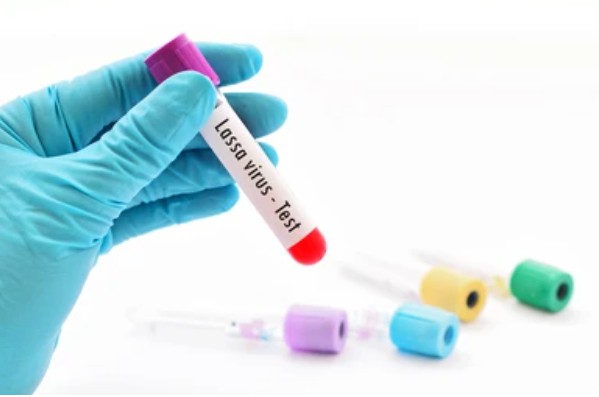 Figure 1. Lassa Virus.
The primary way Lassa virus spreads to humans is through zoonotic transmission which involves movement from animals to humans. Infected Mastomys natalensis rodents serve as the main source of human infections through direct or indirect transmission. Zoonotic transmission most often occurs when humans encounter rodent excreta such as urine and feces directly or indirectly. Upon drying rodent excreta virus particles transform into airborne aerosols. People breathe in these polluted particles when they are airborne due to activities such as sweeping, cleaning, or farming in areas where infected rodents stay. Other routes of primary (zoonotic) transmission include:
| Transmission | Descriptions |
| Direct Contact with Rodent Fluids | Humans who touch rodent urine, feces, blood or tissue could become contaminated when they subsequently touch their eyes, nose or mouth. |
| Rodent Bites | Transmission through rodent bites remains a rare occurrence yet possible when the rodent is carrying an infection. |
| Hunting and Consumption | The practice of hunting and eating rodents such as Mastomys natalensis raises the danger of infection in certain regions. |
| Human-to-Human Transmission: | Person-to-person transmission serves as a secondary transmission mode for Lassa fever after zoonotic transmission. The transmission of infections presents serious risks in medical facilities as nosocomial transmission but it also occurs in domestic environments. Human population exposure to Lassa virus transmission depends largely on the close living quarters shared with Mastomys natalensis. These rodents commonly occupy homes and food storage locations where they create multiple chances for humans to come into contact with their contaminated feces. The way homes are built using materials like mud and wattle and their internal organization affects how many rodents live nearby humans which increases infection risk. |
Symptomatic Lassa fever begins with a slow development of general symptoms which resemble those of other common febrile diseases such as malaria, typhoid, and influenza. Early symptoms include fever (usually low in the beginning but may get higher), vomiting, headache and muscle aches. Sore throat may be accompanied by mouth ulcers and white patches.
 Figure 2. Symptoms of Lassa Fever.
The Lassa virus has a unique structure. As an enveloped virus the Lassa virus possesses an outer lipid membrane which originates from its host cell. The viral envelope contains glycoproteins essential for the virus to attach to and penetrate host cells. The viral genome inside the envelope contains two RNA segments which encode the essential viral proteins needed for replication and survival.
The Lassa virus displays extensive genetic variability which has led to the identification of four principal lineages.
The genetic diversity of the virus creates obstacles for vaccine development because different strains might respond differently to vaccine treatments.
Lassa fever received its first clinical description during the 1950s. Scientists identified the Lassa virus for the first time in 1969 after a series of tragic events happened in Nigeria. In the Nigerian town of Lassa located in Borno State two missionary nurses succumbed to a mysterious severe febrile illness. Healthcare settings faced continued challenges due to Lassa fever's spread shortly after its identification. The early 1970s saw multiple epidemics in Nigeria, Liberia, and Sierra Leone which demonstrated how easily the virus spread through hospital environments. The research initiative that started in Sierra Leone in 1976 collected vital information about Lassa fever's clinical features, epidemiology, transmission mechanisms and possible treatments. The foundational study provided substantial progress in the comprehension of this complex disease.
Multiple West African countries face endemic Lassa fever through persistent viral presence in their rodent populations which results in regular human infection cases. Guinea along with Liberia and Sierra Leone and Nigeria serve as the main endemic regions for this disease. The four primary countries endure the most significant impact from the disease yet reports of sporadic cases and outbreaks appear in surrounding nations such as Benin, Ghana, Mali, and Burkina Faso. The distribution pattern of Lassa virus corresponds directly with both the habitat and population size of Mastomys natalensis which serves as its primary rodent host. Sub-Saharan Africa features the multimammate rat throughout most of its expanse. The extensive distribution of the reservoir host allows Lassa fever to potentially affect additional West and Central African nations regardless of prior case reports if transmission conditions are met.
Antiviral Therapy
The effectiveness of Ribavirin as a broad-spectrum antiviral treatment reaches its peak when administered during the initial six days of illness which results in a 90% reduction in mortality in patients with severe cases. However, its use is limited by:

Supportive Care

Experimental Treatments

The affected communities in West Africa experience major consequences because of Lassa fever. Lassa fever creates both high rates of sickness and death while simultaneously overwhelming health care systems. Hospitals face patient surges during outbreaks which leads to resource scarcity including beds, medical equipment and trained staff. Medical experts worry about the possibility that the Lassa virus could spread to other countries. Globalization and increased travel enable infected individuals to unintentionally transmit the virus across different regions and countries. The international transmission of the virus happens infrequently but demonstrates the importance of global improvements in surveillance systems and the need for rapid response and early detection methods.
To control Lassa virus infections the main strategies involve cutting down human interaction with infected rodents as well as stopping transmission between people when outbreaks occur.
The Lassa virus represents a complex pathological threat which endangers public health with its significant risk predominantly affecting West Africa. Identifying symptoms and transmission routes of the disease remains essential to achieve early detection and implement effective prevention and control measures. To fight against Lassa virus spread and decrease its effects on local populations research must continue alongside improvements in surveillance and public health measures.
| Cat. No. | Product Name | Size | Species Reactivity | Application | Detection Method | |
| DEIA-Z5092 | Human Yellow Fever IgM (YF IgM) ELISA Kit | 96T | Human | Quantitative | / | Inquiry |
| Cat. No. | Product Name | Size | Target | Species | |
| DAG-WT370 | Recombinant Lassa Fever Virus (LASV) VLP lineage II | 1 mg | LASV | / | Inquiry |
| DAG-WT371 | Recombinant Lassa Fever Virus (LASV) VLP lineage III | 1 mg | LASV | / | Inquiry |
| DAG-WT372 | Recombinant Lassa Fever Virus (LASV) VLP lineage IV | 1 mg | LASV | / | Inquiry |
| DAGA-982 | Recombinant lassa virus NP (aa 1-569) [His] | 100 g | / | / | Inquiry |
| DAGA-982 | Recombinant lassa virus NP (aa 1-569) [His] | 100 g | / | / | Inquiry |
| DAGA-981 | Recombinant lassa glycoprotein-1 [His] | 500 g | / | / | Inquiry |
| DAGA-980 | Recombinant lassa capsid [His] | 100 g | / | / | Inquiry |
| DAGA-2011 | Recombinant Lassa Virus Nucleocapsid Protein (a.a.1-569) [His] | 100 g | / | Lassa virus | Inquiry |
Loading ......
