
Inquiry Basket
 Loading ......
Interneurons are a vital component of the nervous system, playing a crucial role in neuronal communication and information processing. The identification and characterization of interneurons rely on the use of specific markers that help distinguish them from other neuronal populations.
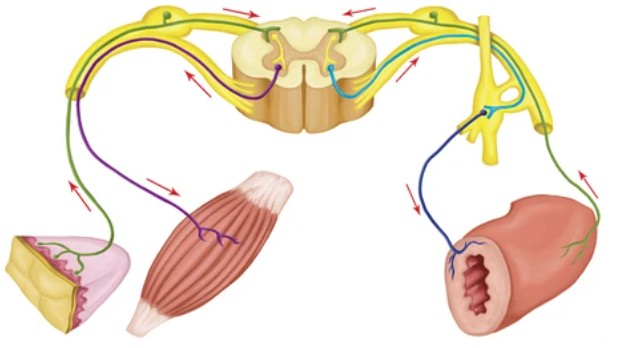
Interneurons, also known as relay neurons, association neurons, or bipolar neurons, connect afferent and efferent neurons in nerve conduction pathways. The main functions of interneurons include regulating neural activity in specific brain areas and controlling the excitatory input of main neurons.
Interneurons can be classified into two groups: local interneurons and relay interneurons. Local interneurons have short axons and form connections with nearby neurons to analyze small pieces of information. On the other hand, relay interneurons have long axons and establish connections between circuits of neurons in different regions of the brain. While interneurons can facilitate communication between different brain regions, their primary function is considered to be operating within local brain areas. The interactions between intermediate neurons enable the brain to perform complex functions such as learning and decision-making.
Some important interneuron markers are listed below.
Calbindin, also called vitamin D-dependent calcium-binding, is an interneuron marker. Major cortical interneuron subclasses can be distinguished based on the expression of distinct calcium-binding proteins, including parvalbumin, calretinin, or calbindin. When studying the spinal cord, researchers have found that calbindin labels several classes of interneurons, such as nonvaricose stellate neurons and rare large neurons in the DGL.
Calretinin is an interneuron marker widely used in neuroscience research. It helps classify cortical interneurons and is involved in various processes, including synaptic plasticity and calcium homeostasis. Calretinin-positive interneurons have been identified in different brain regions and display diverse functional properties.
DLX
DLX is an interneuron marker that is expressed in a subset of interneurons in the cortex and hippocampus. It plays a crucial role during embryonic development by promoting the production of GABAergic interneurons in the forebrain. DLX is also involved in regulating the functional longevity of interneurons in the adult brain. It ensures the proper functioning and maintenance of cortical and hippocampal interneurons throughout adulthood.
GABA, a neurotransmitter, serves as an interneuron marker in the brain. It is involved in the inhibition of neuronal activity and plays a critical role in maintaining the balance between excitation and inhibition. GABAA receptor expression is observed in some interneuron populations, indicating their involvement in mediating the inhibitory effects of GABA. GABA(B) receptor 1-like immunoreactivity (GBR1-LI) exhibits high intensity in presumed GABAergic interneurons across various subregions of the hippocampus.
ChAT (choline acetyltransferase) is a striatal interneuron marker that is also considered a marker for cholinergic interneurons. ChAT is an enzyme responsible for the biosynthesis of acetylcholine, a neurotransmitter involved in various physiological processes. ChAT is highly expressed in cholinergic neurons and is used as a phenotypically specific marker for these neurons.
Chx10
Chx10 is required for the proliferation of retinal progenitor cells and the formation of bipolar cells, a type of retinal interneuron. Moreover, Chx10 is usually restricted to a class of ventral interneurons.
EN1, also known as Engrailed-1, is a marker that is specific for certain classes of interneurons in the brain. While EN1 is associated with interneuron-motoneuron connectivity, its expression is not limited to a specific functional subclass of ventral interneuron. One of the functions of EN1 is to regulate axon pathfinding. It is involved in the association of interneurons that project to motor neurons, facilitating the appropriate guidance of axons during development.
Parvalbumin (PV) is a calcium-binding protein that serves as a marker for distinct subclasses of interneurons in the cortex. PV is also a marker for a specific population of interneurons in the striatum, a region of the brain involved in motor control and reward processing. Furthermore, PV immunoreactivity is a reliable marker for chandelier cells, which are a well-defined morphological type of cortical interneuron that release the neurotransmitter gamma-aminobutyric acid (GABA).
As a trusted company in the field of life sciences, Creative Diagnostics offers a wide range of high-quality antibodies targeting interneuron markers. These antibodies enable researchers to accurately label and study interneurons, exploring their morphology, connectivity, and functional properties.
References
Loading ......
