

Inquiry Basket
 Loading ......
Antibody-drug conjugates (ADCs) have revolutionized cancer therapy by combining the targeting specificity of monoclonal antibodies with the cytotoxic potency of small-molecule drugs. The Intact DM1 ADC ELISA Quantification Kit is a cutting-edge tool designed to precisely measure the concentration of intact DM1-conjugated antibodies in biological samples. This resource page provides detailed technical insights, application guidance, and scientific references to support researchers in leveraging this kit for preclinical and clinical ADC development.
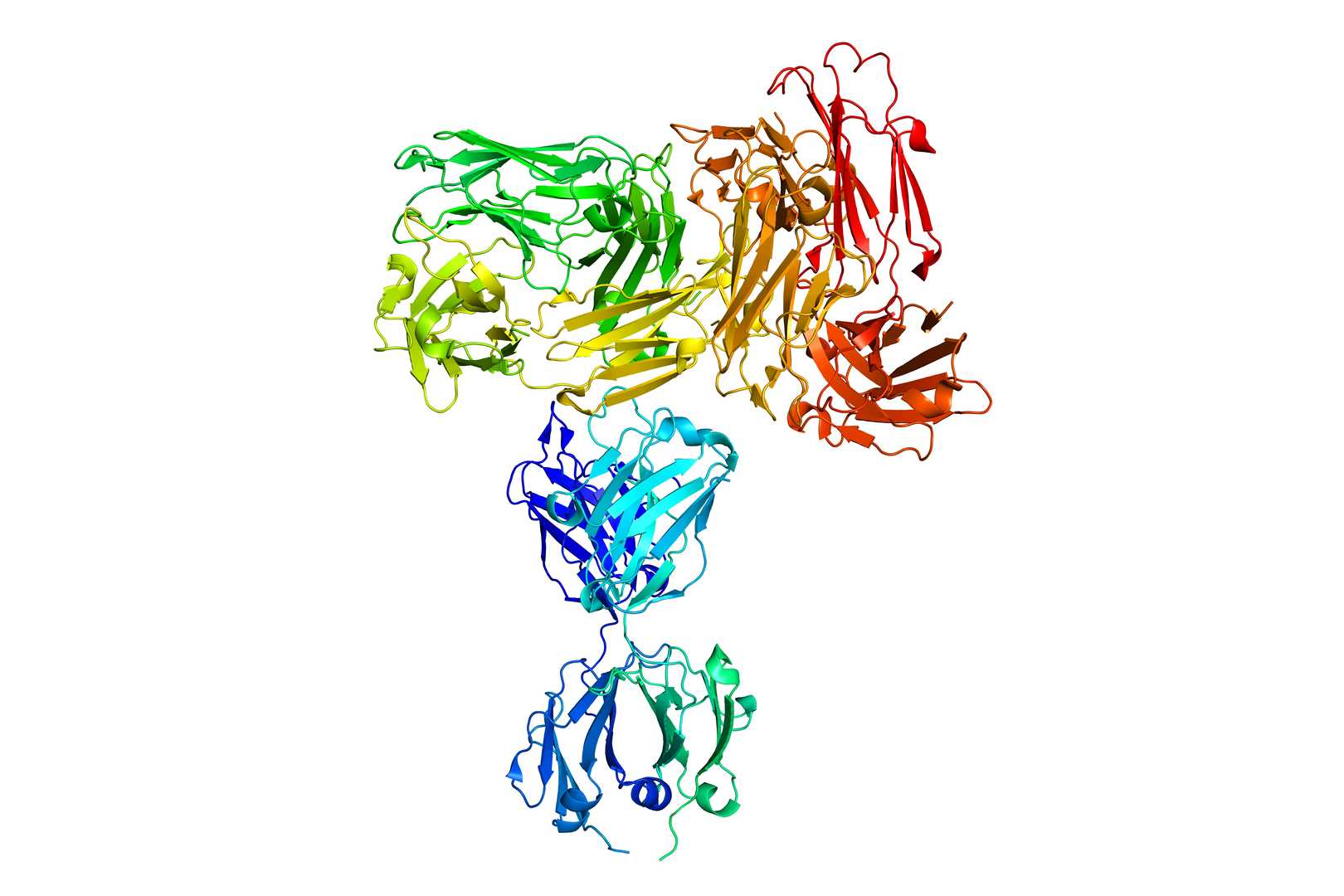 Figure 1. Antibody-drug conjugates (ADCs).
The Intact DM1 ADC ELISA Quantification Kit is a competitive ELISA-based assay optimized for the quantitative detection of DM1 (mertansine)-conjugated antibodies in serum, plasma, cell culture supernatants, and tissue homogenates. This kit enables accurate measurement of intact ADCs while distinguishing them from free DM1, unconjugated antibodies, or degradation products.
Sample Type Compatibility
Sensitivity Profile
Kit Features
Key Features
Technical Principle
Understand the kit: principles and components
Assay Protocol Summary

Pharmacokinetics (PK) Studies
Accurate measurement of the intact ADC in biological fluids (e.g., plasma, serum) is essential for determining its absorption, distribution, metabolism, and excretion (ADME) profile. This kit provides the necessary data to understand the in vivo behavior of the ADC.

Process Development and Quality Control (QC)
During manufacturing, the kit can be used to monitor the intact ADC concentration in various process intermediates and final product formulations. It is a critical tool for assessing product quality and stability.
| Parameter | Details |
| Product name | DM1 ADC ELISA Kit |
| Sample | Serum, plasma |
| Intended Use | This highly sensitive "sandwich" test kit is intended for use in the quantitative determination of antibody DM1 conjugate level in human serum or plasma. It is useful for pre-clinical and clinical pharmacology study of DM1 Antibody Drug Conjugate (ADC). |
| Sensitivity | The limit of quantitation(LOQ) was 10ng/mL, the concentration corresponding to the value obtained by test DM1 Antibody Drug Conjugate (ADC) spiked to a low concentration of 10ng/mL under the precision CV<15% and the recovery in the range of 80-120%. |
| Standard Curve | 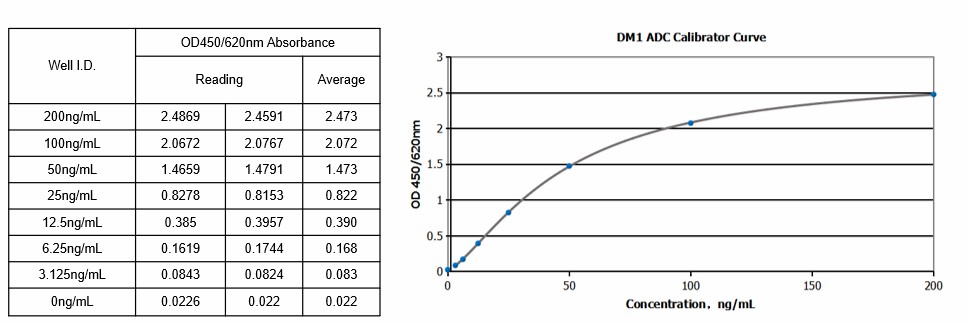 |

Robust and Reproducible
Developed under stringent quality control standards, the kit provides consistent and reproducible results, which is critical for generating reliable data for regulatory submissions. The pre-coated plates and validated reagents minimize inter-assay variability.

High Specificity for ADC
The dual-recognition system (anti-IgG capture, anti-DM1 detection) ensures that the assay specifically measures only the fully assembled, drug-loaded ADC. It discriminates against free antibody (unconjugated) and degraded ADCs.

High Sensitivity
The kit is optimized to detect low concentrations of ADC, which is crucial for PK/PD studies and bioanalysis. The wide dynamic range allows for the quantification of samples with varying concentrations without the need for multiple dilutions.
The Intact DM1 ADC ELISA Quantification Kit is an indispensable tool for ADC researchers, offering a robust, validated method to quantify intact DM1-conjugated antibodies in biological samples. By combining high specificity with ease of use, this kit accelerates preclinical and clinical studies, enabling advancements in targeted cancer therapy. For further guidance, refer to the kit's technical manual or contact the manufacturer's support team.
Measuring total antibody (e.g., with a generic anti-human IgG ELISA) only tells you the total concentration of the antibody molecule, regardless of whether it is conjugated to the drug. The Intact DM1 ADC ELISA specifically measures only the antibody molecules that are still attached to the DM1 payload, providing a more accurate measure of the therapeutically active component.
No. The detection antibody in this kit is highly specific to the DM1 payload. A different kit with a different detection antibody would be required for ADCs with other payloads (e.g., MMAE, calicheamicin).
The kit has been validated for use with a variety of biological matrices, including serum, plasma, and cell culture supernatant. For other matrices, a preliminary validation is recommended.
Loading ......
