
Inquiry Basket
 Loading ......
Infectious Hematopoietic Necrosis Disease (IHNV) is an acute fish infectious disease caused by the Infectious Hematopoietic Necrosis Virus (IHNV) of the Flavivirus genus. It mainly harms juvenile salmonids and has a high mortality rate. The virus is transmitted through water bodies, excreta, and the digestive tract. After infection, it presents symptoms such as necrosis of hematopoietic tissue, blackening of the body surface, internal bleeding, and spasms. The onset temperature is concentrated at 4-13 ℃. The virus was first discovered in Canada and the United States in the mid-20th century and is sensitive to high temperatures and acidic environments.The transmission is related to the migration of virus-infected fish and international trade activities, with fish eggs and adult fish as the main transmission vectors. The diagnostic methods include pathological observation, virus isolation and cultivation, and molecular testing. The prevention and control measures include quarantine management, disinfection of fish eggs with iodine preparations, temperature regulation to 17-20 ℃, and feeding of Chinese herbal medicine. Inactivated vaccines and attenuated vaccines have been applied to stage immunity.
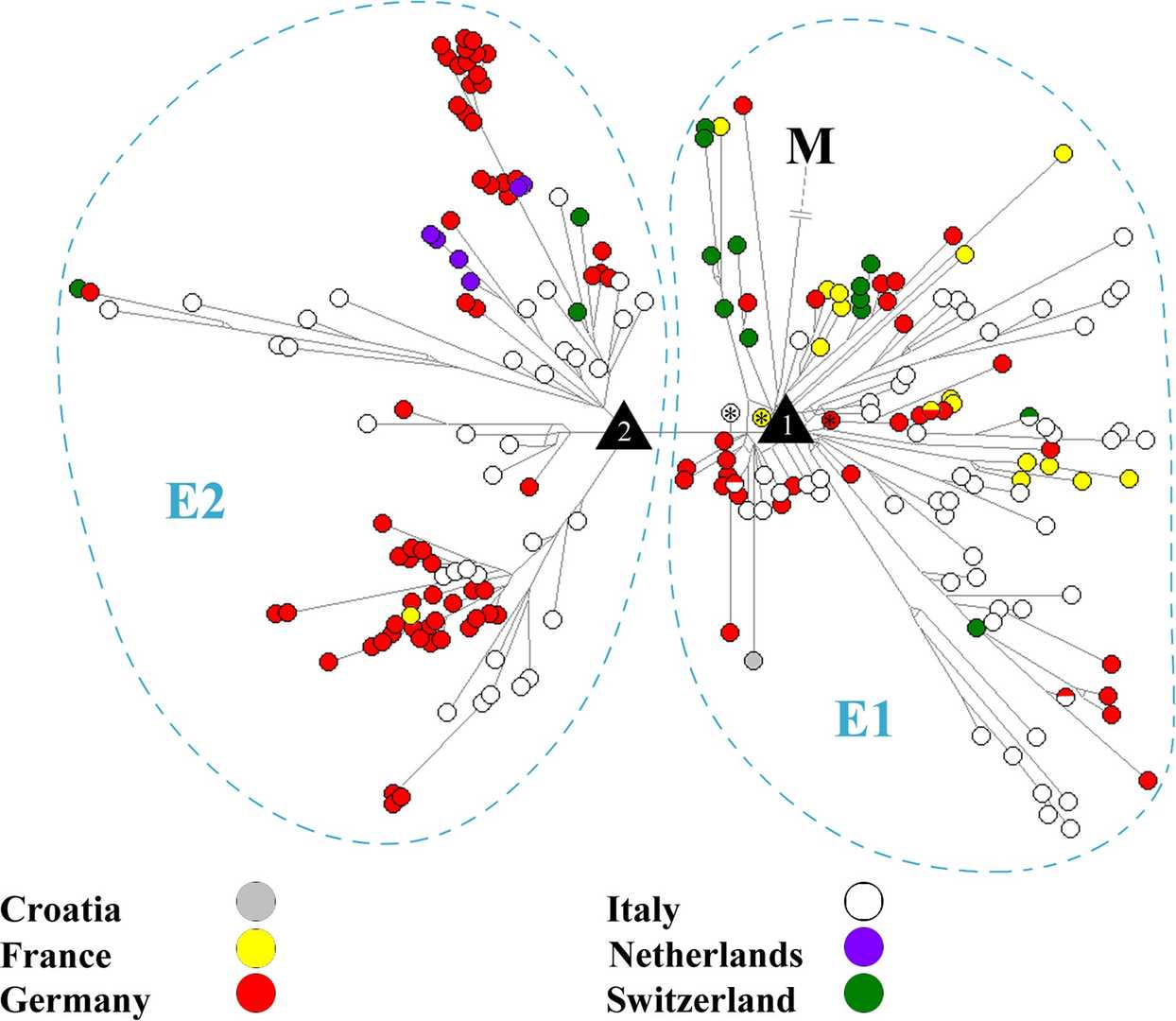 Figure 1. Median-joining network based on the complete G gene sequence from 294 IHNV isolates.( Cieslak, Michael, et al.2017)
The main cause is severe necrosis of hematopoietic tissues in the kidneys and spleen. In severe cases, local necrosis also occurs in the renal tubules and liver, as well as degeneration and necrosis of granulosa cells in the gastric and intestinal lamina propria, and some of the pancreatic glandular and pancreatic islet cells. Inclusions are often seen in the cytoplasm. The white blood cells of diseased fish fry decrease, white blood cells and thrombocytes degenerate, and a considerable number of cells fragments appear. The levels of bicarbonate, bilirubin, calcium, chloride, osmotic pressure, and phosphorus in the blood all decrease. The activity of plasma LDH isoenzymes significantly increased. Abnormal regulation of plasma acidity and alkalinity, renal dysfunction leading to significant imbalance of electrolytes and water, may be the cause of fish death. Virus protein derived inclusion bodies are often observed in the cytoplasm and can be clearly observed and confirmed through specific immunostaining (such as immunohistochemistry) using anti infective hematopoietic necrosis virus (IHNV) polyclonal antibodies, enabling precise histological diagnosis of viral infection.
When IHNV infects rainbow trout, it triggers a complex immune response involving numerous genes and pathways. Transcriptomic studies have identified 6,905 differentially expressed genes (DEGs) in the skin of rainbow trout following IHNV challenge, highlighting the extensive interaction between the virus and host immune system .
Key components of the host immune response include:
Pattern Recognition Receptors (PRRs): NOD1, NLRC3, NLRC5, TLR3
IHNV is the pathogen of fish infectious hematopoietic necrosis (IHN) disease, which is a negative sense single stranded RNA virus. IHNV is a member of the novel rhabdovirus genus, belonging to the rhabdovirus family. North American IHNV isolates were grouped based on partial glycoprotein (G) gene sequences. The three main IHNV genomes in North America are designated as U, M, and L, representing the upper, middle, and lower parts of the geographic range of IHNVs in North America. The Japanese and Korean isolates constitute a new genome of Japanese rainbow trout.
Clinical symptoms and past history of epidemics may indicate IHN. Staphylococcus agglutination, virus neutralization (VN), indirect fluorescent antibody detection, ELISA, PCR, and DNA probe techniques can be used to confirm the diagnosis. The gold standard is virus neutralization. Alternatively, identifying the degeneration and necrosis of granulosa cells in the lamina propria, dense layer, and granular layer of the gastrointestinal tract through histopathology can be used for diagnosing infections.
| Diagnosis | Details |
| Cell Culture | IHNV can be isolated using susceptible fish cell lines, such as EPC (Epitelioma Papulosum Cyprini) and BF-2 (Bluegill Fry) cells. The virus produces characteristic cytopathic effects (CPE) in these cells, which can be further confirmed by immunofluorescence assays or neutralization tests. |
| Molecular Technology | Reverse transcription polymerase chain reaction (RT-PCR) has become the standard method for detecting IHNV due to its high sensitivity and specificity. Various PCR schemes have been developed, including nested PCR methods that can improve detection sensitivity. For example, one approach produces 786 bp of product in the first round of PCR, followed by 323 bp of product in the nested reaction. |
| Serological Methods | Enzyme linked immunosorbent assay (ELISA) and fluorescent antibody assay (FAT) can detect viral antigens in infected tissues. These methods are particularly useful for rapid screening of large samples. |
| Histopathology | Examination of tissue sections from suspected cases can reveal characteristic necrosis of hematopoietic tissues in the kidneys and spleen, providing supportive evidence for IHNV infection. |
Significant progress has been made in vaccine development for IHNV, with several methods showing promise:
Forty years after its initial discovery, the infectious hematopoietic necrosis virus remains a significant threat to global salmon farming. It can cause high mortality rates in juvenile fish, coupled with effective transmission through horizontal and vertical pathways, making it a difficult pathogen to control. The economic impact of the IHNV outbreak continues to drive research to better understand the interaction between the virus and the host, and to develop improved control strategies. The progress in molecular virology provides detailed insights into the genetic composition of IHNVs, including the functions of their six encoded proteins and their roles in viral replication and pathogenesis. This unique non viral granule protein remains a research topic and may be key to understanding the specific virulence mechanism of Novihabado virus.
Reference
| Target | Cat. No. | Product Name | Host | Isotype | |
| IHNV | DPAB2574 | Anti-Infectious Hematopoietic Necrosis Virus (IHNV) polyclonal antibody | Rabbit | IgG | Inquiry |
Loading ......
