
Inquiry Basket
 Loading ......
Natural killer (NK) cells are part of the innate immune system and possess cytotoxic properties similar to those of CD8+ T cells in the adaptive immune system, but they can directly kill target cells without the need for antigen presentation. They account for approximately 10% of the circulating lymphocyte pool and serve as a key force in rapid cellular immune responses. NK cells can swiftly eliminate malignant or infected cells and prevent their spread, while also secreting large amounts of cytokines to enhance the functions of other immune cells. Moreover, in anti-tumor immunity, NK cells are capable of directly recognizing and killing tumor cells. The emergence of chimeric antigen receptor NK (CAR-NK) cells has brought new hope to the field of immunotherapy.
 Fig. 1 The function of NK cells in response to cancer cells.
1. Activation Mechanism of NK Cells
NK cells recognize and attack abnormal cells through a balance of activating and inhibitory receptors on their surface. Normal cells express MHC-I molecules on their surface, which bind to inhibitory receptors on NK cells (such as KIR and NKG2A), thereby suppressing NK cell activity. However, tumor cells and virus-infected cells often downregulate or lose MHC-I expression—which removes inhibitory signals and leads to NK cell activation.
In addition, activating receptors on NK cells (such as NKG2D, DNAM-1, and NKp46) can detect stress-induced ligands on tumor or infected cells. For example, the NKG2D receptor recognizes ligands such as MICA/B and ULBP1-6, which are upregulated in tumor cells due to DNA damage, oxidative stress, or proliferative stress. When activating signals outweigh inhibitory signals, NK cells become activated and exert cytotoxic effects.
2. Cytotoxic Mechanisms of NK Cells
NK cells release perforin and granzymes, proteins that penetrate the target cell membrane and induce apoptosis.
NK cells express death ligands such as Fas ligand (FasL) and TNF-related apoptosis-inducing ligand (TRAIL), which bind to Fas and TRAIL receptors on target cells, triggering programmed cell death.
NK cells express CD16 receptors that recognize IgG antibodies bound to target cells. This allows NK cells to kill antibody-coated cells by releasing cytotoxic granules. This mechanism plays a crucial role in the effectiveness of certain monoclonal antibody therapies, such as rituximab, in cancer treatment.
3. Immunoregulatory Functions
Beyond directly killing tumor cells, NK cells secrete cytokines such as IFN-γ and TNF-α, which modulate the function of other immune cells. These cytokines activate macrophages, T cells, and B cells, enhancing the overall immune response. NK cells can also secrete immunosuppressive cytokines like IL-10 and TGF-β to regulate excessive immune responses under certain conditions.
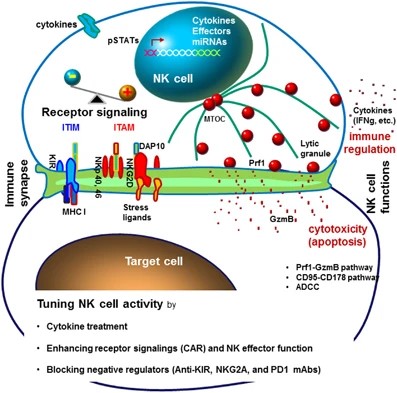 Fig.2 NK cell activation and its translation to therapeutic application
1. Allogeneic NK Cell Infusion Therapy
This strategy involves isolating NK cells from healthy donors, followed by in vitro expansion and activation before infusion into patients to enhance their anti-tumor immune responses. Pre-activation using cytokines such as IL-2, IL-12, IL-15, and IL-18 can significantly boost the cytotoxicity and IFN-γ secretion capacity of NK cells. For example, one clinical trial used IL-2–activated haploidentical NK cells as a bridging therapy before hematopoietic stem cell transplantation in patients with high-risk myelodysplastic syndromes (MDS), achieving complete remission.
2. CAR-NK Cell Therapy
CAR-NK cell therapy is considered a safer and more versatile alternative to CAR-T therapy. CAR-NK cells are less susceptible to immune evasion caused by tumor antigen loss because they retain CAR-independent cytotoxic functions. In terms of safety, CAR-NK cells have significant advantages, including a lower incidence of cytokine release syndrome (CRS) and immune effector cell-associated neurotoxicity syndrome (ICANS).
3. Combination with Monoclonal Antibodies
NK cells can eliminate antibody-coated tumor cells through antibody-dependent cellular cytotoxicity (ADCC). For example, NK cells treated with GSK3 inhibitors and combined with the anti-HER2 antibody trastuzumab showed enhanced anti-tumor effects in a mouse model of ovarian cancer. Additionally, clinical trials are evaluating the safety and efficacy of combining NK cells with nimotuzumab for treating advanced malignant tumors.
Loading ......
