
Inquiry Basket
 Loading ......
Human herpesvirus (HHV) refers to a family of DNA viruses that cause persistent latent infections in humans, including herpesvirus 1 (HSV-1), HSV-2, Epstein Barr virus (EBV), inactivated virus (CMV), pseudoherpesvirus (VZV), and human herpesvirus 6,7,8 (HHV-6, HHV-7, HHV-8). They can cause a range of diseases from harmless rashes on the mouth, external genitalia, or penis to severe ones such as encephalitis, congenital defects, malignant tumors, and more. Rapid and accurate detection of HHV infection can enable early clinical treatment and public health monitoring. As a result, ELISA genome detection system (ELISA) has become an important supplement to HHV screening since it can detect several hundred specimens at the same time while also being highly sensitive and specific.
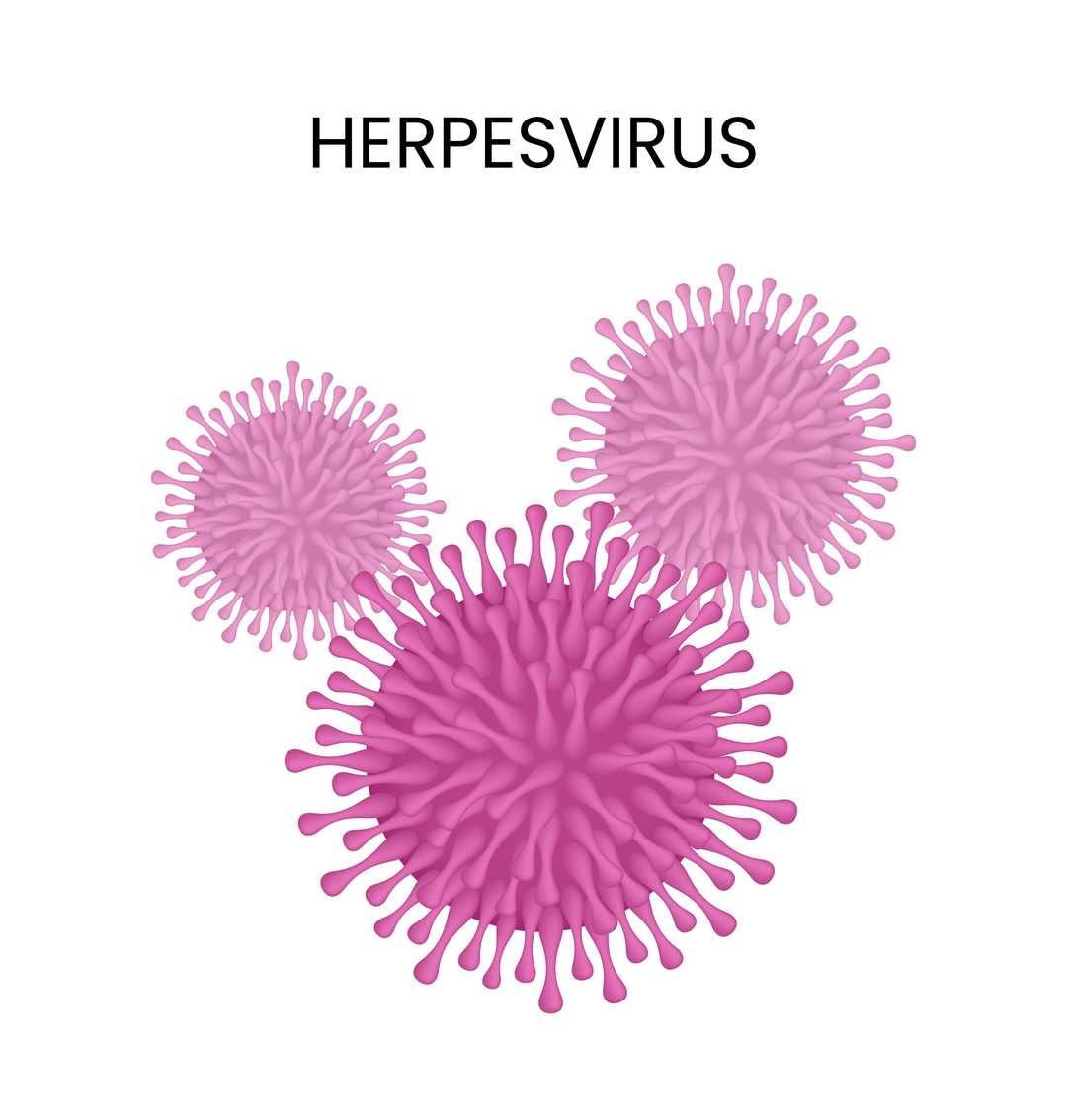 Figure 1. Herpesvirus (HHV) ELISA Kits.
Herpesvirus refers to a large class of viruses that can cause a spreading rash after infecting the human body, with the following common characteristics:
1. Spherical and icosahedral stereosymmetric capsid, with a linear double stranded DNA genome. There is an asymmetric membrane of varying thickness around the nucleocapsid. The outermost layer is the envelope with glycoprotein spikes. Mature viruses with an envelope have a diameter of 180-200 nm and a DNA core diameter of approximately 30-40 nm.
2. Except for EB virus, it can replicate in diploid cell nuclei and produce obvious CPE, with eosinophilic inclusion bodies appearing in the nucleus. Viruses can spread directly through intercellular bridges. Infected cells can fuse with neighboring uninfected cells to form multinucleated giant cells. The cultivation of EB virus and herpes virus type 6 requires human or primate lymphocytes.
3. Under certain stimulating factors, it can also transform into a proliferative infection. Latent and recurrent infections are prominent characteristics of herpes viruses, and this biological behavior can lead to the integration of the genome of certain herpes viruses into the host's chromosome, forming potential oncogenes.
The Herpesviridae family of herpesviruses is divided into three subfamilies: α, β, and γ. They are known as α herpesvirus, β herpesvirus, and γ herpesvirus, respectively. There are herpesviruses in both humans and animals that are linked to infections in people. The herpesviruses that infect people are as follows:
(1) α herpesvirus (herpes simplex virus, varicella zoster virus), which has a wide host range, short replication cycle, and fast reproduction rate. It is a type of lytic virus that often lurks in sensory ganglia.
(2)β - herpesvirus (Cytomegalovirus, Human Herpesvirus 6 and 7) is a subfamily of viruses with a narrow host range, slow to replicate in cell culture, a lengthy reproductive cycle, and the ability to cause infected cells to proliferate and form giant cells. The virus can infect lymphocytes and, in some cases, remain hidden in secretory glands, kidneys, or other tissues.
(3) γ- herpesvirus (EB virus, human herpesvirus 8) is a virus that primarily targets B lymphocytes and has a protracted latent infection period, which is not a source of hemolytic disease in most cases. Additionally, the B-type herpes virus and the Simian herpes virus occasionally cause illness in people.
The achievement of high-throughput capability in HHV ELISA depends on several key components and methods:
| Importance | Description |
| Precision Pipetting | The use of automatic liquid processors to ensure precise pipetting of samples, reagents and detergents, which is very important for high consistency in large numbers of wells. |
| Microplate card reader with enhanced functionality | Fast reading speed: Most modern microplate readers can read the whole 96 well plate in seconds, and some higher level readers can even read 384 well plates to further increase the throughput. Stacker crane and plate loader: The integrated stacker crane can continuously load multiple plates, realizing the long-term unmanned running. Multi mode detection: In addition to the most commonly used colorimetric detection for HHV ELISA, some kits use fluorescence or chemiluminescence to improve sensitivity, which requires a reader that supports these modes of detection. |
| Software integration and data management | Laboratory Information Management System (LIMS): Seamless connection and tracking of samples with the instrument, as well as automated data transfer, reporting and archiving of results, to simplify the management of large data sets required for high-throughput analysis. Automatic data analysis: The data processing software can automatically calculate the concentrations, conduct statistical analysis and label out of range results, which greatly simplifies the interpretation of the results. Quality Control (QC) module: The built-in QC function allows the system to evaluate each run against predefined quality criteria, thus improving the reliability of the results. |
| High density microporous plate | In addition to the 96 well plate commonly used, the high-throughput system can also be equipped with 384 well plates or even 1536 well plates, which can provide more data points per plate to further increase throughput, but they also require a more specialized liquid handling. |
The high-speed and high-accuracy processing of large samples significantly broadens the application of HHV ELISA kit in the following fields:
The high-throughput technology adopted by HHV ELISA brings a lot of convenience and has completely changed the original laboratory diagnosis and research capabilities:

Efficiency and Speed
Processing hundreds or even thousands of samples in a short time compared with traditional manual operations. Shorten the cycle of reporting results and improve efficiency. The resulting turnaround time makes it ideal for clinical needs and large-scale research.

Economy (large-scale)
Although the initial investment in automated equipment is high, the cost per sample will be greatly reduced during high-volume production due to reduced labor costs, reduced reagent consumption, and increased throughput.

Data management
Automation can seamlessly integrate with LIMS and data analysis tools, making data tracking, analysis, reporting, and other management tasks more convenient. It can also reduce the risk of human error in manual data input.
The Human Herpesvirus (HHV) ELISA kit can be used to diagnose and treat HHV infections. It is a high-throughput test kit that provides researchers and clinicians with a fast, dependable, and powerful tool for detecting and monitoring HHV infections such as HSV-1, HSV-2, and HHV-5. In clinical and research settings, the use of ELISA kits has been expanded. The broad adoption of ELISA kits in clinical and research settings has greatly aided in our understanding of HHV infection and has contributed to better patient care. HHV infection continues to be a global health problem, and ELISA technology will continue to play a key part in the battle against these viruses as it continues to be developed and improved.
| Cat. No. | Product Name | Size | Species Reactivity | Application | Detection Method | |
| DEIA1713 | Human Epstein-Barr Virus EBNA-1 IgG ELISA Kit | 96T | Human | Quantitative | iELISA | Inquiry |
| DEIA-NS2401-13 | Herpes simplex Virus 1 and 2 IgG ELISA Kit | 96T | Human | Quantitative | iELISA | Inquiry |
| DEIA-NS2401-14 | Herpes simplex Virus 1 and 2 IgM ELISA Kit | 96T | Human | Quantitative | iELISA | Inquiry |
| DEIA-NS2401-15 | Herpes simplex Virus 2 IgM ELISA Kit | 96T | Human | Quantitative | iELISA | Inquiry |
Loading ......
