
Inquiry Basket
 Loading ......
Enterotoxigenic Escherichia coli (ETEC) represents a complex pathogen which contains 4.8 to 5.2 Mbp of genomic material spread across multiple plasmids. The pathogen contains virulence genes and putative virulence genes which enable different mechanisms of pathogenicity that result in diarrhea. Enterotoxigenic ETEC exists as a primary diarrheal agent worldwide because it creates hundreds of millions of infections that result in 300,000 to 500,000 child deaths annually in developing nations. The diarrheal pathogen ETEC produces either heat labile enterotoxin (LT) and the heat stable enterotoxins (ST) from plasmids while expressing up to 25 different colonization factors (CFs) which are mainly plasmid-encoded.
In 1991, the crystal structure of LT was elucidated and the multimeric AB5 conformation of the toxin was revealed, typically found in members of the AB5 toxin family. Other bacterial toxins are also belong to this large family, including Shiga toxin, Pertussis toxin, Anthrax toxin, Ricin, and Cholera toxin (CT). LT is closely related to CT and shares similar physiology, structure and antigenic properties.
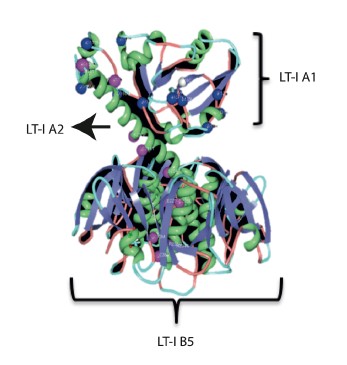 Figure 1. The crystal structure of the human heat labile toxin (LT). (Joffré, 2015)
The holotoxin structure of LT is organized in two subunits: LTA and LTB. The single LTA subunit has a catalytic domain with ADP-ribosylation activity and binds to a pentamer of non-toxic B subunits (LTB). The LTB pentamer binds to glycosphingolipid receptors on the surface of eukaryotic cells (e.g.,GM1 gangloside). The LTA subunit is basically divided into a large A1 domain with the enzyme-active site, which is linked to a small A2 domain responsible for embedding the LTA1 subunit into the center of the LTB pentamer. A single trypsin-sensitive loop and a long α-helix join the two subunits.
ETEC isolates can express two distinct heat-stable toxin families, STa, STA, STI, or ST1 and STb, STB, STII, or ST2 with significant differences in structure, function, antigenic cross-reactivity, methanol solubility and activity in infant mouse. STa found in human isolates is a small cysteine rich enterotoxin of 18-19 amino acids. STa is encoded on a plasmid by a transposon associated estA gene. Within STa, two variants associated with human disease have been described, STh and STp, originally found in human and pigs, respectively. STp and STh are synthetized as 72-amino acid residues including a pre-or signal peptide, a pro region and a mature ST region. ST is active even after 60 min of heating at 95°C. STa also has to go through different steps until it reaches the target and cause diarrhea.
Diarrhea induced by STa is of the secretory type with no signs of inflammation or colon involvement. It also probably induces more severe disease than LT among children in developing countries. A recent study demonstrated that ST is responsible for the rapid onset and shorter duration of ST-induced diarrhea, while if a LT+/ST+ ETEC strain is causing the diarrhea episode, a second phase with longer duration is due to LT-induced diarrhea.
Table 1. LT vs ST.
| Property | Heat-Labile Enterotoxin (LT) | Heat-Stable Enterotoxin (ST) |
| Thermal Stability | Inactivated at 65°C for 30 min. | Stable at 100°C for 20 min; survives autoclaving (121°C). |
| Molecular Weight | ~73 kDa (protein complex). | 1.5–5 kDa (small peptide). |
| Structure | A-B₅ type toxin; 1 enzymatic A subunit (A1 chain); 5 receptor binding B subunits. | Single polypeptide chain (e.g., STa: 18–19 amino acids). |
| Immunogenicity | Strongly immunogenic; induces neutralizing antibodies. | Weak or non-immunogenic. |
| Receptor Binding | B subunit binds GM₁ ganglioside on enterocytes. | Binds guanylate cyclase C (GC-C) receptor. |
| Genetic Control | Encoded by plasmid gene eltAB. | Encoded by plasmid genes (estA for STa; estB for STb). |
| Subtypes | LT-I (human pathogens), LT-II (non-human). | STa (STh-human, STp-porcine), STb (porcine). |
| Role in Disease | Causes secretory diarrhea; similar to cholera toxin. | Rapid-onset diarrhea (1–2 hrs post-infection). |
| Detection | ELISA, cell culture assays, PCR (eltAB gene). | Infant mouse assay, ELISA, PCR (estA/estB genes). |
| Environmental Stability | Sensitive to acid, proteases, and heat. | Resistant to acid (pH 2–10), proteases, and organic solvents. |
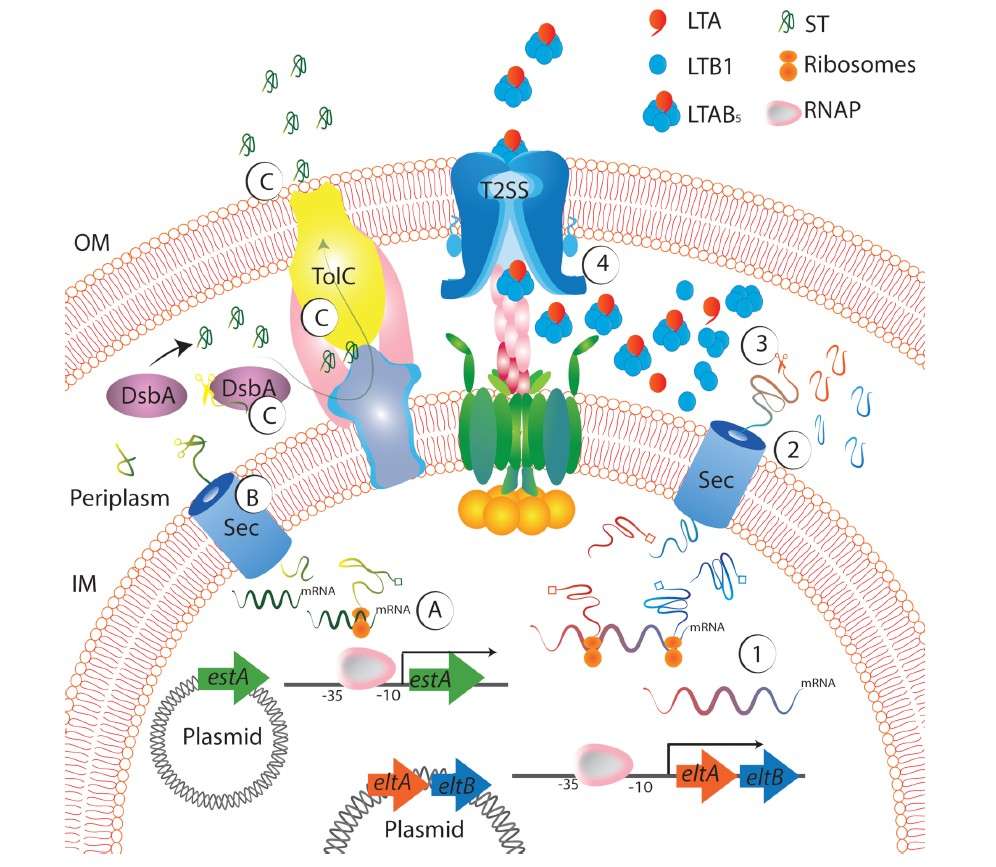 Figure 2. Mechanisms of synthesis and secretion of LT and ST. (Joffré, 2015)
Creative Diagnostics plays a key role in advancing ETEC research by providing Heat-stable Enterotoxin (ST) and Heat-labile Enterotoxins (LT) antibodies and antigens. Our high-quality tools support mechanistic studies of toxin-induced secretory diarrhea, facilitate the development of vaccines, and enable high-throughput screening of neutralizing antibodies.
References
| Target | Cat. No. | Product Name | Host | Isotype | Application | |
| GUCY2C | DMAB-CDB26037 | Hi-Puri™ Mouse Anti-Human GUCY2C Monoclonal antibody, clone PF-07062119 | Mouse | IgG | ELISA | Inquiry |
| DMAB-CDB26038 | Hi-Puri™ Human Anti-Human GUCY2C Monoclonal antibody, clone PF-07062119 | Human | IgG | ELISA | Inquiry | |
| DMAB-CDB26039 | Hi-Puri™ Rabbit Anti-Human GUCY2C Monoclonal antibody, clone PF-07062119 | Rabbit | IgG | ELISA | Inquiry | |
| CAB-3498MH | Anti-GUCY2C monoclonal antibody, clone MAAG945 | Mouse | IgG2b | ELISA, WB | Inquiry | |
| DPAB-DC1512 | Anti-GUCY2C (aa 24-133) polyclonal antibody | Mouse | WB, ELISA | Inquiry | ||
| DPABH-20707 | Anti-GUCY2C (aa 982-1067) polyclonal antibody | Rabbit | IgG | IHC-P | Inquiry | |
| DMABZ016 | Anti-GUCY2C monoclonal antibody, clone 2C22 | Mouse | IgG2b, &kappa | ELISA, WB | Inquiry | |
| DMABZ017 | Anti-GUCY2C monoclonal antibody, clone 3G4 [FITC] | Mouse | IgG2b, &kappa | ELISA, WB | Inquiry | |
| DMABZ018 | Anti-GUCY2C monoclonal antibody, clone 3H8 | Mouse | IgG2b, &kappa | WB, ELISA | Inquiry |
| Target | Cat. No. | Product Name | Host | |
| E. coli Heat Labile Enterotoxin | DAG3923 | Recombinant E. coli Heat-Labile Enterotoxin B subunit | Pichia pastoris | Inquiry |
Loading ......
