
Inquiry Basket
 Loading ......
Granulocytes are a crucial component of the immune system, playing a vital role in defending the body against pathogens and foreign substances. Comprising a diverse group of white blood cells, granulocytes are characterized by the presence of granules within their cytoplasm. Exploring the functions, activation mechanisms, types, and labeled antibodies of granulocytes is crucial in studying these cells.
Granulocytes are involved in both innate and adaptive immune responses, contributing to the body's defense against infections and diseases. These cells are responsible for various functions, including phagocytosis, degranulation, and the release of cytokines.
Phagocytosis
One of the primary functions of granulocytes is phagocytosis. Neutrophils, a type of granulocyte, are highly efficient phagocytes that engulf and destroy invading microorganisms, such as bacteria and fungi. By recognizing pathogen-associated molecular patterns (PAMPs) through pattern recognition receptors (PRRs), neutrophils initiate the phagocytic process, effectively eliminating potential threats.
Degranulation
Granulocytes possess granules within their cytoplasm that contain various biologically active molecules, including enzymes, antimicrobial peptides, and histamine. Upon activation, granulocytes undergo degranulation, releasing these potent substances to combat infections and modulate immune responses. Basophils and mast cells, two types of granulocytes, are particularly involved in degranulation and the subsequent release of pro-inflammatory mediators.
Cytokine Release
Granulocytes also play a crucial role in immune regulation through the release of cytokines. These small proteins act as signaling molecules, orchestrating and modulating immune responses. By secreting cytokines such as interleukins and tumor necrosis factor (TNF), granulocytes can recruit other immune cells to the site of infection, promote inflammation, and facilitate tissue repair processes.
Granulocytes can be activated by various stimuli, including microbial products, immune complexes, and inflammatory cytokines. Understanding the activation mechanisms of granulocytes is essential for unraveling their role in immune responses and developing targeted therapies.
Granulocytes include neutrophils, eosinophils, basophils, and mast cells. Among them, neutrophils (accounting for about 60% of circulating leukocytes in humans and 20% in mice) are the most numerous, followed by eosinophils (accounting for about 1%-3% of circulating leukocytes), while basophils are the least numerous cells (approximately<1% of circulating leukocytes). Mast cells are primarily tissue-resident cells.
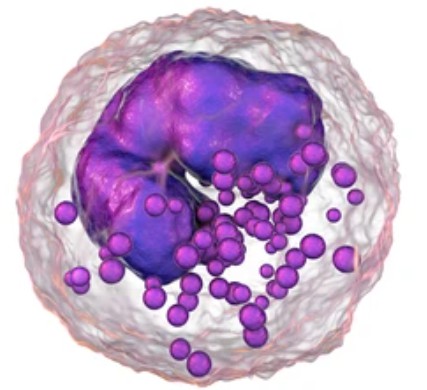
Basophils are involved in multiple functions such as antigen presentation and differentiation of CD4+ T cells. They are characterized by the presence of large basophilic granules containing histamine and other mediators involved in allergic responses.
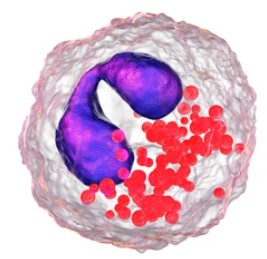
Eosinophils are primarily associated with combating parasitic infections and modulating allergic responses. These granulocytes contain characteristic eosinophilic granules and possess unique surface receptors that facilitate their interaction with other immune cells and target tissues.
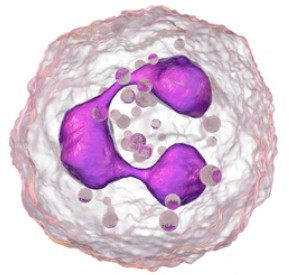
Neutrophils are the most abundant granulocytes and play a central role in innate immunity. They are highly efficient phagocytes and are rapidly recruited to sites of infection or tissue damage. Neutrophils also release antimicrobial peptides, reactive oxygen species, and cytokines to eliminate pathogens and modulate immune responses.
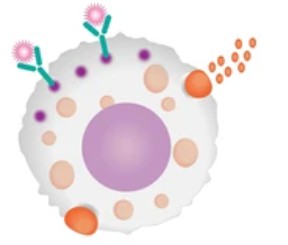
Mast cells have been implicated in allergic responses, but have also been shown to play a protective role, particularly in immunity to parasites and environmental toxins such as venom. Like basophils, mast cells express FcεRI, which binds to the Fc region of IgE, in response to parasitic infections and allergens.
To study granulocytes effectively, researchers rely on marker antibodies that specifically recognize granulocyte-associated surface proteins. These antibodies allow the identification, isolation, and characterization of granulocytes in various experimental settings.
CD markers
Cluster of differentiation (CD) markers are widely used to identify and classify different cell types, including granulocytes. For example, CD45 is a common marker used to distinguish granulocytes from other immune cells. Neutrophils are often characterized by the expression of IL-6, IL-12, TNF α, CD10, CD15, CD17, CD24, CD66b, etc. Eosinophils can be identified by the presence of markers such as MBP, EDN, CD9, CD35, CD64, CD116, CD125, CD126, CD170, and CD193. Basophils can be identified by the presence of markers such as IL-4, CD9, CD11a, CD13, CD16, CD33, CD63, CD123, and CD203c.
Fluorescent-Activated Cell Sorting (FACS)
Fluorescent-Activated Cell Sorting (FACS) is a powerful technique that utilizes marker antibodies conjugated with fluorescent dyes to isolate and analyze specific cell populations. By labeling granulocytes with appropriate marker antibodies, researchers can sort and study these cells more precisely, providing valuable insights into their function and behavior.
As a leading company in the field of biological research, Creative Diagnostics offers a wide range of high-quality marker antibodies and innovative tools for granulocyte research. With over 20 years of experience, Creative Diagnostics continues to support scientists worldwide in their quest to understand the complexities of the immune system and develop novel therapeutic strategies.
Loading ......
