
Inquiry Basket
 Loading ......
Coagulation factor XIIIa (FXIIIa), a plasma transglutaminase, catalyzes the last step in the coagulation process with a significant role in hemostasis. Factor XIII has a number of other functions in addition to coagulation, including pregnancy maintenance, wound healing, immunity, adipogenesis, angiogenesis, etc. A growing body of evidence has demonstrated that FXIII targets a wide range of additional substrates that play important roles in venous thromboembolism, arthropathies, systemic sclerosis, and other diseases. Therefore, FXIIIa has become a promising target for drug and therapy development for related diseases.
FXIIIa stabilizes the blood clot by cross-linking the α- and γ-chains of fibrin. It also protects the newly formed clot from plasmin-mediated fibrinolysis by cross-linking α2-antiplasmin to fibrin. Furthermore, FXIIIa is a major determinant of clot size and the clot's RBC content. Accordingly, FXIII(a) has been implicated in the risk of atherothrombotic diseases and venous thromboembolism (VTE). Inhibiting FXIIIa directly or indirectly leads to smaller clots with fewer entrapped RBCs and relatively more fragile clots that are more susceptible to hydrolysis by the action of proteolytic enzymes such as plasmin. Therefore, inhibitors targeting FXIIIa have been considered to develop a new generation of anticoagulants to prevent and/or treat venous thromboembolism.
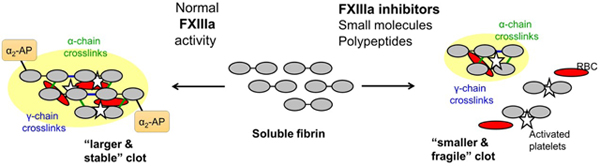 Fig. 1 Factor XIIIa Inhibitors as Potential Novel Drugs for Venous Thromboembolism
It has been demonstrated that the FXIII, drives arthritis pathogenesis by promoting local inflammatory and tissue degradative and remodeling events. Thus, eliminating FXIIIa limits inflammatory arthritis and protects from cartilage and bone destruction in part through mechanisms linked to reduced RANKL-mediated osteoclastogenesis. In summary, therapeutic strategies targeting FXIIIa activity may prove beneficial in limiting arthropathies and other degenerative bone diseases.
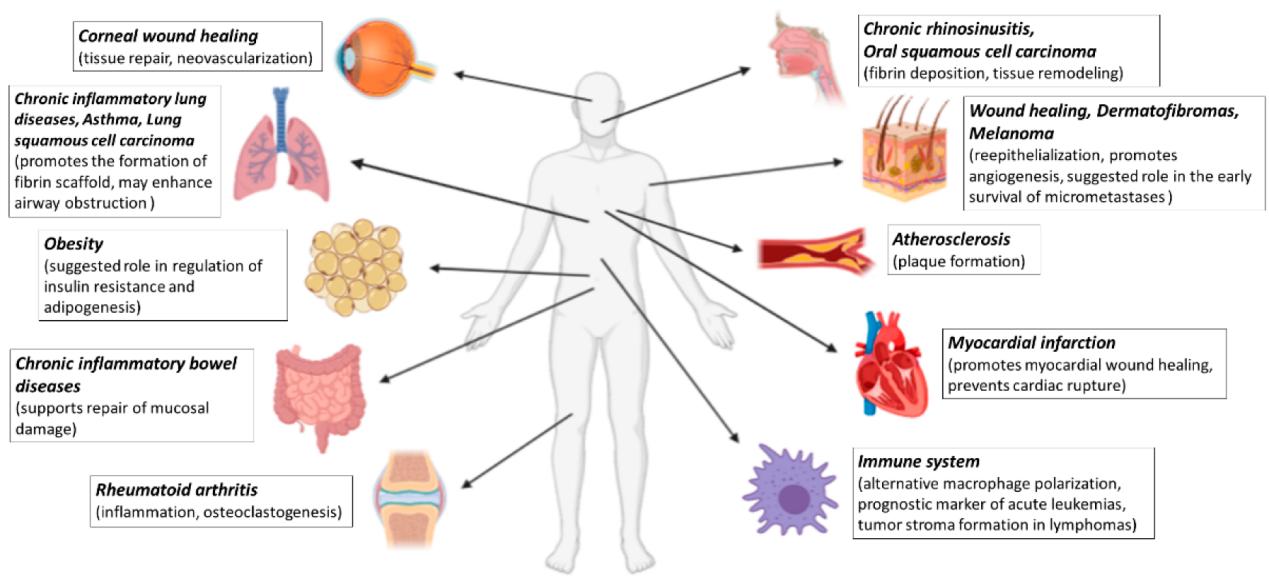 Fig. 2 The role of FXIIIa in diseases
Under infectious disease conditions, FXIII cross-links bacterial surface proteins to fibrinogen, resulting in immobilization and killing, while during wound healing, FXIII induces cross-linking of the provisional matrix. The latter process has been shown to influence the interaction of leukocytes with the provisional extracellular matrix and promote wound healing. Through these actions, there are good rationales for evaluating the therapeutic potential of FXIII in diseases in which tissue repair is dysregulated or perturbed, including systemic sclerosis (scleroderma), invasive bacterial infections, and tissue repair.
FXIII acts on endothelial cell VEGFR-2 and αvβ3 integrin, which ultimately leads to the downregulation of the antiangiogenic protein thrombospondin-1, promoting angiogenesis and neovascularization. Besides, there are studies that have indicated its cardioprotective effect as well as its potential contribution to vascular permeability and stabilization, and to the formation of amyloid β deposits in cerebral amyloid angiopathy and Alzheimer's disease.
Creative Diagnostics now offers a set of highly specific antibodies against FXIIIα/F13A1 which can be used in several scientific applications, e.g., WB, ELISA, IHC, and IP, to boost your drug development research. All of these antibodies are well-validated with abundant quality control data.
» More Reagents in Coagulation Research
Loading ......
