
Inquiry Basket
 Loading ......
The fungal kingdom, recently estimated to contain up to 3.8 million species, presents a great diversity of life forms, trophic strategies, and associations with other organisms. Although all fungi are heterotrophs, the fungal kingdom includes a wide range of life strategies, from saprophytic to mutualistic to parasitic. Fungi fundamentally influence and shape ecosystems through the production and transport of nutrients across trophic levels and entire food webs. With the development of DNA sequencing technology, the beginning of high-throughput sequencing (HTS) analysis of fungal communities was marked. High-throughput sequencing (HTS) studies of fungal communities are redrawing the map by suggesting the vast and unknown taxonomic and functional diversity of the fungal kingdom.
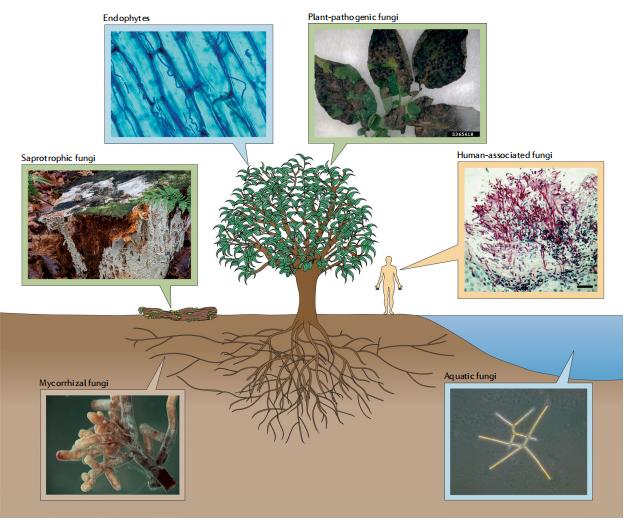 Fig. 1 Fungal diversity in different environments. (Nilsson R H, et al., 2019)
The main steps of high-throughput sequencing include sampling, DNA extraction based on marker PCR amplification, DNA sequencing, sequence processing and data analysis.
Sample preparation. Experimental design is a fundamental step that determines the analytical explanatory power and representativeness of a study.
Selection of markers and primers, and PCR. Selection of genetic markers, primers and amplification conditions is a critical step in HTS studies.
Controls and technical replication. To understand the abundance and nature of contamination and technical artefacts-error accumulation, chimaera formation and index switching (Box 3)- we recommend the use of a negative control (no sample), a positive control (known species unlikely to be found in the samples) and a mock community such as SynMock.
Quality-filtering of HTS data. Optimal ways of demultiplexing HTS samples and examining reads for quality differ between markers and sequencing platforms.
Sequence clustering and operational taxonomic units. Clustering of sequences into roughly species-level OTUs is the most common approach in microbial HTS studies.
Sequence-based taxonomic identification and taxon communication. The taxonomic annotation of OTUs largely relies on sequence similarity searches in reference databases.
Data processing and analysis pipelines. A panoply of software pipelines exists for processing and analysing HTS metabarcode data, with common choices including mothur, USEARCH and QIIME.
Quantification. Quantitative PCR (qPCR) is a well-established method to quantify fungal biomass based on the content of DNA markers.
Arrays and microarrays. Hybridization-based array technologies emerged in the late 1990s and gained popularity in clinical microbiology and bacteriology but not in mycology.
Metagenomics and metatranscriptomics. Although amplicon sequencing is currently the most popular method to target marker genes, the recent development and cost-effectiveness of shotgun HTS enables targeting a suite of genes.
HTS methods for identification of strains and individuals. When larger numbers of nuclear genes are targeted, HTS methods become powerful at delimiting even recently evolved species and species complexes.
Overall fungal diversity. No single factor determines the global distribution and abundance of all fungi, although patterns can be discerned for specific taxonomic and functional groups of fungi, as well as at smaller spatial scales.
Saprotrophic fungi. Saprotrophic fungi have key roles in nutrient cycling and Pedogenesis.
Mycorrhizal fungi. HTS enables exploration of mycorrhizal fungi from not only plant roots but also soil, wood and air.
Plant-pathogenic fungi. The use of HTS methods in mycopathology has somewhat lagged behind other fields of mycology despite the potential usefulness of HTS for Surveillance.
Foliar endophytes. Endophytes inhabit all vegetative organs of plants and include (latent) saprotrophs, commensals, mutualists and even parasites.
Aquatic fungi. Fungi evolved in the sea, and current aquatic fungi are a mixture of direct descendants from the earliest fungi and more recent lineages that transitioned back into the aquatic realm.
Human-associated fungi. Growing awareness of the roles of fungi in disease development and the increasing prevalence of fungal infections, as well as their potential health benefits and probiotic effects, have served to put the human mycobiota in the spotlight.
Loading ......
