
Inquiry Basket
 Loading ......
The isolation and purification of the target cells of interest have been important research tools in cell biology. Whether it is in vitro stimulation to study cytokines expression profiles or cell co-culture to detect cell function, purity of cells is highly required. Fluorescence-activated cell sorting (FACS) is one of the cutting-edge techniques for isolating and purifying cells, which allows researchers to sort cells according to their physical and chemical properties. FACS enables researchers to isolate single cells with unprecedented 99.99% accuracy, making it the ideal tool for applications where cell purity is critical.
FACS is a type of flow cytometry that uses fluorescent dyes or antibodies to label cells and a flow cytometer to measure their fluorescence and other physical properties. The basic principle of FACS involves passing a cell suspension through a flow cytometer, which uses lasers to excite fluorescent dyes or antibodies and detect emission. By analyzing the fluorescence and other physical properties of each cell, the flow cytometer can sort the cells into different p opulations based on their properties.
FACS is a powerful technique because it allows researchers to analyze and sort cells based on multiple parameters, such as size, shape, intracellular signaling molecules, and surface markers (CD45, CD14, HLA-DR, etc.). This technique has many applications in basic and clinical research, including cell cycle analysis, DNA content analysis, protein expression analysis, cell signaling studies, and cell sorting for further analysis or culture. FACS can also be used to isolate rare or specific cell populations, such as stem cells, tumor cells, or immune cells. This makes FACS a valuable tool for many biological and medical applications, including cell biology, immunology, cancer research, and drug discovery.
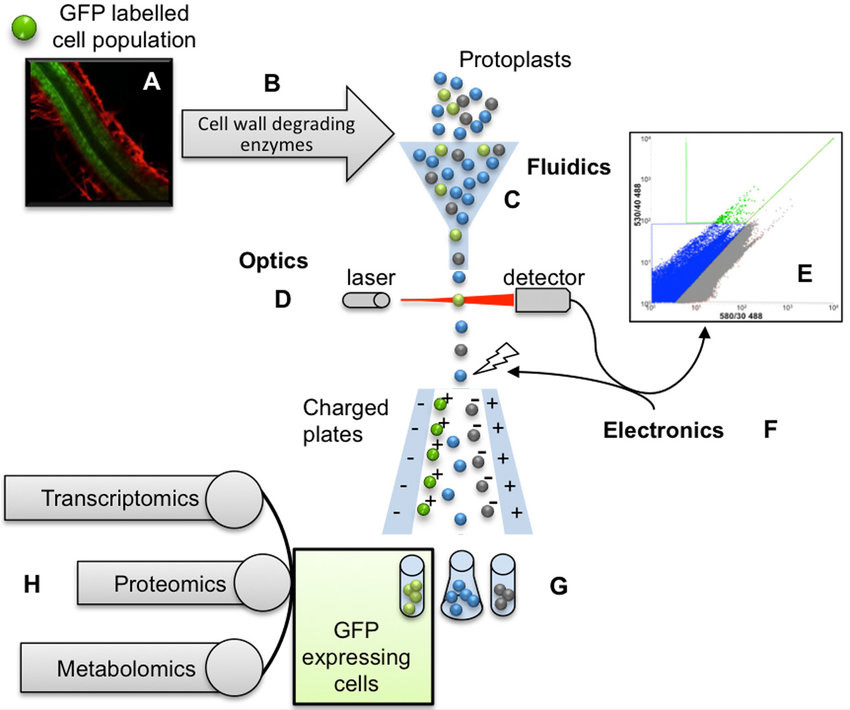 Fig. 1 Fluorescence-Activated Cell Sorting (FACS) workflow. (Carter A D,et al., 2013)
| Sample Preparation |
|
| Instrument Setup |
|
| Data Acquisition |
|
| Post-Sorting Analysis |
|
Note: To maintain cell viability and prevent contamination during subsequent culture, the following measures should be taken during FACS sorting:
Performing FACS requires careful preparation, optimization, and analysis of experimental procedures. By following the tips and guidelines provided in this article, researchers can optimize their FACS experiments and obtain reliable and reproducible results. As a leading provider of innovative tools and services for life science research, Creative Diagnostics offers a wide range of products for FACS analysis, including fluorescent dyes and antibodies.
Reference
Loading ......
